
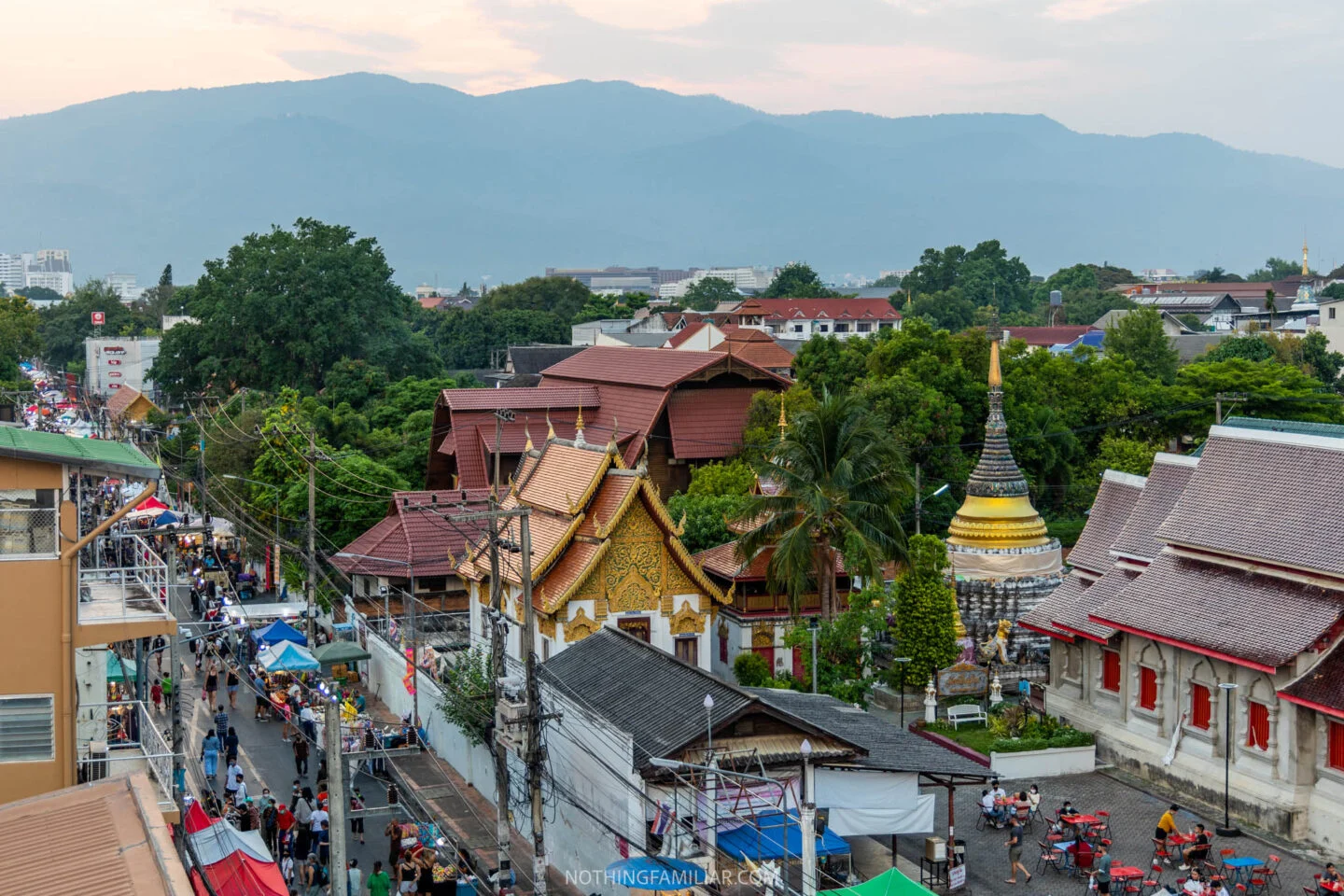
If you’ve ever wondered what kind of lifestyle you can realistically get in Thailand for under $700 a month, the cost of living in Chiang Mai might surprise you. It’s one of the few places where this kind of budget is not just possible, but actually quite comfortable.
When I first arrived, I had the same question. Is this just another online myth, or can you actually live well on this kind of budget? After spending real time here, not as a tourist but as someone building a daily routine, I can say this is very real.
This is not one of those influencer-style budgets where everything looks perfect on paper but falls apart in reality. I am not talking about backpacker survival or short-term tourist spending either. This is based on actually living in Chiang Mai. Having your own apartment, eating out daily, grabbing coffee almost every morning, going to the gym, getting around the city easily, and still having enough left to enjoy your weekends.
The key difference is staying longer. As soon as you stop treating Chiang Mai like a quick destination and start living here for a few months, everything changes. Prices drop, you find better deals, you discover local spots, and you naturally build a routine. You also start meeting people, forming connections, and understanding what expat life here really feels like.
In this guide, I will break down the real Chiang Mai cost of living based on my own experience. By the end, you will have a clear idea of what $700 a month can get you here, and whether this kind of lifestyle fits what you are looking for.

Why So Many People Choose Chiang Mai
Before getting into the numbers, it’s worth asking one simple question. Why Chiang Mai?
On paper, it doesn’t sound that impressive. There’s no beach. No big city skyline like Bangkok. No famous landmarks that everyone recognizes. It’s just a mid-sized city in the mountains of northern Thailand. And yet, once you spend some time here, it starts to make a lot of sense.
What makes Chiang Mai special is not one big thing. It’s how easy life feels here.
When I first arrived, I noticed it almost immediately. Settling in was simple. Finding a place to live was straightforward. Building a daily routine happened naturally. There’s a certain calm rhythm to life that’s hard to explain until you experience it yourself. You wake up, walk out for a coffee, maybe sit with your laptop for a bit, head to the gym or a yoga class, and end the day with a relaxed dinner somewhere local. Nothing feels rushed, and somehow the days feel longer.
The city itself is not huge, around 1.2 million people, but that’s part of the appeal. It’s big enough to have everything you need, but small enough to feel manageable. You don’t spend your life stuck in traffic or dealing with big city stress. In many areas, you can walk short distances, and if not, everything is just a quick scooter ride away. Mountains are always in the background, and there’s a surprising amount of greenery for a city this size.
Another big reason people stay is the community. Chiang Mai has one of the most established expat and digital nomad scenes in Asia. It’s very easy to meet people here. Whether you’re working online, building a business, or just exploring a different lifestyle, you’ll find others doing the same. Over time, you stop feeling like a visitor and start feeling part of something.
The weather also plays a role. Compared to southern Thailand, it’s generally less humid and a bit more comfortable, especially in the cooler months. Mornings and evenings can actually feel fresh, which is something you don’t always get in tropical destinations.
And then there’s the culture. Northern Thailand has its own identity, often referred to as Lanna culture. It’s softer, calmer, and more traditional in many ways. People are polite, friendly, and approachable. Even simple daily interactions feel pleasant, whether you’re ordering food or chatting with someone at a café.
When you combine all of this, the appeal becomes clear. Chiang Mai is not about luxury or big attractions. It’s about quality of life. It’s affordable, social, green, and easy to live in. And for a lot of people, that’s exactly what they’re looking for.

Accommodation in Chiang Mai: What You Actually Get for Your Money
Let’s start with the biggest expense in your Chiang Mai cost of living. Rent.
I’m not going to talk about luxury condos with rooftop pools, saunas, and cocktail bars downstairs. Yes, those exist, and you’ll see them all over YouTube. But that’s not how most people actually live here long term.
What I’m talking about is a simple, realistic setup. The kind of place you move into and immediately feel comfortable. For me, that usually means a small studio, around 25 to 35 square meters, with a balcony, good natural light, air conditioning, a private bathroom, and basic furniture already included. Bed, wardrobe, desk, fridge. Nothing fancy, but everything you need to live well.
When I first started looking, I made the same mistake most people make. I focused on areas like Nimman and the Old Town. These are the most popular neighborhoods for foreigners, and for good reason. Everything is there. Cafés, coworking spaces, Western restaurants, bars, and a very social atmosphere. It’s convenient and feels familiar.
But there’s a trade-off. Prices in these areas have been going up every year. More demand, more development, and more businesses targeting foreigners. You end up paying a premium for the location and lifestyle.
After some time, I started exploring other neighborhoods like Santitham, Jet Yod, and Suthep. And honestly, this is where Chiang Mai started to feel real to me. These areas are still very close to the center. You’re never more than a few minutes away by scooter. But the environment is more local, more relaxed, and much less polished.
Instead of trendy brunch spots, you have street food stalls on every corner. Small family-run cafés. Local markets with fresh fruit and cheap meals. It feels more authentic, and at the same time, your rent drops significantly.
For a place like this, a clean and comfortable studio in a good location, you’re typically looking at around 5,000 to 7,000 baht per month. That’s roughly 150 to 200 dollars. And this is not a “cheap and terrible” setup. It’s actually a very livable space where you can settle in and build a routine without stress.
Finding a place is also easier than most people expect. A lot of listings are posted in Facebook expat groups, but one of the best strategies I’ve used is a bit more old school. I check Airbnb or Booking first, just to understand the general price range for a building or area. Then I go there in person and ask directly about monthly rates.
Most buildings are happy to offer a better price if you stay longer and pay directly. They avoid platform fees, and you get a discount. It’s a win on both sides. Plus, you can actually see the room before committing, which makes a huge difference. Photos can be misleading, but in person you know exactly what you’re getting.
If you take your time with this process, it’s very easy to find a place that feels right without overpaying. And that’s a big part of keeping your overall cost of living in Chiang Mai low while still enjoying your day to day life.

Food in Chiang Mai: Why Eating Out Is Cheaper Than Cooking
One of the biggest surprises when you first start living in Chiang Mai is how little you actually cook.
At home, cooking is usually the cheaper option. Here, it’s often the opposite. Most days, I eat out, just like everyone else around me. Locals do it, expats do it, and after a while, it just becomes part of your routine.
There are a couple of reasons for this. First, most apartments are not designed for cooking. You usually get a small fridge, a sink, maybe a kettle, but no proper kitchen setup. Second, and more importantly, food outside is incredibly affordable. Local restaurants operate on high volume, and many of them source ingredients directly from nearby farms or markets. Everything is fresh, simple, and cooked quickly.
For me, groceries are very basic. I keep things light and easy. Oats with fruit and nuts for breakfast, some coffee at home for lazy mornings, and a few snacks for the evening. If you follow a simple routine like this, groceries stay very cheap. I usually spend around 1,500 baht per month, and that covers everything I need at home.
For the rest of the day, I eat out. And this is where Chiang Mai really delivers. You’ll find local food everywhere. Small street-side spots, night markets, family-run restaurants. Meals are cooked fresh, often right in front of you, and prices are hard to believe at first. A typical local dish costs around 40 to 60 baht. Sometimes even less. Many places also include free tea or water, which is a nice touch.
If you eat like this every day, lunch and dinner at local spots, you can easily keep your monthly food budget around 3,000 baht. That’s roughly 100 dollars for daily meals that are fresh, filling, and surprisingly varied.
Of course, you won’t eat local food all the time. At some point, you’ll want a good burger, a proper pasta, or a relaxed brunch in a nice café. Chiang Mai has plenty of those options too. Western and international restaurants are more expensive, but still reasonable compared to most countries. If you eat out at these places around ten times a month, with an average of 200 baht per meal, that adds another 2,000 baht to your budget.
And if you feel like going all out, you can. The city has everything from stylish rooftop spots to high-end dining experiences and even Michelin-listed restaurants. There really is no upper limit.
That’s what makes food in Chiang Mai so interesting. You’re not locked into one lifestyle. You can eat local and keep your budget low, mix in some Western comfort meals, or go full premium when you feel like it. It’s completely flexible, and that’s a big part of why the overall Chiang Mai cost of living stays so manageable.

Transportation in Chiang Mai: Getting Around the Easy Way
Getting around Chiang Mai is one of those things that feels confusing before you arrive, and then completely obvious once you’re here.
It’s not a big city, and you won’t find a metro system or a reliable public bus network like in larger capitals. At first, that sounds like a downside. But in reality, the city is built in a way that makes transportation simple and surprisingly cheap.
Most people here use scooters. It’s the easiest and most flexible way to move around. Traffic is manageable, distances are short, and you can get almost anywhere in 10 to 15 minutes. After a few days, it starts to feel very natural.
If you want that freedom, renting a scooter is straightforward. Rental shops are everywhere, especially in expat-friendly areas. A basic monthly rental usually costs around 2,500 baht. If you want something newer or more comfortable, prices can go up to around 3,500 or 4,000 baht. Fuel is another small expense. Filling up the tank costs just a few dollars, and if you’re mostly riding around the city, it lasts longer than you’d expect.
That said, scooters are not for everyone. If you’ve never ridden before, Chiang Mai might not be the best place to learn from scratch. Traffic is calm compared to big cities, but it still requires confidence and awareness.
A slower and even cheaper option is cycling. Some people rent bicycles through local apps for long-term use, while others just buy a second-hand bike for around 1,000 baht and use it daily. In certain neighborhoods, especially flatter areas, this works surprisingly well.
If you don’t want to drive at all, you can rely entirely on ride apps. Grab is the most popular one, and it works perfectly. You can order a car or a motorbike taxi within minutes. Short rides usually cost between 20 and 50 baht, which is about one dollar. Even if you use it every day, your monthly transport cost stays very low.
There are also red trucks, called songthaews, driving around the city. They act like shared taxis. You can flag one down, tell the driver where you’re going, and agree on a price. It’s a very local experience, though not always the most convenient if you’re in a hurry.
In the end, transportation in Chiang Mai is flexible. You can ride your own scooter, cycle through quiet streets, or let someone else do the driving. And no matter which option you choose, it’s very hard to spend more than 3,000 baht per month. That’s a big reason why the overall Chiang Mai cost of living stays so low while still giving you a lot of freedom.
Utilities and Internet in Chiang Mai: Simple and Predictable
Utilities are one of the easiest parts of living in Chiang Mai, and honestly, one of the least stressful.
In most apartments and long-stay buildings, Wi Fi is already included in the rent. When I moved in, I didn’t have to set anything up, no contracts, no installation, nothing. The internet was just there and ready to use from day one. Speeds are usually good enough for remote work, video calls, and streaming without any issues. If you’re someone who depends heavily on fast internet, it’s still worth testing it when you visit the room, but in most cases, it works perfectly fine.
Electricity and water are the only real utility costs you need to think about. And even those stay quite low. The main factor here is air conditioning. Chiang Mai can get hot, especially during the burning and summer seasons, so you’ll probably use AC regularly. The more you use it, the higher your bill.
That said, even with daily AC use, my combined electricity and water bill rarely goes over 600 baht per month. That’s around 20 dollars, which still feels very reasonable considering the comfort it gives you.
Another small but very common expense here is cleaning. Many buildings offer weekly room cleaning services, and it’s surprisingly affordable. I usually pay around 200 baht per visit. That comes out to about 800 baht per month. It’s not something you have to do, but I personally like it. It saves time, and at the same time, it supports local workers.
When you put everything together, utilities in Chiang Mai stay very predictable. Water, electricity, and optional cleaning come to around 1,500 baht per month. Roughly 45 dollars for everything. No hidden fees, no seasonal spikes, just simple and manageable monthly costs, which makes budgeting your Chiang Mai cost of living much easier.

Lifestyle and Entertainment in Chiang Mai: Staying Active Without Spending Much
One of the things I genuinely love about Chiang Mai is how easy it is to stay active and have a social life without constantly thinking about money.
You don’t need a big budget here to feel good, stay healthy, and actually enjoy your days.
Let’s start with fitness. Gyms in Chiang Mai are very affordable. A typical monthly membership is around 700 to 1,000 baht, and many places also offer daily passes for 40 to 60 baht. Most gyms are simple. No fancy design, no air conditioning in some cases, but everything you need is there. Weights, machines, and a solid atmosphere. If you’re consistent, it does the job perfectly.
If you’re into something a bit different, there are plenty of options. Tennis courts are easy to find, and renting one usually costs around 200 baht per hour. Playing once or twice a week barely makes a dent in your budget.
Swimming is another good option, especially during the hotter months. You’ll find both public pools and hotel pools offering access passes. Some places sell packages, like 10 or 12 visits at a discounted price. If you go regularly, it usually comes out to under 700 baht per month.
Going out is just as manageable. A local beer is around 70 to 90 baht, and cocktails usually sit between 200 and 300 baht. What I like most is that many places with live music don’t charge any entrance fee. You just walk in, order a drink, and enjoy the evening. It feels relaxed and social, not overly commercial. It’s also one of the easiest ways to meet people here.
But honestly, some of the best things to do in Chiang Mai don’t cost anything at all.
The city is surrounded by mountains, and if you have a scooter, you can explore endless viewpoints, hiking trails, and small villages. It’s one of those places where a random ride can turn into a full day adventure. You stop for a view, grab some local food somewhere in the hills, and just enjoy being out of the city for a while.
For something more chill, I often go for a run or a walk around Ang Kaew Reservoir. It’s a beautiful green area with a lake, popular with both students and locals. There’s always people exercising, relaxing, or just enjoying the atmosphere. Being around that kind of energy makes it much easier to stay consistent with your own routine.
Another side of Chiang Mai I didn’t expect to enjoy this much is the local creative scene. Places like Baan Kang Wat and Jing Jai Market are perfect for slow mornings. You grab a coffee, walk around small artisan shops, talk to local artists, and maybe pick up something unique. It never feels rushed, and you often end up spending more time there than you planned.
And of course, this is Thailand. Getting a proper Thai massage becomes part of your routine sooner or later. A good one costs around 250 to 350 baht, and it’s one of the best value-for-money things you can do for your body.
One of the more random experiences I found was kayaking on the Ping River. Near Wat Fa Ham, you can rent a kayak for around 50 baht. No booking, no apps, just show up and go. It’s simple, a bit unexpected, and actually a really fun way to see a different side of the city.
At the end of the day, lifestyle in Chiang Mai is very flexible. You can stay active, go out, explore, and try new things without spending much. You choose what you enjoy, and build your routine around it. That’s a big part of why the Chiang Mai cost of living feels so comfortable, even on a relatively low budget.

Coffee Culture in Chiang Mai
Coffee is a big part of daily life in Chiang Mai. After a few days here, you start to notice how many cafés there are. Small local spots, minimal specialty places, quiet corners to work, and busy cafés full of people chatting or on laptops. If you enjoy café life, this city makes it very easy to build a routine around it.
Personally, I don’t use coworking spaces. I just rotate between a few laptop-friendly cafés like Akha Ama Coffee, Bob’s Coffee, Café de Sot, and Still Coffee & Life. You order a coffee, find a seat, and you’re good for a couple of hours. No pressure, no membership, just a relaxed environment to get things done.
Prices are very reasonable. A basic americano usually costs between 40 and 60 baht. If you grab one most days, your monthly coffee budget ends up around 1,500 to 2,000 baht. That’s roughly 50 to 65 dollars.

What makes Chiang Mai stand out is the quality. A lot of cafés use locally grown beans from northern Thailand, and there’s a real focus on specialty coffee. You can keep it simple with your daily cup, or go deeper into different beans and brewing styles if you’re into that.
For me, it’s more than just coffee. It’s part of the rhythm of the day. Sitting down with a cup, getting some work done, and just watching life around you.
Small Everyday Expenses You Shouldn’t Ignore
There are also a few small daily costs that don’t seem like much on their own, but are still worth including in your Chiang Mai cost of living.
Mobile data is one of the easiest. It’s cheap and reliable. I pay around 200 baht per month for my plan, and it’s more than enough. If you stay longer, it’s definitely worth getting a local SIM instead of using tourist packages. You can walk into an AIS Shop Maya Mall or AIS Shop Central Festival, bring your passport, and set everything up in a few minutes.
Haircuts are another small but regular expense. A simple cut at a local barbershop costs around 100 baht. It’s quick, no-frills, but perfectly fine for everyday needs.
Then you have basic items like shampoo, soap, toothpaste, and other small household things. These are inexpensive and easy to find in any convenience store or supermarket. I usually spend around 100 to 200 baht per month on these.
When you add everything together, these small extras come to around 500 baht per month. Not a big number, but still part of the full picture if you want a realistic view of living in Chiang Mai.
Final Thoughts on Living in Chiang Mai
When I first arrived, I didn’t expect the cost of living in Chiang Mai to be this low.
It’s not a city that tries to impress you with big attractions or luxury. Instead, it wins you over slowly. Through simple routines, affordable living, and a lifestyle that just makes sense day to day.
For me, the biggest takeaway is this. You don’t need a huge budget to live well here. With around $700 a month, you can have your own place, eat out every day, stay active, enjoy good coffee, and still have a social life. It’s a balanced lifestyle that feels sustainable, not like a temporary escape.
Of course, everyone’s experience will be a bit different. Some people will spend more, some less. But as a baseline, this gives you a very real picture of what to expect.
If you’re thinking about making the move, or even just staying for a few months, Chiang Mai is one of those places that’s easy to try and hard to leave.