
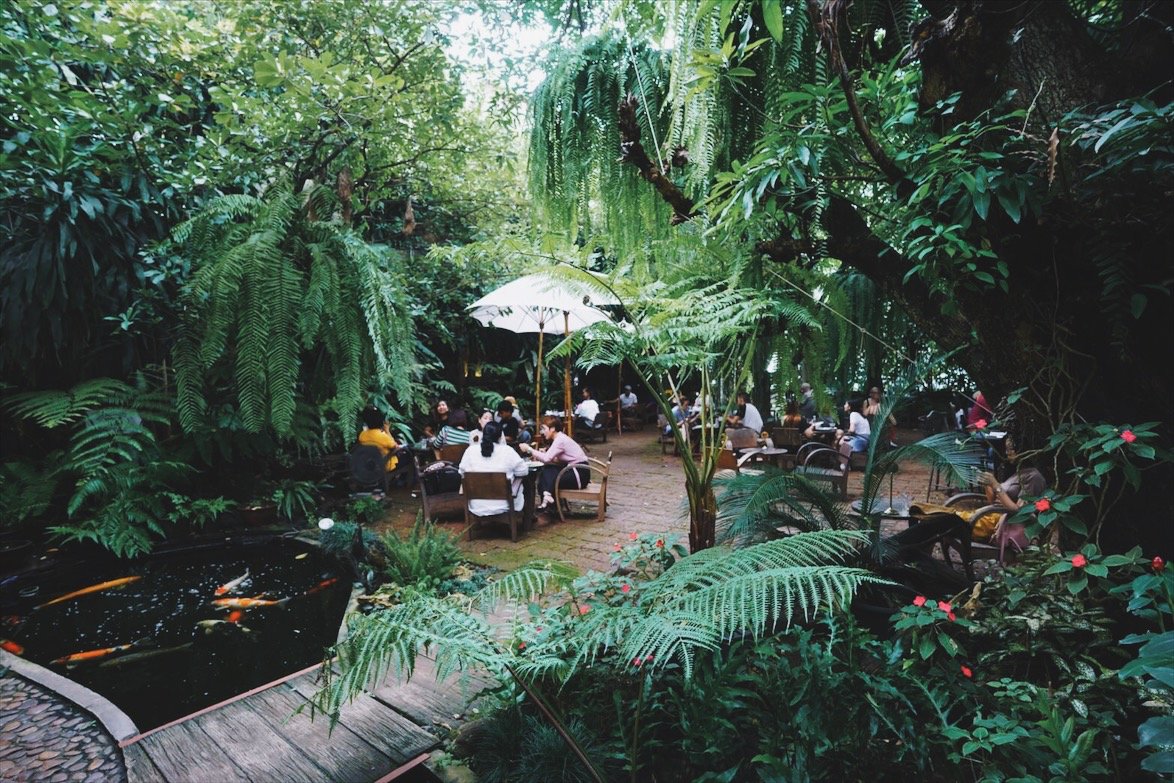
Coffee quickly became a big part of my daily routine in Chiang Mai. It didn’t take long to notice that the Chiang Mai coffee culture is something special. This city truly runs on cafés.
They’re everywhere. Not just in the popular areas, but tucked into quiet streets, hidden between apartment buildings, or sitting on random corners you’d normally walk past. And each one feels a bit different.
Some are small and local, with plastic chairs and strong, simple coffee. Others are beautifully designed, with minimalist interiors, slow music, and people working quietly on laptops. Then you have the busy spots, where people come to meet friends, talk, and just spend time.
Very quickly, you realize this is not just about coffee. It’s about how people live here.

Working From Cafés Instead of Coworking Spaces
Before coming to Chiang Mai, I assumed I would be using coworking spaces. That’s what most people talk about when it comes to digital nomad life.
But in reality, I almost never use them.
Cafés here are more than enough. Many are laptop-friendly, with good WiFi, plenty of seating, and a relaxed attitude. You order a drink, sit down, and no one bothers you. You can stay for hours without feeling pressure to leave.
Over time, I found a few spots that became part of my routine. Places like Akha Ama Coffee, Bob’s Coffee, Café de Sot, and Still Coffee & Life.
Each one has a slightly different vibe. Some are better for focused work, others for relaxed mornings. But all of them offer the same thing. A comfortable place to sit, get things done, and enjoy the moment.
How Much Does Coffee Cost in Chiang Mai?
One of the reasons this lifestyle works so well is the price.
A basic americano usually costs between 40 and 60 baht. Even in nicer cafés, prices stay reasonable compared to Western countries.
If you grab coffee regularly, let’s say almost every day, your monthly cost will be around 1,500 to 2,000 baht. That’s roughly 50 to 65 dollars.
For something that becomes part of your daily routine, it’s a very small price to pay.
Of course, you can spend more if you want. Specialty drinks, desserts, or premium cafés will push the cost higher. But if you keep it simple, coffee stays one of the most enjoyable and affordable parts of living here.
Local Beans and Specialty Coffee Scene
What surprised me the most is the quality.
Northern Thailand actually produces its own coffee, mostly grown in the mountains around Chiang Mai. Many cafés use locally sourced beans, and there’s a real focus on specialty coffee.
You’ll see single-origin options, different roast profiles, and baristas who genuinely care about what they’re making. It’s not just a quick caffeine stop. In many places, coffee is treated as a craft.
If you’re into coffee, this city gives you a lot to explore. You can try different beans, experiment with brewing styles, and slowly develop your taste.
But even if you’re not a coffee enthusiast, you still benefit from it. The baseline quality is simply higher.

The Daily Routine That Forms Around Cafés
After a while, cafés become more than just places to drink coffee.
They shape your day.
For me, it usually starts with a short walk or scooter ride to a nearby café. I order my usual, sit down, open my laptop, and ease into work. Sometimes I stay focused for hours. Other times, I just sit there, thinking, planning, or watching people come and go.
It’s a simple routine, but it works.
There’s something about the atmosphere that makes it easier to be productive without feeling stressed. You’re not locked into an office, but you’re also not distracted like you might be at home.
It’s that balance that makes Chiang Mai so appealing.
Final Thoughts on Coffee Life in Chiang Mai
If you enjoy café culture, Chiang Mai is one of the easiest places in the world to settle into.
You don’t need expensive memberships or a big budget. A simple coffee, a comfortable seat, and a bit of time is all it takes.
Over time, these small daily moments add up. They become part of your routine, part of your lifestyle, and honestly, part of the reason it’s so easy to stay here longer than planned.
And once you get used to that rhythm, it’s hard to imagine going back.