
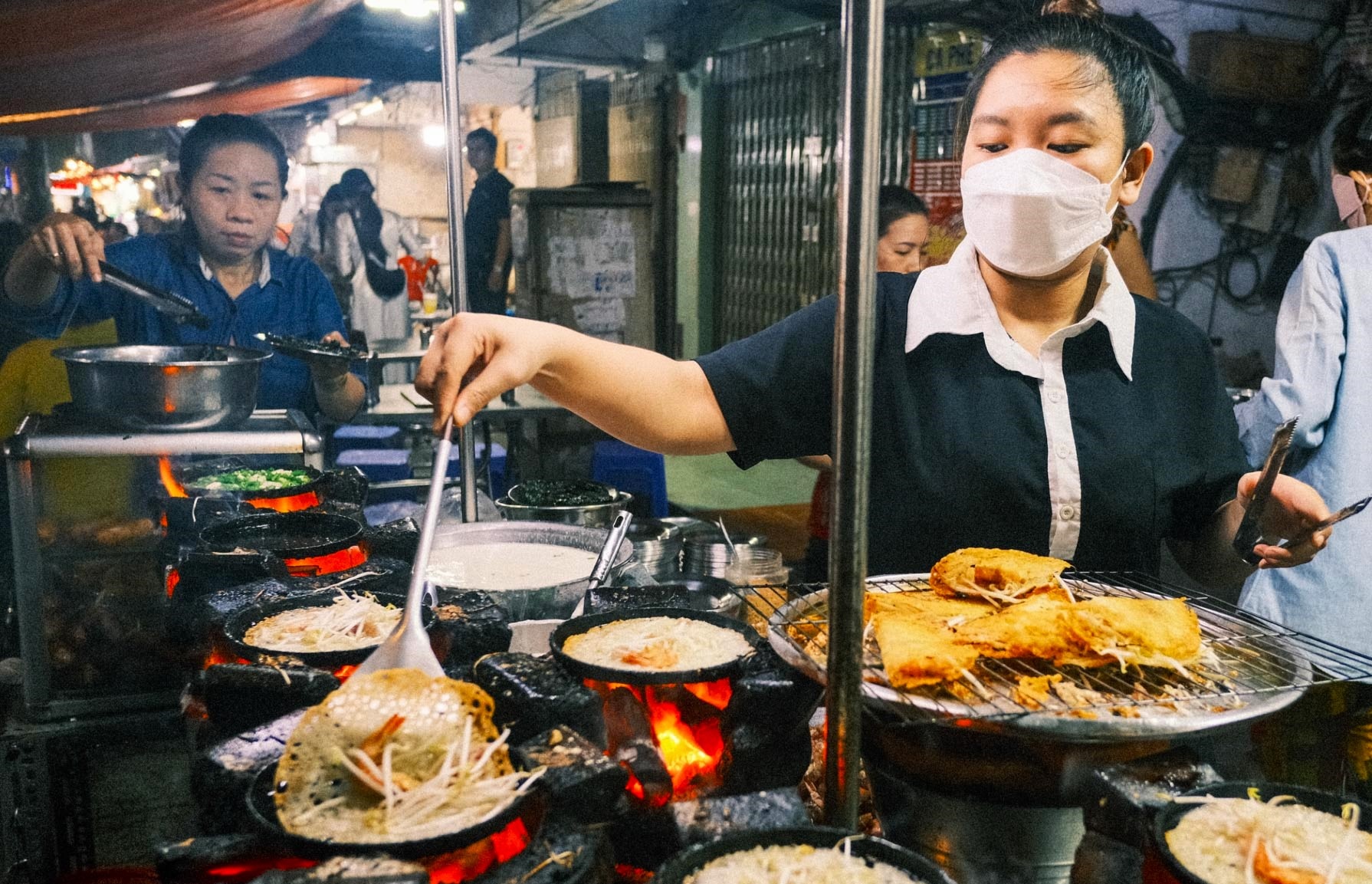
What Makes Vietnamese Food So Unique?
Vietnamese food guide is something I wish I had when I first arrived in the country.
The first time I tried Vietnamese food, I didn’t fully get it.
It felt simple. Light. Almost too subtle compared to other Asian cuisines I was used to.
But the longer I stayed in Vietnam, the more everything started to make sense.
Flavors here are not trying to overwhelm you. They are built on balance. Fresh herbs, slow-cooked broths, grilled meats, fish sauce, lime, chili. Everything has a role, and when it comes together, it just works.
Now, after spending time across different parts of the country, Vietnamese food has easily become one of my favorites in the world.
Why Vietnam Is One of the Best Food Countries in the World
Vietnam is one of those rare places where you can eat incredibly well every single day without spending much.
Street food is not just cheap. It is often better than restaurant food in many other countries.
You sit on a small plastic chair, order something for 40,000 dong, and a few minutes later you are eating a dish that has been perfected over generations.
Everything feels fresh, fast, and real.
Vietnamese Food Is Not the Same Everywhere
One thing many people don’t realize before coming here is how different Vietnamese food is depending on the region.
It is not just small variations.
The entire style of cooking, seasoning, and even portion sizes can change as you move through the country.
What You Will Learn in This Guide
In this Vietnamese food guide, I will break down Vietnamese food by region so you can understand what to eat and what to expect in each part of the country.
We will cover:
- Northern Vietnam food
- Central Vietnam food
- Southern Vietnam food
And the most important dishes you should try in each region.

Understanding Vietnamese Food by Region
Vietnam stretches over 1,600 kilometers from north to south, and that distance shapes everything about its food.
Climate, history, and local ingredients all influence how dishes are prepared and how they taste.
Because of this, Vietnamese cuisine naturally developed into three distinct regional styles.
The Three Main Food Regions in Vietnam
Simple, balanced, and less sweet. Focus on clean, natural flavors.
Central Vietnam
Stronger, bolder flavors. More spice and more complex dishes.
Southern Vietnam
Sweeter, richer, and more diverse, with a wider mix of ingredients.
To make things easier to understand, here is a quick breakdown of how Vietnamese food differs across regions:
| Region | Flavor | Style | Must-Try |
| North (Hanoi) | Balanced, mild | Traditional, simple | Pho, Bun Cha |
| Central (Da Nang, Hue) | Bold, spicy | Complex, varied | Mi Quang, Bun Bo Hue |
| South (Saigon) | Sweet, rich | Flexible, diverse | Com Tam, Banh Mi |
Northern Vietnamese Food (Hanoi & the North)
What Makes Northern Food Unique
Northern Vietnamese food is where everything begins.
This is the most traditional style of Vietnamese cuisine, especially around Hanoi and the surrounding regions. And you can feel that history in the food.
Flavors here are noticeably more subtle compared to the rest of the country. There is less sugar, less spice, and a much stronger focus on balance.
Nothing is overpowering.
Instead of bold or heavy seasoning, dishes rely on freshness, natural ingredients, and careful preparation. Broths are clean and light. Herbs are used with precision. Every element feels intentional.
If you are expecting strong, spicy, or sweet flavors, Northern food might feel almost too simple at first.
But that simplicity is exactly what makes it so refined.
Must-Try Dishes in Northern Vietnam
If you want to understand Northern Vietnamese food, these are the dishes you should start with:
Pho (especially in Hanoi)
This is where pho was born, and it shows. The broth is clear, light, and deeply aromatic without being heavy. It is very different from the richer versions you find in the south.

Bun Cha
One of the most iconic dishes in Hanoi. Grilled pork served with rice noodles, fresh herbs, and a slightly sweet and tangy dipping sauce. Simple, but incredibly satisfying.
Banh Cuon
Thin, delicate rice rolls filled with minced pork and mushrooms. Usually served with herbs and fish sauce. Light, soft, and surprisingly filling.
Cha Ca
A lesser-known but very traditional dish. Turmeric-marinated fish cooked with dill and spring onions. Unique flavor, very different from typical Vietnamese meals.
Xoi
Sticky rice dishes you will see everywhere, especially in the mornings. Topped with things like egg, pork, or fried shallots. Cheap, filling, and part of everyday life.
My Experience Eating in the North
The first time I tried food in the north, I honestly didn’t fully appreciate it.
It felt too simple.
I was expecting something more intense, more explosive. But after a few days, my perspective completely changed.
You start noticing the details.
The way the broth in pho is clean but still full of flavor. The balance between herbs, meat, and sauce in bun cha. The freshness of everything you eat.
Street food culture here is also on another level.
You sit on tiny plastic chairs, right on the sidewalk, surrounded by locals who have probably been eating at the same spot for years. No fancy design, no presentation. Just people who know exactly what they are doing.
And that is when it clicks.
Northern Vietnamese food is not trying to impress you instantly. It grows on you. And once it does, you start craving that simplicity in a way that is hard to explain.
Central Vietnamese Food (Da Nang, Hoi An, Hue)
What Makes Central Food Unique
If Northern Vietnamese food is about balance and subtlety, Central Vietnam is where things get much more intense.
Cities like Da Nang, Hoi An, and Hue have a completely different approach to food.
Flavors here are stronger, sharper, and often spicier. Especially in Hue, where chili is used much more aggressively than in other parts of the country.
Another thing you notice quickly is portion size.
Instead of one large dish, meals often feel more varied, with multiple smaller components. There is more contrast, more texture, more going on in a single meal.
This region is also heavily influenced by royal cuisine from Hue, which used to be Vietnam’s imperial capital. That influence still shows today in the presentation, variety, and attention to detail in many dishes.
Food here feels more complex. Sometimes even a bit chaotic at first. But once you get used to it, it becomes incredibly addictive.
Must-Try Dishes in Central Vietnam
If you are in Central Vietnam, these are the dishes you should not miss:
Mi Quang
This is the signature dish of the region, especially around Da Nang. Thick rice noodles, a small amount of rich broth, herbs, peanuts, and crispy rice crackers on top. It is not a soup like pho, more like a mix between dry and wet. Very unique.

A much stronger and spicier alternative to pho. The broth is deeper, richer, and has a noticeable chili kick. If you like bold flavors, this is one of the best dishes in Vietnam.
Banh Xeo (central style)
Different from the southern version. Smaller, crispier, and less oily. Usually filled with shrimp, pork, and bean sprouts, then wrapped in rice paper with herbs.
Cao Lau
A dish you will almost only find in Hoi An. Thick noodles, slices of pork, fresh greens, and crispy toppings. Slightly smoky, slightly chewy, very specific texture.
Nem Lui
Grilled pork skewers served with herbs, rice paper, and dipping sauce. You build your own wraps, which makes the whole experience more interactive.
Why I Personally Love Central Vietnamese Food
This is where Vietnamese food really clicked for me.
Spending time in Da Nang, I naturally ended up eating a lot of Central Vietnamese dishes, and at some point I realized I was enjoying them more than anything else.
The flavor intensity is just on another level.
Dishes feel more alive. More contrast, more texture, more personality. You get sweetness, saltiness, spice, freshness all in one bite.
Another thing I noticed is the difference between local spots and tourist places.
Near the beach or in more polished areas, food can feel toned down, slightly adjusted for visitors. But once you move a bit inland and start eating at small local places, everything changes.
Flavors become stronger. Portions feel more authentic. And the overall experience just feels more real.
Mi Quang from a small street-side place will taste completely different from one served in a modern café. Same dish, completely different experience.
That is something I kept noticing again and again.
And honestly, that is why Central Vietnam is probably my favorite region when it comes to food.
Southern Vietnamese Food (Ho Chi Minh City & the South)
What Makes Southern Food Unique
If Northern food is subtle and Central food is intense, Southern Vietnamese food is where things become richer, sweeter, and more diverse.
Around Ho Chi Minh City and the southern regions, the cuisine feels more relaxed and more open to influence.
One of the first things you will notice is the sweetness.
Many dishes include a slightly sweet note, whether it comes from sugar, coconut, or naturally sweet ingredients. It is not overwhelming, but it is definitely there, especially if you compare it to the north.
Another big difference is the amount of herbs and vegetables.
Meals often come with large plates of fresh greens, which you mix into your dish depending on your taste. It makes everything feel lighter, even when the flavors are richer.
Portions also tend to be bigger.
And because the south has historically been more open to trade and international influence, the food scene feels more varied. You will find a wider mix of styles, ingredients, and interpretations of classic dishes.
It is a bit less strict, a bit more flexible, and that is part of its appeal.
Must-Try Dishes in Southern Vietnam
If you are exploring Southern Vietnam, these are some of the key dishes to try:
Com Tam
One of the most typical meals in the south. Broken rice served with grilled pork, egg, pickled vegetables, and fish sauce. Simple, filling, and very satisfying.
Hu Tieu
A lighter, slightly sweeter noodle soup compared to pho. Often served with pork, seafood, and a clear but flavorful broth.
Banh Mi (Saigon style)
You will find banh mi everywhere in Vietnam, but the southern version is usually more loaded. More fillings, more sauce, more going on inside the baguette.

Goi Cuon
Fresh rice paper rolls filled with shrimp, herbs, vermicelli, and sometimes pork. Light, refreshing, and usually served with a peanut-based dipping sauce.
Broken rice dishes (variety)
Beyond classic com tam, you will see many variations with different meats, toppings, and combinations. It becomes part of everyday eating.
My Experience in the South
The first thing I noticed in the south was how different everything felt compared to the north and central regions.
Food is easier to approach.
Flavors are more obvious, slightly sweeter, and often more immediately enjoyable if you are new to Vietnamese cuisine.
At the same time, the variety is on another level.
In a city like Ho Chi Minh City, you can eat something completely different every single day and still not run out of options. Street food, modern cafés, international restaurants, everything is available.
It feels more dynamic, more fast-paced.
Compared to Central Vietnam, where I personally love the intensity and structure of the dishes, the south feels more flexible. Less traditional in some ways, but more diverse.
And that makes it a very easy place to enjoy food, especially if you are just starting to explore Vietnamese cuisine.
Street Food Culture in Vietnam
Why Street Food Is the Real Experience
If you really want to understand Vietnamese food, you have to eat on the street.
Not occasionally. Not just for the experience. But regularly.
Street food is where everything feels the most authentic. Meals are cooked fresh, right in front of you. Ingredients are simple, but the execution is often incredibly refined because the same dishes are repeated hundreds of times every day.
It is fast, cheap, and built for daily life.
But what makes it special is not just the food.
It is the atmosphere.
You sit next to locals, watch the street, hear the noise of scooters passing by, and somehow everything just feels alive. It is not polished or designed. It is real.
And that is exactly why it works.

What to Expect
Street food in Vietnam is very different from what many people imagine before arriving.
Most places are simple.
Small plastic chairs. Low tables. Sometimes no menu at all.
You often sit right on the sidewalk, a few meters away from traffic, eating food that tastes better than what you would expect in a restaurant.
At first, it can feel a bit chaotic.
There might be a language barrier. Ordering is not always straightforward. But in reality, it is easier than it looks.
Many places specialize in just one dish. You point, you look at what others are eating, or you use a translation app. After a few tries, it becomes completely natural.
Tips for Eating Street Food Safely
Eating street food in Vietnam is generally very safe, but there are a few simple rules that make a big difference.
Busy places are usually the best places.
High turnover means fresher ingredients and food that is constantly being prepared.
Watch how the food is handled.
Clean cooking areas, fresh ingredients, and proper storage are good signs.
Trust your instincts.
If something feels off, just move on. There are always plenty of other options nearby.
After a short time, you naturally develop a sense for what works and what does not.
How Much Food Costs in Vietnam
One of the biggest advantages of Vietnam is how affordable good food is.
A typical local meal usually costs:
Around 40,000 to 60,000 VND (roughly $1.5 to $2.5)
And this is not a small snack. It is a proper, freshly cooked meal.
Prices can vary depending on the region.
Northern Vietnam tends to be slightly more stable in pricing. Central Vietnam often offers very good value for quality. Southern Vietnam can be a bit more expensive in major cities, especially in more modern areas.
There is also a clear difference between eating local and eating Western food.
Local Vietnamese meals stay very affordable almost everywhere.
Western or international food usually costs two to three times more, especially in popular areas or near tourist zones.
A Realistic Monthly Food Budget
If you eat mostly local food and occasionally mix in international meals, a realistic monthly food budget looks like this:
Around 4,000,000 to 6,000,000 VND
Roughly $150 to $250 USD
That includes daily meals, coffee, and occasional dining out.
For the quality, freshness, and variety you get, it is honestly hard to beat.
Final Thoughts: Which Region Has the Best Food?
After spending time across different parts of Vietnam, this is the question I get asked the most.
Which region has the best food?
The honest answer is, there is no single winner.
Each region has its own style.
The north is balanced and traditional.
The center is bold and full of flavor.
The south is rich, sweet, and diverse.
It really depends on what you personally enjoy.
Some people love the simplicity of northern dishes. Others prefer the intensity of central food. And many enjoy the variety you find in the south.
The best approach is simple.
Try everything.
Move between regions, taste the differences, and let your own preferences develop naturally.
Because in the end, that is what makes Vietnamese food so interesting.

Frequently Asked Questions About Vietnamese Food
What is the most popular food in Vietnam?
The most popular dish in Vietnam is Pho. It’s a rice noodle soup with a slow-cooked broth, usually served with beef or chicken, fresh herbs, lime, and chili. You’ll find it everywhere, from small street stalls to restaurants.
Is Vietnamese food healthy?
Yes, Vietnamese food is generally considered very healthy. Most dishes are made with fresh herbs, vegetables, grilled meats, and light broths. Compared to many other cuisines, it uses less oil and focuses more on balance and freshness.
What is the difference between Northern, Central, and Southern Vietnamese food?
Vietnamese food changes significantly by region:
- Northern Vietnam: More simple, balanced, and less sweet
- Central Vietnam: Stronger flavors, often spicier and more complex
- Southern Vietnam: Sweeter, richer, and more diverse
Each region has its own unique dishes and cooking style.
Is street food safe in Vietnam?
Yes, street food in Vietnam is generally safe if you follow a few basic rules. Choose busy places with high turnover, watch how the food is prepared, and avoid anything that looks like it has been sitting out too long. Locals eat street food daily, so it’s a big part of everyday life.
How much does food cost in Vietnam?
Food in Vietnam is very affordable. A typical local meal usually costs between 40,000 and 60,000 VND (around $1.5 to $2.5 USD). Even eating out every day, most people spend only around $150 to $250 per month.
What Vietnamese dishes should I try first?
If it’s your first time in Vietnam, start with:
- Pho
- Banh Mi
- Bun Cha
- Mi Quang
- Com Tam
These give you a great overview of different regional flavors.
Do people in Vietnam cook at home or eat out?
Many people in Vietnam eat out regularly because it’s cheap, fast, and convenient. Street food and local restaurants are a huge part of daily life, especially in cities like Ho Chi Minh City and Da Nang.
Is Vietnamese food spicy?
It depends on the region. Northern food is usually mild, Central Vietnam (especially Hue) can be quite spicy, and Southern food is generally less spicy but slightly sweeter. You can usually adjust spice levels to your preference.