
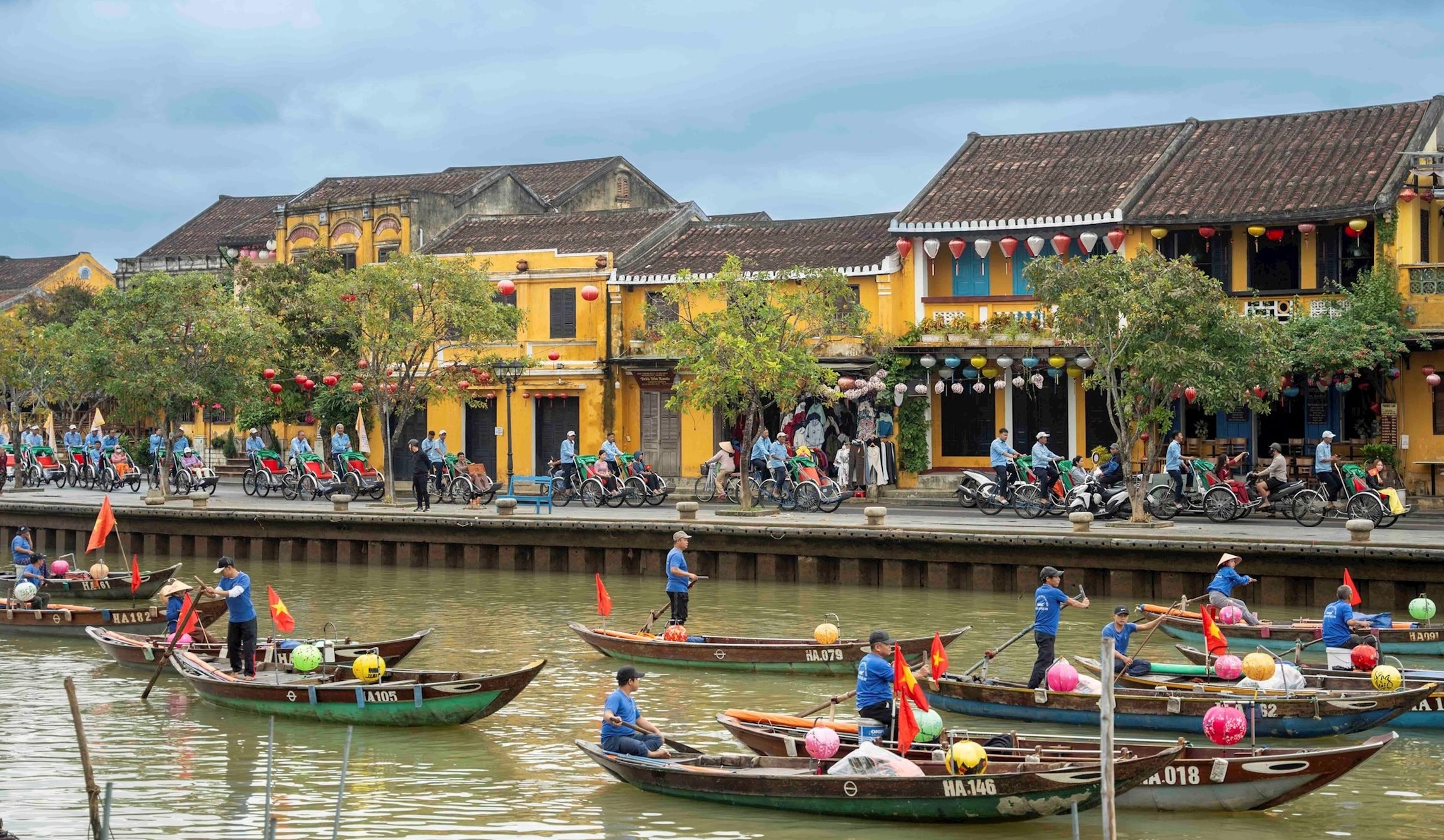
Living in Hoi An was never really part of my plan.
After spending a lot of time in Da Nang over the years, I had visited Hoi An more times than I can count. But for a long time, I saw it the same way most people do. Beautiful, yes. But also crowded, touristy, and more like a place you visit for a day or two before moving on.
But recently, that perspective started to change.
The more time I spent here, and the more people I met who actually chose to stay long term, the more I started to understand the appeal. There is something about Hoi An that is easy to miss if you only see the surface.
So instead of another typical travel guide, I want to show you what living in Hoi An actually feels like. Not just the lanterns and the old town, but the real day-to-day life. The costs, the neighborhoods, the food, the work setup, and the small details that only start to matter once you stay longer.
Because Hoi An is one of those places that looks simple at first… but is a bit more complex once you really experience it.
Why Living in Hoi An Appeals to Some People
Before getting into the practical side of living in Hoi An, it’s worth asking a simple question.
Why would anyone choose to stay here long term?
At first glance, it’s obvious. The town makes a very strong first impression. Lanterns everywhere, colorful buildings, old wooden houses, narrow streets. It genuinely feels like stepping into a movie.
There’s a reason the old town is a UNESCO World Heritage Site. Everything is preserved in a way that makes it feel almost frozen in time.

But what surprised me is that Hoi An is more than just its old town.
You’re never far from nature here. Within minutes, you can be at the beach, or cycling through rice fields that stretch in every direction. The contrast between busy tourist streets and quiet countryside is something you don’t find in many places.
There’s also a unique mix of cultures. You see it in the architecture, the food, and even the people. This goes back centuries, when Japanese and Chinese traders settled here and shaped the town into what it is today.
And then there’s the lifestyle.
Yoga studios, cafés, co-working spaces, small creative businesses. Over the years, a growing number of expats and digital nomads have built a slower, more intentional way of living here.
And that’s really the key.
Hoi An is not about excitement. It’s about pace.
Accommodation – Where to Stay in Hoi An
When people think about living in Hoi An, they usually imagine staying in the old town.
And yes, it looks amazing.
But living there is a completely different experience.
It gets extremely crowded, especially in the evenings. Sometimes it’s so packed that even walking a short distance takes time. It’s great to visit, but not ideal for daily life.
That’s why most foreigners stay outside of the center.

One of the most popular areas is An Bang / Tan Thanh, near the beach. It has a relaxed, international vibe. Cafés, bars, restaurants, and a more social atmosphere. It feels easy and comfortable, especially if you’re new.
Another area that stands out is Cam Chau.
This is where things start to feel more balanced. You’re between the old town and the beach, often surrounded by rice fields, and everything is just a short bike ride away. It’s quieter, more local, and much better suited for a routine.
Now, finding a place is not always as easy as you’d expect.
Platforms like Airbnb or Booking often show higher prices because they focus on short-term stays. In reality, most long-term rentals are found through Facebook groups or local contacts.
And demand is real.
Good places get taken quickly.
What usually works best is posting your own request. Landlords often reach out directly, and you get more options that way. The good part is that in most cases, you don’t pay agent fees.
In terms of price, living in Hoi An is slightly more expensive than Da Nang.
A comfortable long-term rental usually sits around:
– 10 to 12 million VND
– roughly $400 to $500 per month
One important thing to check is moisture and mold. Hoi An is prone to flooding, and ground-floor apartments can be affected, especially during the rainy season.
Food & Eating Out in Hoi An
Food is easily one of the highlights of living in Hoi An.
What I like here is the balance.
You have a strong mix of international restaurants and local Vietnamese spots, so you never really feel limited. Places like Morning Glory are popular for a reason. Good quality, consistent food, and a nice setting.
But honestly, some of the best meals are in small local places hidden away from the main streets.
Simple dishes like mi quang or com tam become part of your routine without even planning it.

Prices depend a lot on where you eat.
- Local meals: 50,000 to 70,000 VND (~$2–3)
- Mid-range / Western food: 100,000 to 150,000 VND
- Upscale dining: can go much higher
If you cook, local markets are usually the best option. Fresh ingredients every morning, low prices, and a much more local experience compared to supermarkets.
I actually enjoy going there. It’s one of those small things that makes daily life feel more real.
Coffee Shops & Co-working Spaces
If you work remotely, living in Hoi An is surprisingly easy.
In many ways, it reminds me of Chiang Mai. You don’t really search for places to work. They’re just everywhere.
There are a few solid co-working spaces in town.
Places like Hub Hoi An or Faifo Flow are popular for a reason. Reliable internet, good atmosphere, and a mix of people working on different things.
Prices are reasonable:
- Daily pass: ~350,000 VND
- Monthly: ~4 million VND
But to be honest, many people don’t even use co-working spaces.
The café scene is strong enough on its own.
Coffee shops here are taken seriously. There’s a lot of competition, so places focus heavily on design, comfort, and quality.
Typical prices:
- Vietnamese coffee (ca phe den, ca phe sua da): 25,000–35,000 VND
- Specialty coffee: 50,000–70,000 VND
You’ll see people working, reading, meeting others, or just relaxing. It becomes part of your daily rhythm without thinking too much about it.
Internet is usually good enough, although not always perfect. But for most remote work, it does the job.
Getting Around in Hoi An
Getting around Hoi An is simple, but very different from what you might be used to in bigger cities.
There is no real public transport inside the town. You won’t find buses running through neighborhoods or anything you’d rely on daily. Once you arrive, you quickly realize that movement here is much more personal and flexible.
Most people use Grab, which works reliably for both car and motorbike rides. It’s cheap, fast, and available almost everywhere. A short ride usually costs between 20,000 and 40,000 VND, making it an easy option if you don’t want to think too much about logistics.

That said, scooters are still the most common way to get around. Many long-term visitors rent one monthly and use it as their main transport. It gives you full freedom, especially if you plan to move between the town, the beach, and nearby areas regularly.
Personally, I don’t ride scooters, so I always go for a bicycle instead. And honestly, Hoi An might be one of the best places in Vietnam for that.
The town is small, relatively flat, and surprisingly bike-friendly. You can reach almost everything within 10 to 15 minutes. Riding through rice fields, quiet streets, and small local neighborhoods becomes part of your daily routine. It’s not just transport, it’s part of the experience.
Bike rentals are cheap. You can find daily rentals starting around 50,000 VND, and long-term deals are even better. For me, this is easily the most enjoyable way to move around Hoi An.
Lifestyle & Daily Life in Hoi An
Hoi An has a very specific rhythm, and you feel it almost immediately.
At first, it’s incredibly refreshing.
You walk through the old town, see the lanterns, the small shops, the riverside cafés. Everything feels calm, aesthetic, almost cinematic. It’s one of those places where even doing nothing feels enjoyable.
But daily life here is not just about the old town.
Once you stay a bit longer, you naturally move away from the busiest areas. You start spending more time in quieter neighborhoods, cafés near rice fields, or places closer to the beach.
That’s where Hoi An really shows its character.
Life becomes slower. More intentional. You don’t rush from one place to another. Instead, your day starts to revolve around simple routines. Morning coffee, a bike ride, a few hours of work, maybe a walk in the evening.
For some people, this is exactly what they are looking for.
For others, it can feel limiting over time.
There isn’t a strong “city energy” here. Outside of peak tourist hours, things get very quiet. Sometimes almost too quiet. If you are used to a more dynamic lifestyle, with constant movement and variety, you might start to feel that difference after a few weeks.
That said, there are still social options.
The old town has bars, live music, and places where people gather in the evenings. If you go a bit later, after the main tourist wave, the atmosphere becomes much more relaxed and enjoyable.
Then there is An Bang Beach, which plays a huge role in daily life here.
It’s calmer than the beaches in Da Nang, less crowded, and more suited for slow afternoons. Sitting by the water, reading, working, or just doing nothing becomes part of your routine without even planning it.
Overall, Hoi An doesn’t try to entertain you constantly. It slows you down.
And whether that feels peaceful or limiting depends entirely on your personality.
Cost of Living in Hoi An
Hoi An looks like it should be cheap.
And in some ways, it is.
But once you stay longer, you start noticing that the cost of living here is slightly higher than expected, especially compared to nearby cities like Da Nang.
Accommodation is the biggest factor.
Short-term rentals, especially near the old town or the beach, can feel overpriced. Even long-term options are limited because of the town’s size, which naturally pushes prices up.
A comfortable apartment usually falls somewhere between 10 to 12 million VND per month, sometimes more depending on location and quality.
Food is still affordable, but not as cheap as many people expect from Vietnam.
A local meal typically costs around 50,000 to 70,000 VND. In more central or tourist-heavy areas, it’s easy to pay 100,000 or even 150,000 VND without realizing it. Western food or more polished restaurants can go much higher.
Coffee follows a similar pattern.
Simple Vietnamese coffee stays cheap, around 25,000 to 35,000 VND. But most cafés people actually spend time in charge more, usually between 50,000 and 70,000 VND. You’re paying for the environment as much as the drink.
Going out is slightly more expensive as well.
A local beer like Huda Beer usually costs around 40,000 to 50,000 VND in bars. Cocktails often range between 150,000 and 200,000 VND, sometimes higher depending on the place.
Even small things add up.
Laundry services, for example, are usually around 30,000 VND per kilogram, slightly higher than in other cities.
Overall, Hoi An is not expensive in a global sense. But compared to other places in Vietnam, you are paying a small premium.
And that premium is for the atmosphere.
Downsides of Living in Hoi An
Hoi An is easy to like at first.
But living here long term is a different experience.
The first thing you notice over time is how small the town actually is.
At the beginning, everything feels charming. The same streets, the same cafés, the same routes. But after a few weeks, that familiarity can start to feel repetitive. The sense of discovery fades faster than in bigger cities.
Daily life also requires a bit more planning.
You have fewer options, less variety, and sometimes you need to go out of your way for simple things. It’s not a major problem, but it changes how your day feels.
The weather is another important factor.
Hoi An is hot and humid for most of the year. During the rainy season, flooding becomes a real consideration. Some areas, especially closer to the river, can be affected. Streets can fill with water, and ground-floor apartments are more exposed.
This also connects to another issue: moisture and mold.
Because of the humidity, some apartments develop mold quite quickly, especially if they are poorly ventilated or located on lower floors. It’s something you need to check carefully when choosing a place.
Socially, the environment can feel a bit limited as well.
You do meet people, but the circle is smaller, and it’s easy to fall into the same routines. If you need constant variety, new energy, or a fast-paced environment, this might not be the right place long term.
And then there is tourism.

Hoi An is not just touristy. It can be extremely crowded.
At peak hours, especially in the evening, the old town becomes packed. Walking through certain areas can feel slow and overwhelming. At times, even crossing a small bridge turns into a waiting game.
None of this makes Hoi An a bad place.
It just makes it very specific.
Final Thoughts: Is Hoi An Worth Living In?
Hoi An is one of those places that looks almost perfect at first.
And in many ways, it is.
It’s beautiful, unique, and full of character. The mix of history, culture, and everyday life creates an atmosphere that is hard to find anywhere else in Vietnam.
But living here is not the same as visiting.
Hoi An asks you to slow down. To accept a quieter rhythm. To be okay with less variety and fewer options.
For some people, that’s exactly what they are looking for.
For others, it becomes the reason they eventually move on.
Personally, I enjoy coming back here again and again.
But every time I stay a bit longer, I understand the place more clearly. Not just what makes it special, but also what makes it challenging.
And that’s really the key.
Hoi An is not for everyone.
But if it fits your lifestyle, it can be a very comfortable place to stay for a while.
Frequently Asked Questions About Living in Hoi An
Is Hoi An a good place to live long term?
Hoi An can be a great place to live if you prefer a slower, more relaxed lifestyle. It’s peaceful, beautiful, and easy to settle into. However, the small size and limited variety can feel restrictive over time, especially if you are used to bigger cities.
How much does it cost to live in Hoi An Vietnam?
The cost of living in Hoi An typically ranges between $700 and $1,200 per month, depending on your lifestyle. Rent is the biggest expense, usually between $400 and $500 for a comfortable apartment, while food, transport, and daily costs remain relatively affordable.
Is Hoi An more expensive than Da Nang?
Yes, in many cases Hoi An is slightly more expensive than Da Nang. This is mainly due to tourism and fewer rental options. Accommodation and dining, especially in central areas, tend to cost more.
Can you work remotely from Hoi An?
Yes, Hoi An is a popular destination for remote workers. There are several co-working spaces and many cafés with good Wi-Fi. While internet speeds can vary slightly, they are generally reliable enough for most online work.
Do you need a scooter in Hoi An?
Not necessarily. Many people use bicycles or rely on ride-hailing apps like Grab. Since the town is small and relatively flat, it’s easy to get around without driving a scooter.
What are the downsides of living in Hoi An?
The main downsides include the small size of the town, limited variety in daily life, heavy tourism in the old town, and weather conditions like heat, humidity, and occasional flooding during the rainy season.
Is Hoi An safe for expats?
Yes, Hoi An is generally considered very safe. Crime rates are low, and the town has a relaxed atmosphere. As with anywhere, basic precautions are always recommended.