
Can you actually live comfortably in Saigon on $800?
Before I moved to Ho Chi Minh City, I kept asking myself one question: can you actually build a comfortable life here as an expat on less than $800 a month? Not a short stay or a few weeks of travel, but real everyday life with rent, food, transport, coffee, and everything else that slowly becomes part of your routine.
In this article, I’m breaking down my real monthly expenses in Saigon, or Ho Chi Minh City as it’s officially called. And I don’t mean just rent and groceries. I’m talking about everything that actually makes up daily life here: transport, cafés, restaurants, internet, health insurance, visa costs, haircuts, going out, and all those small expenses people usually forget when they talk about “cost of living in Vietnam.”
This is not about luxury apartments, rooftop bars, or the Instagram version of expat life. It’s about something much more real. Everyday living in Vietnam’s biggest city, learning its rhythm, finding your favorite places, building a routine, and slowly turning a chaotic foreign city into something that starts to feel familiar.
By the end, you’ll have a clear idea of what an $800 monthly budget actually looks like in Ho Chi Minh City and whether this kind of lifestyle could realistically work for you.
Let’s get into it.
Why I Chose Ho Chi Minh City as an Expat
Before breaking down the budget, there’s always one obvious question: why Saigon?
And honestly, I asked myself the same thing before moving here.
Ho Chi Minh City is not an easy place to describe in a calm or romantic way. It’s huge, loud, crowded, humid, and constantly moving. Motorbikes are everywhere, and traffic at first looks completely chaotic, almost like there are no rules at all. There are no quiet mountain views or slow old-town mornings. Instead, you get a dense southern megacity filled with neon signs, glass towers, hidden alleys, street food, and nonstop energy.
So why do people actually choose to live here?
For me, the answer is momentum. Saigon pulls you in. It doesn’t sit quietly in the background of your life, you actively interact with it every day. When I first settled in, I started building small routines without even noticing. My regular coffee shop, my favorite cơm tấm place, a shortcut through a random alley, and a few streets that slowly became “my area” even though I never planned it.
At some point, what felt like chaos just turned into normal life.
With more than 10 million people, the city is massive, but once you understand its rhythm, it becomes surprisingly livable. Everything stays open late, food is everywhere, and you can step outside at almost any hour and find something to eat within minutes. Coffee here is not just a drink, it’s part of daily culture. People meet in cafés, work in cafés, and socialize in cafés. It becomes part of the social structure of the city.
What also surprised me is how diverse the expat scene is. You meet remote workers, entrepreneurs, teachers, creatives, and long-term travelers who originally came for a short stay but ended up staying for years. Some people even keep doing the three-month visa cycle repeatedly and never really leave.
Another thing I genuinely love about Saigon is the underground music scene. Small indie shows, jazz nights, acoustic sessions in hidden bars, places you only find if someone tells you or you stumble into them by chance. After a while, you start talking to musicians, hearing their stories, and discovering a side of the city most visitors never see.
The atmosphere is also very different from northern Vietnam. There are no cold winters or gray seasons. Instead, life is shaped by tropical heat, sudden rain, and warm nights. Traditional markets sit next to modern malls, and street vendors work in the shadow of skyscrapers. The city never feels finished, only constantly evolving.
Saigon is not calm or polished, and it is definitely not for everyone. But it is alive, social, affordable, and surprisingly easy to call home once you adapt to it.
My Apartment in Ho Chi Minh City: Rent Breakdown

Let’s start with the biggest monthly expense: rent.
I’m not talking about luxury condos with infinity pools, rooftop lounges, gyms, or security guards greeting you at the entrance. Saigon has plenty of those, especially in areas like Thảo Điền or District 7, but that’s a completely different lifestyle and budget.
I’m talking about something much more realistic: a simple studio or small one-bedroom apartment that is furnished, clean, functional, has air conditioning, stable Wi-Fi, and is comfortable enough for everyday living.
When most foreigners first arrive, they usually start with a few familiar areas. District 1 is the obvious choice. It’s central, full of cafés, restaurants, coworking spaces, and nightlife. Everything is convenient, but rent is higher and living in the busiest part of the city every day can get exhausting.
Then there’s Thảo Điền, probably the most famous expat neighborhood in the city. It’s full of international cafés, gyms, imported groceries, and modern apartments. Life there feels easy and comfortable, which is exactly why many newcomers choose it. But that comfort comes with higher rent and a more isolated expat bubble.
After some time, many people move elsewhere. In my case, I ended up in District 4. It’s still close to the center but feels much more local. Less expat-heavy, more everyday Saigon. On my street, I barely see foreigners, just local families, small businesses, street food stalls, and very strong Vietnamese coffee.
I found my apartment through a Facebook group called “Apartment Hunting for Expats,” which I honestly recommend starting with. Expats move often, listings change quickly, and landlords are usually looking for tenants fast, so there are plenty of direct deals without agents.
I pay 8 million VND per month, and I’m genuinely happy with it. It’s a small but bright apartment with a functional kitchen, air conditioning, a tiny balcony, a good shower, and plenty of natural light. It has everything I actually need and is within walking distance of shops, cafés, and transport.
Realistically, a furnished studio or small one-bedroom apartment like this usually costs between 7 and 10 million VND per month depending on location and building. At that price, you get a private apartment with basic furniture, AC, and internet. Nothing luxury, but more than enough for a comfortable life.
Utilities and Internet in Saigon
Utilities in Ho Chi Minh City are generally affordable for an expat, but one thing really matters: air conditioning.
Because the city is hot all year, AC is something you use daily.
My electricity bill averages around 800,000 VND per month. The main reason is AC usage and electricity cost, which is roughly 4,000 VND per kilowatt.
Internet is simple. In many apartments it’s already included, but if not, a solid fiber plan from providers like Viettel costs around 250,000 VND per month, which is about $10. It’s more than enough for remote work, streaming, and video calls.
Water is extremely cheap. I’ve never paid more than 200,000 VND per month.
So overall, utilities usually come to around 1 million VND per month, but that number depends heavily on how much you use air conditioning.
One important tip: always check how utilities are billed before signing a lease, especially electricity rates and internet inclusion.
I also use a weekly cleaning service that costs around 400,000 VND per month. It saves time, keeps the apartment comfortable, and supports local workers.
Food in Ho Chi Minh City: Eating Out, Groceries, and Real Daily Costs

In Ho Chi Minh City, cooking at home is not really the default lifestyle for an expat. At least not for most people I’ve met here.
A lot of apartments, especially smaller studios, come with very basic kitchens. Enough to survive, not really enough to enjoy cooking every day. And once you see the food prices outside, you quickly stop thinking about cooking anyway.
Honestly, even though I had a kitchen, I haven’t cooked a single meal since moving here. I just don’t enjoy cooking for myself, and in Saigon that actually works out fine.
Food is everywhere. Street stalls, small family restaurants, and casual local spots are on almost every corner. And in many cases, eating out is actually cheaper than buying ingredients and cooking the same meal at home. That still surprises me sometimes, but it’s true.
For groceries, I keep things very simple. Mostly fruit, nuts, coffee for slow mornings, some yogurt, snacks, and a few basics for evenings when I don’t feel like going out. If you stick to local shops like Circle K, FamilyMart, 7-Eleven, and neighborhood markets, groceries stay very cheap.
I usually spend around 1 to 1.5 million VND per month, which is roughly $40 to $60.
But the real highlight is eating out.
I’m talking about small, family-run places where they literally close once they sell out for the day. Sometimes it’s still morning and they’re already done. That kind of thing is normal here.
I’ve eaten at so many local spots in my area that I’ve basically lost count. And I’ve had almost no bad experiences. The food is fresh, portions are big, and people are genuinely friendly, even when I’m clearly struggling with Vietnamese.
A typical meal like cơm tấm, phở bò, or a simple noodle soup costs around 30,000 to 60,000 VND, which is roughly $1 to $2. It’s fast, filling, and honestly very easy to make it part of daily life.
Even if you eat every meal outside, your total food budget usually stays around 3 to 4 million VND per month.
A lot of people worry about eating street food every day, but in Saigon that concern fades quickly. Many vendors have been doing the same dishes for years, sometimes decades. And some of the best meals I’ve had here came from tiny plastic-stool places that look completely unremarkable from the outside.
Of course, sometimes you want something different. Sushi, burgers, brunch, pizza, or a nicer Vietnamese restaurant. The city has all of that too.
A casual sit-down meal usually costs around 100,000 to 200,000 VND, and if you do that regularly, you might add another 1 to 2 million VND per month to your budget.
Overall, food here is very flexible. You can live extremely cheap, mix in Western food, or switch styles whenever you feel like it.
Coffee Culture in Saigon and Why Cafés Replace Coworking Spaces
At this point, I basically admit it. I’m fully addicted to coffee in Vietnam.
And I’ve even started treating it as its own budget category.
One of the most shocking things here is how cheap coffee is. A basic cà phê đen can cost as little as 15,000 VND, sometimes even 12,000. And it’s not weak coffee either. It’s strong, dark robusta that hits immediately.
But coffee in Saigon is not just about caffeine. It’s part of daily life.
People don’t just grab coffee and leave. They sit for hours, work, talk, take calls, or just watch traffic pass by with iced coffee in hand. And after a while, you naturally start doing the same.
Cafés are everywhere. And they all feel different.
You get tiny street cafés with plastic chairs on the sidewalk, hidden spots inside old buildings, and modern air-conditioned cafés full of laptops and focused people.
There is always a place nearby for whatever you need. Work, social time, escape from heat, or just a quiet break.
Prices are still very reasonable:
- Traditional coffee: 20,000 to 30,000 VND
- Coconut or specialty drinks: 40,000 to 60,000 VND
Even in nicer cafés, you rarely go over $3.
With one or two coffees per day, I usually spend around 1.6 million VND per month.
What’s interesting is that most expats don’t really use coworking spaces. Cafés already do that job.
You just pick a place, order a drink, open your laptop, and stay for a couple of hours. Nobody rushes you, and it feels completely normal.
Saigon has a very strong remote work culture because of that. Fast internet, cheap drinks, and endless laptop-friendly spaces.
And since Vietnam is one of the biggest coffee producers in the world, the culture here runs deep. Strong beans, slow brewing methods, and a daily rhythm built around coffee.
What still surprises me is how people can drink strong coffee late at night and still sleep normally. That part I still don’t fully understand.
What Nobody Tells You About Living Abroad: Banking, Mail & Taxes
One thing people rarely talk about when living abroad long term is everything happening behind the scenes.
At first, it all feels simple and exciting. You are focused on flights, apartments, food, cafés, and exploring a new country. Everything feels flexible and temporary in a good way.
But after a while, reality slowly shifts. Practical questions start to appear. What address do you use for banking? How do you handle taxes back home? What about mail, legal residency, or just keeping your financial life organized while constantly moving between countries?
This is the part of living abroad that almost nobody shows online, but it is also the part that eventually matters the most.
The truth is, once you leave your home country, you do not just “travel”. You start managing two systems at the same time. Your life abroad, and your legal and financial setup back home. And if that part is messy, everything else eventually feels unstable.
That is why I started looking more seriously into structured solutions for this.
One service I came across is SavvyNomad. They focus on helping Americans living abroad set up things like Florida residency, mail handling, and a more organized tax and administrative structure for long term international living.
They also provide a very practical free checklist that breaks down the basics of what you should have in place when you start building a life abroad. If you are in the early stage, this is a good starting point.
And if you are already at the stage where you want a more complete setup, you can also explore their full service, see pricing, and check what works for your situation here. You can also apply the code “NOMADNEST” to get $50 off.
What I realized is that this part of the lifestyle is not exciting, but it is important. Once your backend setup is clear, everything else becomes easier. You stop worrying about paperwork, missed mail, or random administrative problems, and you can actually focus on the reason you moved abroad in the first place.
Living abroad is not only about travel and freedom. It is also about structure. And the better your structure is, the more freedom you actually have.
Transportation in Ho Chi Minh City: Grab, Scooters, and Chaos That Works

Getting around Ho Chi Minh City looks chaotic at first. And honestly, it kind of is.
But at the same time, it works.
You have buses, ride-hailing apps, scooters, and even a new metro line that people are quite proud of.
Public buses are the cheapest option. A ride costs around 6,000 to 10,000 VND, which is basically nothing. The buses are fine, sometimes even modern and air-conditioned, but they can be slow and crowded.
Then there is the metro. Yes, Saigon finally has one. Only one line so far, but it’s a good start.
Most people still rely on ride-hailing apps like Grab and Be. It’s fast, simple, and cheap.
A short ride usually costs around 25,000 to 50,000 VND, roughly $1 to $2 depending on distance and traffic.
Scooters are everywhere. Renting one costs around 2.5 million VND per month, and many long-term expats eventually buy one instead.
I personally don’t use a scooter. I rely mostly on Grab bikes, occasional buses, and walking when it makes sense.
But walking in Saigon depends heavily on the weather. Sometimes it’s nice, sometimes it feels like a workout you didn’t sign up for.
Overall, my transport costs stay under 1 million VND per month.
Entertainment and Lifestyle in Saigon

One thing I really like about Ho Chi Minh City as an expat is that you don’t need much money to have a full life here.
There is always something happening. Live music, rooftop bars, cafés, meetups, language exchanges, or just random events you stumble into.
Even walking around the city feels like an activity. You always find something new.
Gyms are affordable, usually around 500,000 VND per month, but I mostly stopped going and replaced it with outdoor workouts, jogging, and playing local games like Vietnamese foot badminton.
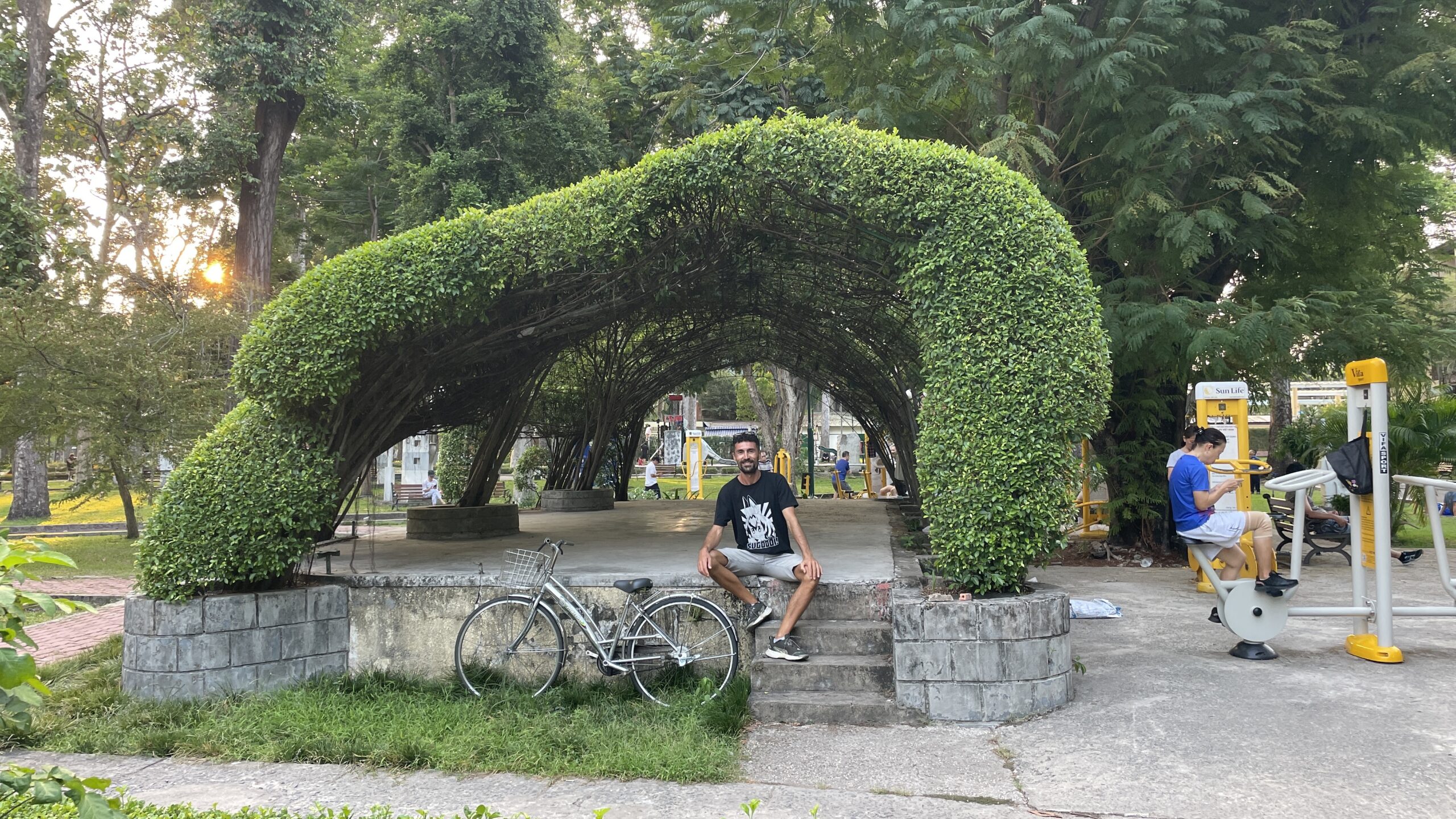
Parks are one of my favorite parts of the city. Early mornings are full of energy. People dancing, exercising, playing sports, or just doing group workouts together. It’s actually very motivating to watch.
There’s also a strong cultural layer here. Temples, old buildings, quiet spaces where you can slow down, light incense, and just take a break from the city pace.
Social life is very easy. You don’t need much planning. You just go out.
Bars, craft beer places, rooftop spots, open mic nights, and community events are everywhere. And a lot of them are either cheap or free to enter.
Nightlife is also more than just drinking. There are live bands, indie shows, jazz nights, and small underground music spots that you only discover after spending time here.
Meeting people is also surprisingly easy. Expat groups, sports communities, hobby circles, business meetups. Once you show up a few times, things naturally open up.
For me, entertainment usually costs around 1 million VND per month.
Can You Live in Ho Chi Minh City for Under $800? My Real Monthly Breakdown
So now I want to bring everything together and show the full picture of what life in Saigon actually costs me.
These numbers are not theory. They are my real monthly expenses living here, and they also reflect what I see many expats spending for a normal, comfortable expat lifestyle in Ho Chi Minh City. Not luxury. Not survival mode. Just a balanced, realistic way of living in a big Asian city that moves fast every single day.
When I add everything up, my total monthly cost comes to just under 21 million VND, which is roughly $800 USD.

That includes everything. Rent, food, transport, coffee, insurance, internet, going out, and all the small things that quietly add up over time.
Of course, Saigon is flexible. You can go much cheaper if you fully live local, small room, mostly street food, almost no extras. Or you can easily double or even triple this if you go for modern condos, imported groceries, rooftop bars, and a more Western lifestyle.
The city really supports both extremes.
For me, this middle ground feels perfect. Comfortable, simple, and still very affordable for what I get in return. And just to put it into perspective, the average local salary here is often around half of this budget. So what feels “budget friendly” for an expat is actually quite a solid living standard in Ho Chi Minh City.
Here’s the full breakdown of my monthly costs:
| Item | Cost (VND) | Approx. USD |
| Rent (studio apartment) | 8,000,000 | $305 |
| Utilities (water + electricity) | 1,000,000 | $38 |
| Cleaning service | 400,000 | $15 |
| Groceries | 1,200,000 | $46 |
| Local restaurants | 3,900,000 | $133 |
| Western restaurants | 1,800,000 | $57 |
| Coffee | 1,600,000 | $61 |
| Transport | 1,000,000 | $38 |
| Health insurance | 1,600,000 | $61 |
| Going out / drinks | 1,000,000 | $38 |
| Visa costs | 220,000 | $9 |
| Sports / activities | 320,000 | $12 |
| Haircut | 100,000 | $4 |
| SIM card | 125,000 | $5 |
| Toiletries | 300,000 | $12 |
| Total | 20,565,000 VND | ≈ $791 |
This is what a real, stable month looks like for me here.
Not cheap backpacking. Not luxury expat life. Just a normal rhythm in Ho Chi Minh City.
If you’re planning something similar, your numbers might shift a bit, but the structure will stay very similar.
Visa Options for Vietnam (What Actually Works in Real Life)
Visas in Vietnam are probably one of the most confusing parts of living here.
Rules change often, and there is no real digital nomad visa. So most expats, including me, rely on standard tourist options and short-term stays.
The most common option is the 90-day e-visa. You apply online, pay around $25, and usually get it approved in a few days. It’s simple and straightforward, but it’s still not long-term.
That means after 90 days, you usually have to leave the country and come back with a new visa. This is what people call a “visa run”, and it often means short trips to places like Thailand, Cambodia, or Malaysia. For many expats, this just becomes part of the lifestyle.
If you’re working for a company or running a registered business, you can apply for a work permit and temporary residence card. That’s the more stable option, but it comes with more paperwork and requirements.
And honestly, that’s basically the system here.
Nothing overly complicated, just something you get used to over time if you stay long enough.
Downsides of Living in Ho Chi Minh City (The Real Dealbreakers)
Before anyone decides to move to Ho Chi Minh City to start an expat life, there are a few things you really need to understand. These are the parts you don’t usually see in travel videos.
First, the noise.
Saigon is not quiet. At all. Motorbikes never stop, horns are constant, street vendors are everywhere, and construction seems to always be happening somewhere nearby.
At first, it feels like chaos. But after a while, your brain just adapts to it. Still, if you need silence and calm every day, this city will challenge you.
Then there is the heat and humidity.
There is no real cool season here. It’s warm almost all year, and the humidity hits you the moment you step outside. Air conditioning stops being a comfort and becomes part of how you plan your entire day.
Traffic is another thing you have to get used to.
It looks completely chaotic at first. And in some ways, it is. But somehow it works. Thousands of scooters moving like they all understand an invisible system. After a while, you stop overthinking it and just move with the flow.

And finally, the pace of life.
Saigon moves fast. People work fast, talk fast, live fast. Cafés are always full, streets are always active, and everything feels like it is in motion.
Some people love that energy immediately. Others feel drained by it over time.
So yes, Ho Chi Minh City is loud, hot, and intense. It is not soft, not slow, and not peaceful.
But if you match its energy, it can feel incredibly alive.
And for me, that intensity is exactly what makes it interesting. I genuinely love it here. The city never feels static, and that is probably why so many people arrive for a short stay and end up staying much longer than planned.