
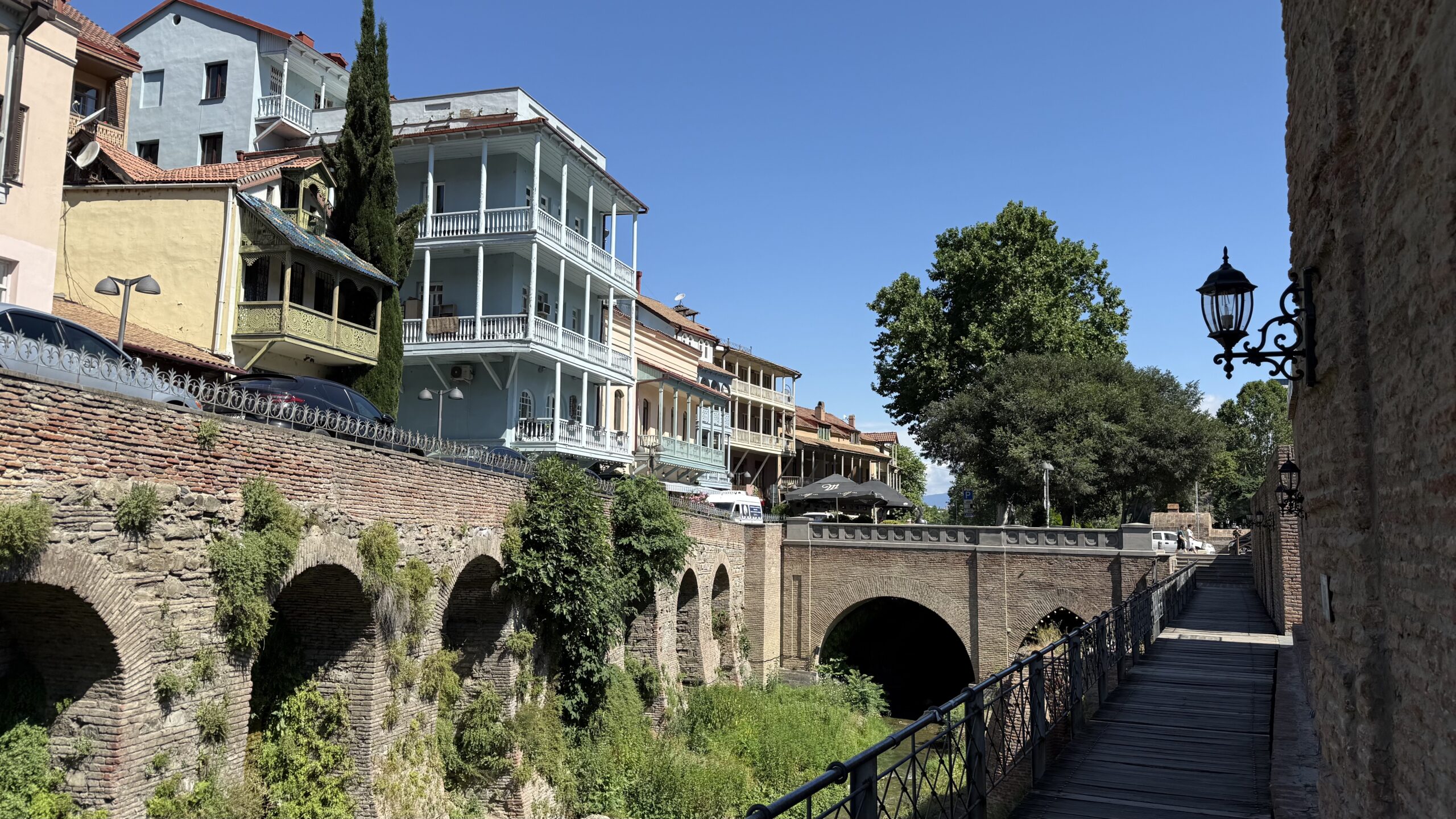
Over the past few years, I’ve spent quite a lot of time living in Tbilisi, Georgia, and one question I get asked all the time is:
Can you actually live comfortably in Tbilisi on around $900 a month?
The short answer is yes, but the more interesting question is what kind of lifestyle that budget gives you.
When many people think about moving to Europe, they imagine expensive rent, high restaurant prices, and a cost of living that quickly becomes overwhelming. But Tbilisi is different. Georgia’s capital offers something that is becoming increasingly rare: a good quality of life without the huge price tag you find in many European cities.
For me, around $900 per month covers almost everything I need for a comfortable expat lifestyle in Tbilisi. That includes my accommodation, utilities, fast internet, groceries, eating out, health insurance, and transportation.
It also gives me enough freedom to enjoy the things that make life here enjoyable. I can meet friends for specialty coffee, enjoy Georgian wine, play tennis a few times a month, explore different restaurants, and experience the city without constantly checking my bank account.
Of course, there is no single “correct” budget for living in Tbilisi. Everyone’s lifestyle is different. Some expats choose a more luxurious lifestyle and easily spend over $2,000 per month, especially if they rent premium apartments in areas like Vake or Vera, eat out daily, and travel frequently.
At the same time, I’ve met people who live comfortably in Tbilisi for much less by choosing cheaper accommodation, cooking more often, and living more like locals.
In this guide, I want to share my personal experience and give you a realistic look at the cost of living in Tbilisi as an expat.
I’ll break down my actual monthly expenses, including rent, food, transportation, entertainment, and everyday costs. I’ll also talk about the best neighborhoods to live in, what daily life feels like, the things I love about the city, and some disadvantages you should know before making the move.
Because while Tbilisi has a lot going for it, no city is perfect. Understanding both the advantages and the challenges is important before deciding whether Georgia is the right place for you.
So, let’s take a closer look at what expat life in Tbilisi really costs.
Why I Keep Coming Back to Tbilisi?
For me, the answer is simple. Tbilisi is one of those cities that feels comfortable almost immediately. It has a relaxed atmosphere without ever feeling boring, and it’s lively without the stress and chaos you often find in larger European capitals. It’s the kind of place where you quickly settle into a routine and start feeling at home.

One of the first things I noticed was how walkable the city is. I love exploring on foot, and Tbilisi rewards you for doing exactly that. It’s easy to spend hours wandering through narrow cobblestone streets, crossing the river, discovering hidden courtyards, stumbling across tiny bakeries, and finding cozy cafés tucked inside historic buildings. Every neighborhood has its own personality, and even after several visits, I still find places I hadn’t seen before.
The architecture is another reason I enjoy spending time here. Traditional wooden balconies stand next to colorful townhouses, Soviet-era apartment blocks, centuries-old churches, and modern glass buildings. On paper, it shouldn’t work, but somehow it does. That mix gives Tbilisi a unique character that I haven’t experienced anywhere else.
As someone who works remotely, I also appreciate the café culture. There are hundreds of independent coffee shops across the city, many with fast Wi-Fi and a relaxed atmosphere that’s perfect for getting some work done.
Nobody rushes you out the door after finishing your coffee, and it’s completely normal to spend a few hours working from your laptop.
Another thing I love is how easy it is to escape into nature. Within minutes, you can take the cable car to Narikala Fortress, hike around Mtatsminda Park, walk through Vake Park. Or simply enjoy the paths along the Kura River. And if you have a free weekend, the Caucasus Mountains, Georgia’s famous wine region of Kakheti, and countless historic towns are all within easy reach.
One thing that genuinely surprised me when I first arrived was how safe Tbilisi feels. I’ve walked home late at night many times without feeling uncomfortable. Of course, common sense always applies wherever you are in the world, but overall I’ve found the city to be one of the safest capitals I’ve visited.
Tbilisi has also become a popular destination for digital nomads and expats. It’s easy to meet entrepreneurs, freelancers, remote workers and retirees. Some travelers who originally planned to stay for just a few months but ended up extending their stay. Georgia’s generous visa policy has played a huge role in creating this international community. I’ll cover that in more detail later in this guide.
And then there’s the food. Honestly, Georgian cuisine deserves every bit of its reputation. Freshly baked khachapuri, juicy khinkali, flavorful ojakhuri, and warm local bread quickly became regular parts of my diet. Eating out is affordable enough that it naturally becomes part of everyday life rather than an occasional treat.
The same goes for wine. Georgia is widely considered one of the oldest wine-producing countries in the world. Locals are incredibly proud of that history. Don’t be surprised if you find yourself joining a friendly debate about whether Georgia or neighboring Armenia has the oldest wine culture.
For me, that’s what makes Tbilisi so appealing. It combines beautiful architecture, a relaxed lifestyle, incredible food, easy access to nature. Also a welcoming international community, all while remaining one of the most affordable capitals I’ve lived in. It’s a combination that’s surprisingly hard to find elsewhere.
Accommodation in Tbilisi; Where to Live and How Much It Costs
Accommodation will probably be your biggest monthly expense in Tbilisi, but compared to most European capitals, it’s still surprisingly affordable. The amount you pay depends mostly on the neighborhood you choose and the type of place you’re looking for.

If you want to live in one of the city’s most popular expat areas, Vake and Vera are usually at the top of the list. Both neighborhoods are full of excellent cafés, restaurants, parks, gyms, and coworking spaces. They’re clean, lively, and have a great atmosphere, which explains why they’re so popular. The downside is the price. A modern studio or one-bedroom apartment here typically starts at around 1,600 lari ($590) per month, and larger apartments can cost considerably more.
If you’re trying to keep your monthly budget under control, I think Saburtalo offers some of the best value in the city. It’s well connected by the metro, has plenty of supermarkets, cafés, shopping malls, and everything you need for everyday life. Isani is another neighborhood worth considering if your priority is affordability while still having easy access to the rest of the city.
Personally, I decided to keep things simple and rented a private room in Avlabari. It’s not a luxury apartment, but it has everything I need. My room is bright, clean, has a nice balcony, plenty of natural light, a fully equipped shared kitchen, good air conditioning, and a surprisingly great shower. For 800 lari per month, I honestly think it’s one of the best value places I’ve rented while traveling.
One trick I’ve used in several countries also worked really well in Tbilisi. I usually book my first few nights through Airbnb or Booking.com so I have somewhere comfortable to stay when I arrive. Then, if I like the apartment, I simply ask the owner whether they’d be willing to rent it to me directly for a longer stay. Since they don’t have to pay platform commissions, many landlords are happy to offer a lower monthly price, and I’ve managed to save quite a bit of money this way.
If you’re planning to stay for more than a few weeks, I definitely recommend searching locally instead of relying only on international booking platforms. Facebook groups, local real estate agents, and websites like SS.ge usually have a much larger selection and significantly better prices. Many apartments never even appear on Airbnb, so your options increase dramatically once you’re actually in the city.
Another thing I really appreciate about renting in Tbilisi is that most apartments come fully furnished. It’s common to find places that already include a washing machine, kitchen appliances, internet, furniture, dishes, and everything else you need to move in from day one. That makes relocating incredibly easy, especially if you’re traveling with just a suitcase.
For me, living in a walkable neighborhood close to cafés, supermarkets, and public transport is much more important than being right in the tourist center. While the Old Town is beautiful, it can also be crowded, noisy, and much busier in the evenings. I prefer being just outside the main tourist areas, where daily life feels a bit more relaxed while still being only a short walk or metro ride away.
Utilities and Internet in Tbilisi
Utilities are one of those expenses that are easy to overlook, but fortunately, they’re not something I’ve had to worry about much in Tbilisi.
Personally, I’ve never paid more than 120 lari per month for utilities. I usually spend time here during the spring and autumn, so I rarely need heating or air conditioning. My apartment also doesn’t have gas, and Wi-Fi is already included in the rent, which keeps my monthly costs nice and low.
If you’re planning to stay during the winter, expect your bills to be a bit higher. Most apartments rely on gas heating or electric heaters, and combined utility costs can easily reach 300 lari per month, depending on the size of your apartment and how warm you like to keep it. The same applies during the hottest summer months if you’re running the air conditioning every day.
Water is extremely affordable and usually costs just a few dollars each month, so it’s rarely something you’ll even notice on your budget.
Internet is another area where Tbilisi really impressed me. Fast, reliable Wi-Fi is available almost everywhere, and download speeds of 100 to 300 Mbps are common. I’ve never had any issues working remotely, uploading videos, or joining video calls. If internet isn’t already included in your rent, a home connection usually costs around 30 lari per month, which is excellent value.
One thing you won’t see very often is self-service laundromats. At first, I thought that might be inconvenient, but it quickly turned out not to matter because almost every apartment comes with its own washing machine.
Overall, utility costs in Tbilisi are very reasonable for most of the year. Your monthly bill mainly depends on how much heating or air conditioning you use, but even then, it’s still lower than what I’ve paid in many other European cities.
Food, Coffee & Wine in Tbilisi
Food is one of the biggest reasons I keep coming back to Georgia. The cuisine is simple, hearty, and full of flavor, and it’s honestly difficult to have a bad meal. Whether you’re grabbing fresh bread from a neighborhood bakery, eating street food, or sitting down at a modern restaurant, the quality is consistently high. Even better, the price difference between casual spots and nicer restaurants isn’t nearly as dramatic as it is in many other countries.
Some of my favorite Georgian dishes are khachapuri, khinkali, and ojakhuri, and you’ll find them almost everywhere. A typical meal at a local restaurant usually costs around 20 lari, depending on what you order, and the portions are often generous enough to share. If it’s your first time trying khinkali, don’t underestimate them. One dumpling starts at around 1.5 lari, but they’re much more filling than they look. I still don’t think I could eat ten in one sitting.

One thing I really appreciate about Tbilisi is that many of the best restaurants don’t look particularly fancy. They’re popular because the food is consistently good, not because they’re designed for Instagram. After a few visits, you’ll probably start seeing familiar faces behind the counter. A simple “Gamarjoba”, which means hello in Georgian, is always appreciated and usually comes back with a smile.
If you’re in the mood for something different, Tbilisi has no shortage of international options. You’ll find excellent Japanese, Middle Eastern, Italian, burger, vegan, and healthy restaurants throughout the city. They’re naturally a bit more expensive than local places, but still very affordable by European standards. Personally, I spend around 360 lari per month eating out, and for me, it’s one of the easiest expenses to justify.
For groceries, I usually shop at Carrefour, Spar, local markets, and small fruit and vegetable stalls. Fresh local produce, dairy products, and bread are very affordable, while imported products tend to cost noticeably more. On average, I spend around 660 lari per month on groceries, which gives me a good balance between cooking at home and eating out.
Coffee is another part of my daily routine. Tbilisi has an excellent specialty coffee scene, especially in neighborhoods like Vera and Vake, where independent cafés seem to be on almost every corner. A cappuccino usually costs between 6 and 10 lari, while an oat milk latte at a specialty café can reach around 15 lari. Most cafés also have reliable Wi-Fi, so it’s common to see remote workers spending a few hours with their laptops.

And then there’s the wine. Georgia is widely considered one of the oldest wine-producing countries in the world, with a winemaking tradition stretching back more than 8,000 years. Once I started trying local varieties like Saperavi, Kindzmarauli, and Kisi, I completely understood why Georgians are so proud of their wine culture. The prices make it even better. A good bottle of Georgian wine starts at around 11 lari in supermarkets, while a glass at a wine bar usually costs between 5 and 10 lari.
Altogether, including groceries, restaurants, coffee, and wine, I spend around 1,200 lari per month. Considering the quality of the food and the incredible café culture, I think it’s one of the best parts of living in Tbilisi and easily one of the best values you’ll find anywhere in Europe or the Caucasus.
Getting Around Tbilisi
Getting around Tbilisi is surprisingly easy, and it’s one of the reasons my monthly budget stays so low. The city is fairly compact, so even without a car, it’s simple to get almost anywhere you need.
Public transport is reliable, affordable, and easy to figure out. The metro only has two lines, so it doesn’t cover every neighborhood, but that’s where the bus network comes in. Together, they make it easy to reach most parts of the city. If you’re staying for more than a few days, I recommend getting a MetroMoney card. It costs just 1 lari for unlimited transfers between buses and the metro within 90 minutes, making it one of the cheapest public transport systems I’ve used. You can also pay with a Visa or Mastercard, or simply use Apple Pay, although the fare is slightly higher.
For trips where I don’t feel like walking, I usually open Bolt or Yandex Go. Taxis in Tbilisi are incredibly affordable, and most rides across the city cost somewhere between 5 and 8 lari. Even longer journeys are inexpensive compared to most European cities.
That said, I probably spend more time walking than using any other form of transport. Tbilisi is definitely a hilly city, but that’s part of its charm. Some of my favorite cafés, viewpoints, colorful streets, and hidden courtyards were places I discovered simply by wandering around without a plan.

You’ll also find shared electric scooters and bikes in some parts of the city, although not as many as in other European capitals. They’re convenient for shorter distances, but most locals and expats still rely on walking, public transport, or taxis.
One ride I always recommend, even if you’re only visiting for a few days, is the cable car to Narikala Fortress. For just 2.5 lari, you get one of the best panoramic views over Tbilisi, and it’s easily one of the best-value attractions in the city.
Overall, I rarely spend more than 70 lari per month on transportation. Between the affordable public transport, cheap taxis, and the fact that I genuinely enjoy walking, getting around Tbilisi is both easy and budget-friendly.
Entertainment and Everyday Life in Tbilisi
One of my favorite things about living in Tbilisi is that you rarely need to plan your free time. The city has a relaxed rhythm where good days seem to happen naturally. You go out for a coffee, end up chatting with someone, keep walking through the streets, stop for dinner or a glass of wine, and before you know it, you’ve spent the whole evening out.

The café and bar scene plays a big part in that. Whether you’re looking for a quiet wine bar, a lively local pub, a rooftop with city views, or a cozy specialty coffee shop, there’s always somewhere worth checking out. It’s one of those cities where it’s easy to become a regular, and after a while you’ll start recognizing both the staff and other familiar faces.
Tbilisi also has a surprisingly active international community. There are regular language exchanges, networking events, coworking meetups, hiking groups, and fitness communities, so meeting new people is much easier than I expected.
When the weather is nice, I enjoy playing tennis at the Vake Tennis Courts, where an hour usually costs between 25 and 40 lari, depending on the time of day. If you plan to play, it’s worth booking your court in advance because they fill up quickly.
For anyone who enjoys staying active, there are plenty of gyms across the city, with memberships starting at around $50 per month. That said, I often skip the gym altogether. Tbilisi’s parks, hills, and steep streets provide more than enough exercise, and a simple evening walk can easily turn into a decent workout.
For me, that’s what makes life in Tbilisi so enjoyable. After a few weeks, you naturally develop your own routines, find your favorite cafés and restaurants, recognize familiar faces, and slowly start feeling less like a visitor and more like a local. That’s something I haven’t experienced in every city I’ve lived in, and it’s one of the main reasons I keep coming back.
Other Everyday Expenses in Tbilisi
When people calculate the cost of living in Tbilisi, they usually focus on the big expenses like rent, food, and transportation. But the smaller everyday costs also play an important role in your monthly budget.
These are the things that don’t feel expensive individually, but they slowly add up over the course of a month.
Mobile Data and SIM Cards
One thing I really like about Georgia is how easy and affordable mobile data is. Getting a SIM card is simple, and you can buy one at the airport or from one of the many mobile shops around Tbilisi within a few minutes.
The most popular providers are Magti, Silknet, and Cellfie Mobile. A typical prepaid plan with enough data for everyday use costs around 20 lari per month, depending on how much data you need.
Coverage in Tbilisi is generally very good, especially in the central areas. For everyday things like Google Maps, messaging, social media, and even occasional remote work outside your apartment, the connection is more than enough.
Haircuts and Personal Care
Haircuts are another expense where Tbilisi is much cheaper compared to most Western countries.
Local barbers are everywhere, and a basic haircut usually costs around 20 lari. The service is usually quick, simple, and exactly what you need.
Of course, if you prefer more premium salons or English-speaking barbers in popular expat areas, you’ll pay more. However, even those options are still usually much cheaper than what you would expect in many European cities.
Toiletries and Household Items
Everyday essentials like shampoo, toothpaste, soap, and cleaning products are also reasonably priced.
I usually spend around 50 lari per month on these items, mostly buying them from supermarkets like Carrefour and Spar. These stores are convenient because you can find almost everything you need in one place.
Overall, these smaller expenses don’t have a major impact on my budget, which is another reason why living in Tbilisi feels financially comfortable.
My Total Monthly Cost of Living in Tbilisi
Now let’s put everything together.
The numbers in this guide are based on my actual monthly spending while living in Tbilisi, real prices I’ve experienced myself, and what I’ve consistently seen other expats paying.
This is not a luxury lifestyle, but it’s also not extreme budget living. It’s simply a comfortable everyday lifestyle where I can enjoy the city without constantly worrying about every expense.
My total monthly cost comes to just under 2,400 lari, which is roughly $900 per month.
This includes everything:
- Rent and utilities
- Groceries
- Eating out
- Coffee and wine
- Transportation
- Mobile data
- Haircuts
- Entertainment
- Occasional activities like tennis & cinema
- Other small daily expenses
For me, this budget creates a really comfortable balance. I don’t feel like I’m sacrificing my lifestyle, but at the same time, I’m not spending unnecessarily.
Of course, everyone’s budget will look different. You can definitely live in Tbilisi for less by choosing cheaper accommodation, cooking more often, and limiting entertainment expenses. On the other hand, it’s also easy to spend much more if you choose premium apartments, go out frequently, or live in the most expensive neighborhoods.
| Item | Cost (GEL) | Approx. USD |
| Rent (studio apartment) | 800 GEL | ≈ $303 |
| Utilities (water + electricity) | 120 GEL | ≈ $46 |
| Groceries | 660 GEL | ≈ $250 |
| Eating out (18 meals × ~20 GEL) | 360 GEL | ≈ $136 |
| Coffee (17 × ~7 GEL) | 119 GEL | ≈ $45 |
| Transport (Bus rides + Bolt) | 70 GEL | ≈ $27 |
| Healthcare & insurance | 163 GEL | ≈ $62 |
| Visa / border runs | 0 GEL | ≈ $0 |
| Activities (tennis, cinema, etc.) | 160 GEL | ≈ $61 |
| Haircut | 20 GEL | ≈ $8 |
| SIM / mobile internet | 20 GEL | ≈ $8 |
| Toiletries | 50 GEL | ≈ $19 |
| TOTAL MONTHLY COST | 2,382 GEL | ≈ $904 |
Managing Money Abroad: How I Handle International Finances While Living in Georgia
Moving to another country is exciting, but there are also a lot of practical things that people don’t think about until they actually arrive.
Finding an apartment, choosing a neighborhood, and figuring out daily life are usually the fun parts. But one challenge that comes up very quickly is managing your money internationally.
When you’re living abroad, simple things like paying rent, transferring savings, receiving payments, or exchanging currencies can become surprisingly frustrating if you’re relying only on traditional banks.
When I first started spending longer periods outside my home country, I quickly realized that international banking was not as simple as I expected. Exchange rates were often worse than I thought, transfer fees could add up, and moving money between different currencies felt much more complicated than it needed to be.
That’s why I started using Wise.
Wise is designed specifically for people who live international lifestyles, whether you’re an expat, digital nomad, remote worker, or someone who simply travels frequently. It allows you to manage multiple currencies in one account, exchange money using the mid-market exchange rate, and clearly see the fees before making a transfer.
For me, it has made everyday life abroad much easier. Whether I’m paying my monthly rent in Georgia, managing expenses while traveling, or receiving payments from international clients, everything can be handled from one place.
I also use the Wise Multi-Currency Card when I travel. Since I spend a lot of time in different countries, being able to pay directly in local currencies without worrying about unnecessary foreign transaction fees is extremely convenient.
Another thing I appreciate is the transparency. The app makes it easy to track transfers, see exactly where your money is, and understand the costs involved. According to Wise, around 75% of transfers arrive in under 20 seconds, which makes the whole process feel much faster and more predictable.
If you’re planning to move abroad, already living overseas, or simply want an easier way to manage money across different countries, Wise is definitely something worth considering. New users can also get a fee-free transfer of up to $600 through my link below.
Managing money internationally doesn’t have to be complicated, and having the right tools makes a huge difference when building a life abroad.
Visa Requirements for Georgia
One of the biggest advantages of living in Georgia is how simple the entry rules are.
For many nationalities, including citizens of the United States, United Kingdom, Canada, and many European countries, Georgia allows visa-free entry for up to one full year. There is no complicated application process, no expensive paperwork, and no need to arrange a visa before arriving.

This is one of the main reasons Tbilisi has become such a popular destination for digital nomads, remote workers, and long-term travelers. Compared to many countries where staying longer involves complicated bureaucracy, Georgia makes the process incredibly easy.
If you decide that you want to stay longer, there are also residency options available, usually connected to work, business, property ownership, or other qualifying situations.
However, many expats simply take advantage of Georgia’s flexible rules by making a short trip to a neighboring country. A popular option is traveling to Armenia, for example by train to Yerevan, spending a weekend there, and then returning to Georgia with a fresh entry period.
For anyone looking for a location with minimal visa stress, Georgia is one of the easiest countries in the region.
Healthcare in Tbilisi: What Expats Should Know
Healthcare is another important factor when choosing where to live abroad.
In general, I’ve found healthcare in Tbilisi to be very good, especially when using private clinics. The city has several modern medical facilities that are used by both locals and foreigners.
Popular options among expats include Innova, American Medical Center, and Evex Hospitals. English-speaking staff are often available, especially in private clinics, which makes the experience much easier if you don’t speak Georgian.
For everyday medical needs, appointments are usually quick to arrange, waiting times are generally short, and the process feels much simpler compared to many countries where seeing a doctor can take weeks.
If you have international health insurance, it is usually accepted at private clinics, making everything much more straightforward.
Of course, for more serious medical situations, many expats still prefer having comprehensive international insurance, especially if they travel frequently or want access to healthcare outside Georgia as well.
The Downsides of Living in Tbilisi
Tbilisi is a city that is very easy to fall in love with, but it is not perfect.
After spending significant time here, I think it’s important to talk about some of the challenges that might surprise people when they first move.
Older Buildings and Infrastructure
One of the biggest adjustments is the condition of some buildings and public spaces.
Central areas like Rustaveli Avenue, Vera, and parts of the Old Town are beautiful and well maintained, but once you move outside the main tourist areas, you will often see older buildings that need renovation.
Some sidewalks are uneven, some apartment entrances look a little rough, and maintenance standards can vary significantly from one street to another.
Personally, I think this is part of Tbilisi’s charm and history, but it definitely takes some getting used to if you’re coming from a city with very polished infrastructure.
Language Barrier
Language can also be challenging, especially outside the main tourist and expat areas.
In cafés, hotels, restaurants, and coworking spaces, English is usually enough. However, in local shops, government offices, or everyday situations, Georgian is still the main language.
Many older Georgians also speak Russian, so knowing some Russian can be helpful. Otherwise, translation apps quickly become part of your daily routine.

The good news is that younger generations are increasingly learning English, and in popular expat neighborhoods, communication is becoming easier every year.
Driving and Traffic
Driving in Tbilisi is another adjustment. Compared to many European cities, traffic can feel more chaotic. Drivers often make quick decisions, turn suddenly, and follow rules a little more flexibly than what many foreigners are used to.
As a pedestrian, you simply need to stay alert, especially when crossing busy roads.
Personally, I rarely find this to be a major problem because the city is walkable and taxis are incredibly affordable.
Winter Air Quality
Another thing worth mentioning is air quality during the colder months.
In December and January, some parts of Tbilisi can experience noticeable pollution. This is mainly caused by older vehicles, heating systems, and the city’s location in a valley surrounded by mountains.
Some days are completely fine, while on others, you can definitely notice the difference.
That said, I wouldn’t consider any of these issues deal-breakers. They are simply part of living in a city that is developing quickly and changing year after year.
For many expats, the advantages of Tbilisi still far outweigh these disadvantages.
Final Thoughts: Is $900 Enough to Live in Tbilisi?
So, can you really live in Tbilisi for around $900 per month? For me, the answer is yes, comfortably.
It is not a luxury lifestyle, but it is enough to rent a comfortable place, eat out regularly, enjoy great coffee, explore the city, stay active, and maintain a social life.
What I appreciate most about Tbilisi is the balance it offers. It is affordable, but it doesn’t feel cheap. You get incredible food, one of the oldest wine cultures in the world, beautiful architecture, walkable neighborhoods, easy access to nature, and a growing international community.
Of course, no city is perfect. Tbilisi has its rough edges, and some aspects of daily life require adjustment. But after spending so much time here, I understand why so many expats arrive for a few months and end up staying much longer.
For me, the combination of affordability, lifestyle, culture, and freedom is what keeps bringing me back.
And if you’re looking for a European-style city with a lower cost of living and a unique atmosphere, Tbilisi is definitely a place worth considering.
Frequently Asked Questions About Living in Tbilisi, Georgia
How much does it cost to live in Tbilisi per month?
You can live comfortably in Tbilisi for around $900 to $1,200 per month, depending on your lifestyle. My personal monthly expenses are around 2,400 Georgian lari (about $900), including rent, food, transportation, entertainment, and daily expenses.
Is Tbilisi an expensive city to live in?
No, Tbilisi is one of the more affordable European-style capitals. Rent, restaurants, transportation, and everyday services are much cheaper compared to cities like London, Paris, or Berlin, while still offering a good quality of life.
Can you live in Tbilisi on $900 a month?
Yes, $900 per month is enough for a comfortable lifestyle in Tbilisi. You can rent a nice apartment, eat out regularly, enjoy cafés, use taxis, and still have money for entertainment.
Is Tbilisi safe for foreigners?
Yes, Tbilisi is generally considered a safe city for expats and travelers. Like anywhere, you should use common sense, but most foreigners feel comfortable walking around the city even in the evening.
Is Tbilisi a good place for expats and digital nomads?
Yes, Tbilisi has become a popular destination for digital nomads, remote workers, and expats. Affordable living costs, fast internet, easy visa rules, and a growing international community make it an attractive place for long-term stays.
How long can foreigners stay in Georgia?
Many nationalities, including citizens of the US, UK, Canada, and many European countries, can stay in Georgia visa-free for up to one year. This simple visa policy is one of the biggest reasons many foreigners choose Georgia.
What are the best neighborhoods to live in Tbilisi?
Popular expat areas include Vake, Vera, Saburtalo, and Avlabari. Vake and Vera offer great cafés and restaurants, while Saburtalo and other areas provide better value for money.
Is healthcare good in Tbilisi?
Yes, healthcare in Tbilisi is generally good, especially in private clinics. Many facilities have English-speaking staff, short waiting times, and affordable prices compared to many Western countries.
Is Georgian food expensive in Tbilisi?
No, Georgian food is very affordable. Local dishes like khachapuri and khinkali are widely available, and you can enjoy a good restaurant meal for around 20 Georgian lari.
What are the disadvantages of living in Tbilisi?
The main challenges are older buildings, uneven infrastructure, language barriers outside tourist areas, traffic, and winter air pollution. However, many expats find that the affordable lifestyle and unique culture outweigh these downsides.