
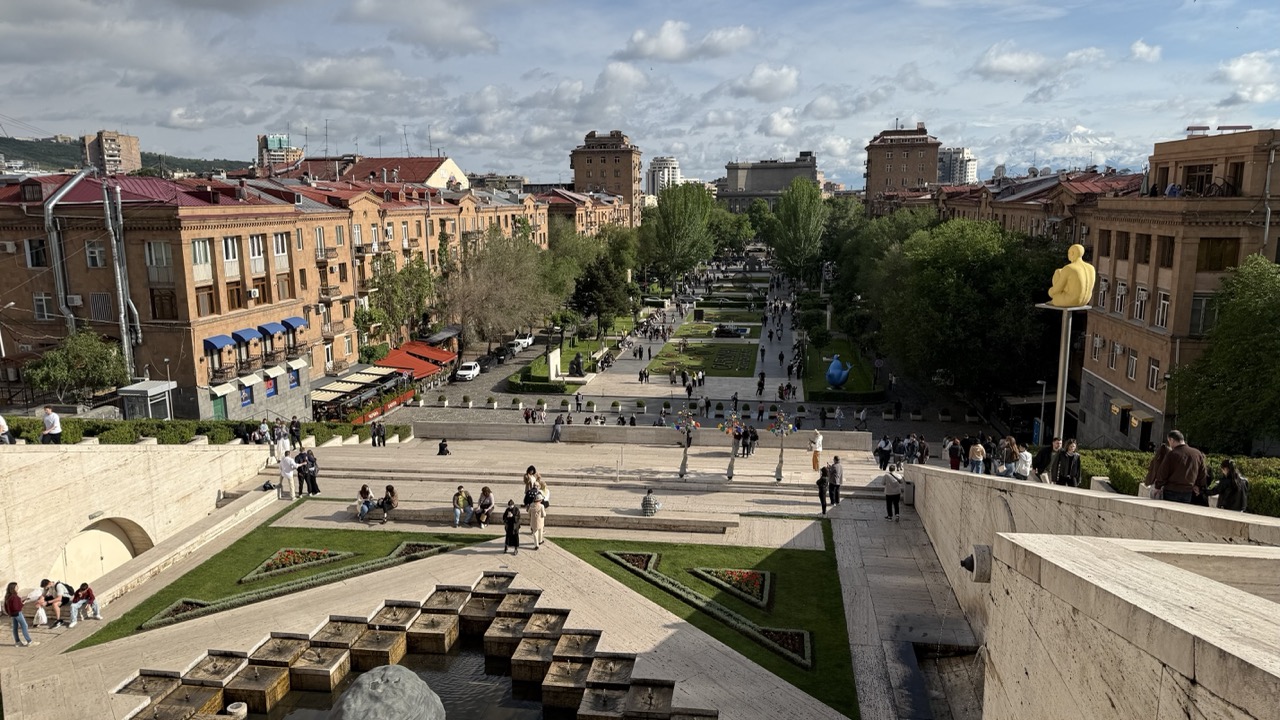
Can you build a comfortable life in Yerevan, Armenia on around $900 a month?
After spending quite a bit of time living in Armenia’s capital, I can confidently say that the answer is yes, but it depends on the lifestyle you’re looking for. This isn’t a backpacker budget and it certainly isn’t luxury living either. It’s simply the budget I personally lived on while enjoying everything that made me fall in love with the city.
In this guide, I’ll break down exactly what my monthly expenses looked like, from rent and utilities to groceries, restaurants, transportation, healthcare, and entertainment. I’ll also share the neighborhoods I’d recommend, what everyday life actually feels like as an expat, and the things I genuinely enjoyed, along with a few downsides that are worth knowing before making the move.
I’m not going to focus on the usual tourist attractions or the most Instagram-famous cafés. There are already plenty of travel guides covering those. Instead, I want to share what it’s really like to build a life here and why I think Yerevan remains one of the most overlooked cities for expats and digital nomads.
Why I Keep Coming Back to Yerevan
Before talking about numbers, I think it’s worth answering a more important question: Why would anyone choose to live in Yerevan?
For me, it comes down to something that’s difficult to measure on a spreadsheet. Yerevan has character.
It doesn’t try to impress you with futuristic skylines or luxury shopping districts. Instead, it’s a city that slowly grows on you. The more time I spent here, the more I appreciated its slower pace, welcoming atmosphere, and the little routines that quickly started to feel like home.
While cities like Tbilisi have become well-known hubs for expats and digital nomads in the region, I think Yerevan offers a quieter and more authentic experience that many people overlook.

One of the things I enjoy most is how walkable the city is. Most daily life revolves around the center, where it’s easy to move between cafés, restaurants, parks, supermarkets, museums, and shops without ever needing a car. Many days I barely used public transport because everything I needed was within a comfortable walking distance.
The architecture is another reason Yerevan feels so unique. Much of the city is built from pink volcanic tuff stone, giving the streets a warm color that changes throughout the day depending on the sunlight. In the 1920s, architect Alexander Tamanyan redesigned Yerevan with a modern city plan, creating wide boulevards and large public squares while preserving much of the city’s historic identity. Today you’ll see old Armenian churches, Soviet apartment blocks, quiet courtyards, and stylish modern cafés all existing side by side.
What surprised me the most, however, was the city’s cultural life. For a city of just over one million people, there is always something happening. Art exhibitions, concerts, live performances, museums, cultural festivals, and community events seem to fill the calendar every week. Armenia has an incredibly rich artistic tradition that many foreigners know very little about before arriving.
One of my favorite examples is Vardavar, an ancient Armenian water festival that dates back to pagan times. Once a year, the entire city turns into one giant water fight, and absolutely nobody is safe. It’s one of those traditions that perfectly reflects the fun and community spirit you’ll find throughout the city.
The café culture is another reason I enjoy spending time here. Yerevan has developed a fantastic specialty coffee scene over the last few years. You’ll find students studying, entrepreneurs having meetings, freelancers working remotely, and groups of friends chatting for hours over coffee. Nobody seems to be in a rush, and that’s something I really appreciate.

Wine is deeply connected to everyday life as well.
Many people don’t realize that Armenia is one of the oldest wine-producing countries in the world, with a winemaking tradition stretching back thousands of years. Whether it’s visiting one of the local wine festivals or simply opening a bottle while catching up with friends, wine feels like a natural part of the culture rather than something reserved for special occasions.
Food deserves its own mention too.
Armenian cuisine is still incredibly underrated internationally. Traditional dishes like lahmajo, dolma, lavash, khorovats, and fresh seasonal salads are easy to find, but Yerevan also has an impressive selection of Middle Eastern, Georgian, Italian, and international restaurants. One thing I noticed very quickly is that eating well here doesn’t have to be expensive.
Another reason I enjoy living here is the location.
Yerevan sits in the heart of the Caucasus, surrounded by mountains, lakes, monasteries, and incredible hiking trails. Within an hour or two, you can leave the city completely behind and spend the day exploring dramatic landscapes that feel a world away from the capital. Weekend hiking trips are extremely popular with both locals and expats, and they’ve become one of my favorite parts of living here.
Finally, there’s the feeling of safety.

It’s something you don’t always notice immediately, but after living here for a while it becomes obvious. Walking home late at night never felt uncomfortable to me, and that’s something I genuinely value. According to Numbeo, in 2026 Armenia ranks as the 9th safest country in the world, which is one of the reasons many expats feel comfortable settling here long term.
Finding an Apartment in Yerevan
Accommodation will almost certainly be your biggest monthly expense, but how much you spend depends largely on your priorities.
For my own budget of 120,000 Armenian drams per month, I had two realistic choices.
I could either rent a small studio around 30 minutes from downtown in neighborhoods like Shengavit or Nor Nork, or rent a room in a shared apartment right in Kentron, the city center.
For 120,000 drams I found a fully furnished room inside a historic building just a short walk from Mashtots Avenue. The apartment had a fully equipped shared kitchen, a good shower, reliable internet, and a balcony where I ended up drinking my morning coffee almost every day. For me, being able to walk almost everywhere was worth far more than having a private apartment further away.

If your budget is higher, Kentron remains the most popular neighborhood for expats. It’s home to countless cafés, restaurants, museums, parks, supermarkets, and much of Yerevan’s nightlife. The convenience is hard to beat, although rental prices reflect that. A decent studio or one-bedroom apartment here usually starts from around 250,000 drams per month, depending on the building and condition.
Other neighborhoods worth considering include Komitas and parts of Ajapnyak, especially around TUMO Park, where you can often find better value while still staying well connected to the city center.
When searching for long-term rentals, my recommendation is simple: use List.am.
It’s the platform most locals use, and you’ll generally find far better prices than on Airbnb. I also recommend filtering out estate agents whenever possible and contacting property owners directly to avoid paying unnecessary commissions.
For your first few nights, though, booking an Airbnb or hotel is still the easiest option. Once you’re in the city, apartment hunting becomes much easier because you can visit places in person before making a decision.

One thing I really appreciate about Yerevan is that most rentals come fully furnished. In many cases, you can arrive with nothing more than a suitcase and move in immediately.
One final tip that saved me from making a mistake:
Don’t judge an apartment by the outside of the building.
Some of the city’s beautiful historic buildings hide surprisingly outdated interiors, while many Soviet-era apartment blocks have been completely renovated inside and offer modern, comfortable living spaces. Before signing any rental agreement, always check the heating system, insulation, water pressure, and internet connection. Those details matter far more than the building’s appearance once you’re actually living there.
Utilities and Internet in Yerevan: What I Actually Pay Each Month
One thing I really appreciate about living in Yerevan is that everyday bills are quite predictable, at least during spring and autumn. Since I usually visit during the shoulder seasons, my monthly utility bill has never been more than 15,000 AMD. Wi-Fi is included in my rent, and I rarely need to use either the heating or the air conditioning, which keeps costs low.
That changes once summer or winter arrives. Yerevan has four proper seasons, with hot summers and cold winters. Friends of mine living in one or two-bedroom apartments have told me they sometimes pay up to 100,000 AMD per month for electricity, gas, and water during the hottest and coldest months, especially in older buildings with poor insulation. If you’re planning to stay year-round, this is definitely something worth including in your budget.

One thing you almost never have to worry about is drinking water. It comes straight from the surrounding mountains, is perfectly safe to drink, and honestly tastes better than bottled water in many countries I’ve visited. You’ll also notice public drinking fountains all over the city, so buying bottled water quickly becomes unnecessary.
Internet is another area where Yerevan performs surprisingly well. If it’s not already included in your rent, home internet is still very affordable. Providers like Ucom and Amio offer reliable high-speed connections starting from around 6,000 AMD per month, often bundled with TV. I never had issues working remotely, joining video calls, or uploading large files.
Food, Coffee and Wine in Yerevan | One of the City’s Biggest Highlights
Food is one of the main reasons I keep coming back to Armenia. It’s not just about eating well for less. Meals here are genuinely part of everyday life. Friends and families spend hours around the table, sharing dishes, talking, and enjoying each other’s company. After living here for a while, you naturally start doing the same.
Because I cook quite often, I spend around 85,000 AMD per month on groceries. Most of my shopping happens at Yerevan City, Zovq, Carrefour, and local neighborhood markets. Fresh fruit, vegetables, dairy products, bread, and meat are all reasonably priced and excellent quality. Imported snacks, alcohol, and international brands usually cost noticeably more, so I mostly stick to local products.
Armenian cuisine deserves far more attention than it gets internationally. Dishes like dolma, spas, harisa, lahmajo, grilled meats, fresh salads, and the famous lavash are everywhere. Lavash is even recognized by UNESCO as part of Armenia’s cultural heritage, and after spending some time here, it’s easy to understand why.

Eating out is another pleasant surprise. Whether you choose a small family-run restaurant or a modern café, it’s difficult to spend a fortune. A typical local meal usually costs around 2,000 to 3,000 AMD, while more upscale restaurants are naturally more expensive. During my stay, I spent around 35,000 AMD eating out with friends, and I never felt like I had to compromise on quality.
If you’re craving something different, Yerevan has a surprisingly good international food scene. You’ll find excellent Middle Eastern, Georgian, Italian, Asian, and European restaurants throughout the city center. Prices are higher than traditional Armenian restaurants, but still much lower than what I’d expect to pay in most Western European cities.
Coffee is another part of my daily routine. Yerevan has developed a fantastic café culture over the past few years, and there are countless places where people meet friends, work remotely, or simply enjoy a slow afternoon. I often stop by places like Surf Coffee or Two-O-Two Fahrenheit, where a cappuccino usually costs around 1,000 to 1,200 AMD. Good Wi-Fi, comfortable seating, and a relaxed atmosphere make these cafés perfect if you work online.
Then there’s the wine. Armenia is one of the oldest wine-producing countries in the world, and that tradition is still very much alive today. A decent bottle of Armenian wine usually costs between 3,000 and 5,000 AMD, while a glass at a wine bar is typically 1,200 to 2,000 AMD.
If you enjoy wine, Saryan Street is one place you shouldn’t miss. It’s packed with wine bars and becomes one of the liveliest streets in the city during the evenings. And if you’re visiting in June, try to plan your trip around Yerevan Wine Days. Local wineries take over the streets, thousands of people come together, and the whole city feels like one big celebration.
Altogether, including groceries, restaurants, coffee, and a few drinks, I spent around 150,000 AMD this month. Considering the quality of the food and the variety available, I honestly think Yerevan offers some of the best value for money anywhere in the region.
Transportation in Yerevan: Cheap, Reliable and Easy to Use
Getting around Yerevan is one of the easiest parts of living here, and transportation barely affects my monthly budget.
The city is compact, especially if you’re staying near the center. Most days I simply walk. Cafés, supermarkets, restaurants, parks, museums, and coworking spaces are often within a comfortable walking distance, so I end up exploring the city without even thinking about public transport.
When I do need it, Yerevan’s public transportation is reliable and inexpensive. Over the past few years, the city has introduced a fleet of modern buses, making the system much more comfortable than it used to be. The metro is fast and avoids traffic completely, although it only has one main line, so buses handle most journeys.
A single ride on the bus, metro, or one of the new electric trolleybuses costs just 150 AMD, and you can simply tap your bank card or use Apple Pay when boarding.
One app I recommend downloading as soon as you arrive is Yandex Maps. In my experience, it’s much more accurate than Google Maps for public transportation in Armenia and provides real-time arrival information that makes getting around very straightforward.
For taxis, I almost always use GG or Yandex Go. A typical 10 to 15-minute ride across central Yerevan usually costs between 800 and 1,000 AMD. If you’re traveling with friends, splitting the fare often makes it almost as cheap as taking the bus.

During the warmer months, you’ll also see shared electric scooters around the city. They’re fun for short rides, although most residents still rely on walking, public transport, or taxis for everyday travel.
One thing I also love about living in Yerevan is how easy it is to leave the city for a day or two. Affordable buses, marshrutkas, and trains connect Yerevan with places like Lake Sevan, Dilijan, and Gyumri, making weekend trips both simple and inexpensive.
Personally, I spent around 11,000 AMD on transportation this month. Since I walk almost everywhere, taxis are really just something I use when I’m in a hurry or the weather isn’t great.
Entertainment and Lifestyle in Yerevan: Why I Never Get Bored Here
One of the things I enjoy most about living in Yerevan is how naturally life falls into a comfortable routine. It isn’t one of those huge capitals where you’re constantly rushing across town or planning every weekend weeks in advance. Life simply feels slower, more relaxed, and much easier to enjoy.
A lot of everyday life revolves around cafés, restaurants, and meeting friends. The city center is full of places where you can sit for hours with a coffee, work on your laptop, or simply watch the city go by. I often find myself doing exactly that. Some days I head out for one coffee and somehow don’t make it home until the evening.
The café scene has grown tremendously over the last few years, especially around Pushkin Street, Cascade, and Saryan Street. Whether you’re looking for specialty coffee, a quiet place to work remotely, a wine bar, or a restaurant with outdoor seating, you’ll find plenty of options within walking distance.

What surprised me even more was Yerevan’s cultural scene. For a city of just over one million people, there is an incredible amount happening throughout the year. Concerts, art exhibitions, live music, festivals, theatre performances, and community events are all part of everyday life here.
I also ended up visiting far more museums than I expected. The Sergei Parajanov House-Museum, the Modern Art Museum of Yerevan, and the Kochar Museum are among my favorites, and admission usually costs only 1,500 to 2,000 AMD. During the warmer months, the city also hosts free outdoor opera and ballet performances at TUMO Park, while Republic Square regularly turns into a giant concert venue featuring both Armenian and international artists.
If you’re moving to Yerevan as an expat or digital nomad, meeting people is easier than you might expect. There are regular language exchanges, networking events, coworking spaces, fitness groups, and hiking communities. The expat community is smaller than in places like Chiang Mai or Lisbon, but I actually think that’s an advantage. People quickly recognize each other, conversations feel more genuine, and it’s surprisingly easy to build real friendships.
One thing I absolutely love is how close nature is. You can spend the morning working from a café in Kentron and, just a couple of hours later, find yourself hiking through the mountains of Lori or Vayots Dzor.
I usually join hikes organized by Armenian Geographic, one of the country’s oldest hiking communities. They organize guided day trips for around 8,000 to 10,000 AMD, including transportation. I’ve joined several of their hikes already, and every single one has been a fantastic experience. They pick everyone up early in the morning, drive to some of Armenia’s most beautiful places, and bring you back to Yerevan in the evening.
If you prefer exploring on your own, download the Hike Armenia app. It includes hundreds of well-marked hiking trails with maps, photos, elevation profiles, and community reviews. And if you’re looking for something more challenging, Armenia is also home to sections of the Transcaucasian Trail and the Armenian National Trail, both offering some of the country’s most spectacular mountain scenery.

For me, that’s what makes Yerevan different. You don’t have to constantly search for things to do. Once you settle into daily life, interesting places, events, and people seem to find you naturally.
Other Everyday Expenses in Yerevan
When planning your monthly budget, it’s easy to focus on rent and groceries while forgetting about all the smaller everyday expenses. Individually they don’t seem like much, but together they can easily add another few hundred dollars over the course of a year.
Mobile internet is one of the easiest expenses to manage. Armenia has excellent mobile coverage, and getting a SIM card takes only a few minutes. The three main providers are Viva, Ucom, and Team Telecom Armenia, with official stores located throughout Yerevan and even at the airport.
I personally use Viva, and my 5G mobile plan costs around 2,700 AMD per month. It includes more than enough data for navigation, video calls, streaming, and even working remotely using my phone as a hotspot whenever needed. I’ve been genuinely impressed by both the speeds and the coverage.
Haircuts are another expense that stays refreshingly affordable. I usually pay around 3,000 AMD at a local barber. There are plenty of more premium barbershops around the city if that’s your preference, but even those remain inexpensive compared to most European countries.

For toiletries, cleaning products, and other household essentials, I normally spend around 8,000 AMD per month. Things like shampoo, toothpaste, detergent, and basic skincare products are easy to find in supermarkets and pharmacies across the city.
Then there are all the little purchases that don’t fit neatly into a budget spreadsheet. Meeting friends for wine, grabbing a late-night snack, replacing something around the apartment, or making an unexpected purchase are the kinds of expenses that slowly add up. They’re also the reason why everyone’s monthly budget in Yerevan ends up looking slightly different.
My Real Cost of Living in Yerevan: Can You Live Comfortably on $900?
So, what does my monthly budget actually look like after adding everything together?
Based on my own spending, I live comfortably in Yerevan on around 330,000 AMD per month, which works out to just over $900 USD.
This isn’t a backpacker budget, but it also isn’t luxury living. It’s simply the lifestyle that feels comfortable to me. It includes my rent, utilities, groceries, restaurants, coffee, wine, transportation, mobile phone, and all the smaller everyday expenses that come with living here.
It also leaves enough room for the things that make life enjoyable. I can join a few hiking trips, play table tennis with friends, visit museums and galleries, watch the occasional movie, and still go out for coffee several times a week without constantly thinking about money.
Could you spend less? Absolutely. Renting outside the city center, cooking more often, and limiting entertainment could reduce your monthly expenses quite a bit.
Could you spend more? Very easily. A larger apartment in Kentron, frequent restaurant meals, more nightlife, and regular travel around Armenia could double your budget without much effort.
For me, though, this is exactly where Yerevan stands out. The city offers a quality of life that feels much higher than the price you actually pay for it. That’s one of the biggest reasons I keep coming back.
| Item | Cost (AMD) | Approx. USD |
| Rent (shared apartment room) | 120,000 AMD | ≈ $327 |
| Utilities (water, gas & electricity) | 15,000 AMD | ≈ $40 |
| Groceries | 85,000 AMD | ≈ $231 |
| Eating out (16 meals × ~2,200 AMD) | 35,000 AMD | ≈ $95 |
| Coffee (19 × ~1,100 AMD) | 20,900 AMD | ≈ $57 |
| Transport (Bus & GG/Yandex) | 11,000 AMD | ≈ $29 |
| Hiking expenses | 22,000 AMD | ≈ $61 |
| Visa costs | 0 AMD | ≈ $0 |
| Entertainment (cinema, table tennis, etc.) | 11,000 AMD | ≈ $29 |
| Haircut | 3,000 AMD | ≈ $8 |
| SIM card & mobile data | 2,700 AMD | ≈ $7 |
| Toiletries | 8,000 AMD | ≈ $22 |
| TOTAL MONTHLY COST | 333,600 AMD | ≈ $907 |
How I Manage My Money While Living Abroad
One thing I don’t think enough people talk about before moving abroad is how you’ll actually manage your money once you arrive.
Finding an apartment is one thing. Paying rent in another currency, transferring savings from your home country, receiving freelance payments, and dealing with exchange rates is a completely different challenge. When I first started living abroad, I honestly assumed it would all be straightforward. It wasn’t.
Traditional banks often charged higher transfer fees than I expected, exchange rates weren’t particularly competitive, and international transfers sometimes took longer than they should have. After a while, I realized I needed a setup that was designed for people who regularly move between countries.
That’s why I started using Wise.
I use it to hold multiple currencies in one account, convert money using the mid-market exchange rate, and send international transfers without constantly wondering how much I’ll lose in hidden fees. One thing I appreciate is that everything is transparent. Before sending money, I can see exactly what the transfer will cost and how much the recipient will receive.
Living abroad also means constantly dealing with different currencies. Whether I’m paying rent in Armenia, receiving payments from international clients, or traveling somewhere new, it’s convenient having everything managed from one place.
I also travel with the Wise Multi-Currency Card, which lets me pay directly in local currencies without worrying about unnecessary foreign transaction fees. Since I spend a lot of time moving between countries, it’s become one of those things I use almost every day without even thinking about it.
Another feature I really like is how quickly transfers arrive. Wise reports that around 75% of transfers are completed instantly, and in my experience, international payments are usually much faster than I expected. Being able to track every transfer inside the app also gives me peace of mind whenever I’m moving larger amounts of money.
If you’re planning to relocate, become a digital nomad, or simply need a better way to manage your finances internationally, it’s definitely worth taking a look. New Wise users can currently get their first international transfer fee-free up to $600 through my link.
Armenia Visa Requirements: Can You Live in Yerevan Long Term?
One of the reasons Yerevan has become increasingly popular with expats and remote workers is that Armenia has relatively straightforward immigration rules.
For citizens of the United States, the United Kingdom, most European countries, and many other nationalities, entering Armenia is surprisingly easy. Many visitors can stay visa-free for up to 180 days per year, making Armenia an attractive destination for digital nomads, slow travelers, and anyone looking to spend an extended period in the Caucasus.
If you decide to stay even longer, Armenia also offers several residency pathways. Temporary and permanent residence permits are available for people who qualify through employment, business ownership, studies, family connections, or other legal grounds.

One thing I’ve always appreciated about Armenia is that the immigration process feels much less complicated than in many other countries I’ve visited. It’s one of the reasons the country has quietly become a popular base for entrepreneurs, freelancers, and location-independent professionals.
That said, immigration rules can change over time. Before planning a long-term move, I always recommend checking the latest visa requirements with the official Armenian authorities or your nearest Armenian embassy to make sure you have the most up-to-date information.
Healthcare in Yerevan: What Expats Should Expect
Healthcare is one of those topics that often gets overlooked when planning a move abroad, but it’s something worth researching before you arrive.
Fortunately, Yerevan has a solid private healthcare system, and that’s where most expats choose to go for everyday medical care.
Some of the best-known private hospitals and medical centers include Vardanants Medical Center, Izmirlian Medical Center, and Nairi Medical Center. These clinics are popular with both locals and foreigners, and it’s usually possible to find English-speaking doctors or staff who can help if you don’t speak Armenian.
One thing that impressed me was how easy it is to book an appointment. Unlike in many countries where you might wait weeks to see a specialist, appointments in Yerevan are often available within a few days, and sometimes even on the same day.
Healthcare is also surprisingly affordable. A standard consultation with a doctor generally starts at around 10,000 AMD, although prices naturally vary depending on the specialist and the clinic. For routine checkups, blood tests, or minor health issues, paying out of pocket is often much cheaper than many people expect.

For more serious medical situations, many expats still choose to carry international health insurance, especially if they travel frequently or plan to live abroad long term. Personally, I think it’s worth having the extra peace of mind, even if you don’t use it very often.
Overall, I found healthcare in Yerevan to be efficient, accessible, and much easier to navigate than I expected before moving here. For everyday medical needs, it’s one less thing to worry about while settling into life in Armenia.
The Downsides of Living in Yerevan
As much as I enjoy living in Yerevan, I don’t think any city is perfect, and Armenia’s capital is no exception. There are a few things that surprised me during my first stay here, and I think it’s only fair to mention them if you’re considering moving to Yerevan yourself.
The first thing you’ll probably notice is the condition of some residential buildings. The city center is beautiful, especially around Kentron, but once you venture into other neighborhoods you’ll see plenty of Soviet-era apartment blocks that haven’t been renovated for decades. At first glance they can look a little intimidating.
Interestingly, I’ve learned not to judge an apartment by its exterior. Some of the nicest places I’ve stayed were hidden inside buildings that looked fairly run-down from the outside. On the other hand, beautifully restored buildings don’t always have the best apartments inside. It’s one of those things you quickly get used to after spending some time here.
The city’s infrastructure also varies quite a bit depending on where you are. Some neighborhoods have modern parks, smooth sidewalks, and renovated public spaces, while others still have uneven pavements and roads that could definitely use some attention.
Language can also take a little adjustment. Armenian is unlike almost any other language you’ll come across, and during my first few weeks I couldn’t even recognize the alphabet. Thankfully, translation apps make everyday life much easier. In central Yerevan, younger people often speak good English, while Russian is still widely spoken, especially among older generations.
Traffic is another part of daily life that takes some getting used to. The number of cars has increased significantly over the last few years, and driving can feel more chaotic than in many European cities. Fortunately, I’ve found drivers to be surprisingly respectful toward pedestrians, especially at marked crossings. Even so, I always pay extra attention when crossing busy roads.
Another thing worth mentioning is the climate. Yerevan experiences four proper seasons, with very hot summers and cold winters. During winter, air quality can occasionally become an issue because of increased heating and the city’s location in the Ararat Valley, where pollution sometimes gets trapped during calm weather.
Finally, Armenia is still developing, and you’ll notice that in some everyday situations. Customer service has improved a lot over the years, and more services are becoming digital, but occasionally you’ll still come across processes that require a little extra patience compared to Western Europe.
Personally, I don’t see any of these as major deal-breakers. They’re simply part of living in a country that’s evolving quickly. For me, the safety, affordability, incredible food, welcoming people, rich culture, and relaxed pace of life outweigh these small inconveniences many times over.
Is Yerevan Worth Moving To? My Final Thoughts After Living Here
So, can you live comfortably in Yerevan on around $900 per month?
Based on my own experience, the answer is yes.
Of course, your budget will always depend on your lifestyle, but I genuinely think this is one of the best-value capitals I’ve lived in. It gives me enough to rent a comfortable place, enjoy great food, meet friends for coffee, stay active, travel around Armenia, and still avoid constantly worrying about every expense.
More importantly, though, it’s not really about the money.
What keeps bringing me back to Yerevan isn’t just the affordable cost of living. It’s the atmosphere. It’s the feeling of walking through the city in the evening, stopping for coffee at a place you’ve already become a regular, spending weekends hiking in the mountains, and sharing long dinners with friends over Armenian food and wine.
Yerevan has a personality that’s difficult to explain until you’ve spent some time here. It isn’t trying to compete with cities like Prague, Budapest, or Lisbon. Instead, it offers something completely different. It feels authentic, relaxed, and incredibly welcoming.

I’ve now returned to Yerevan several times, and every visit reminds me why I enjoy living here so much. It’s one of those places that quietly grows on you. The longer you stay, the more reasons you find to keep coming back.
If you’re thinking about moving to Armenia, working remotely, or simply spending a few months living somewhere different, I honestly think Yerevan deserves a place on your shortlist. It may not be the first city people think of, but for me, it’s one of the most underrated places to live in Europe and the Caucasus.
Frequently Asked Questions About Living in Yerevan, Armenia
Can you live in Yerevan, Armenia on $900 a month?
Yes, it is possible to live comfortably in Yerevan on around $900 per month, depending on your lifestyle. A budget like this can cover rent, utilities, groceries, restaurants, transportation, coffee, entertainment, and other everyday expenses. However, choosing a private apartment in the city center or spending more on nightlife and travel will increase your monthly costs.
How much does it cost to live in Yerevan as an expat?
The cost of living in Yerevan depends heavily on your lifestyle, but many expats can live comfortably between $800 and $1,500 per month. Rent is usually the biggest expense, while food, transportation, and entertainment remain relatively affordable compared to many European capitals.
Is Yerevan a good city for expats and digital nomads?
Yes, Yerevan has become increasingly popular with expats, remote workers, and digital nomads because of its affordable living costs, safety, café culture, reliable internet, and welcoming local community. The city is also a great base for exploring Armenia’s mountains, lakes, and historic sites.
How much is rent in Yerevan, Armenia?
Rent prices in Yerevan vary depending on the neighborhood and apartment type. A room in a shared apartment in central Yerevan can cost around 120,000 AMD ($300+), while a private studio or one-bedroom apartment in popular areas like Kentron usually starts from around 250,000 AMD per month.
What are the best neighborhoods to live in Yerevan as a foreigner?
The most popular areas for expats in Yerevan are Kentron (the city center), Arabkir, Komitas, and parts of Ajapnyak. Kentron is the most convenient for cafés, restaurants, nightlife, and walking, while neighborhoods outside the center usually offer better value for money.
Is Yerevan safe for foreigners?
Yes, Yerevan is generally considered a safe city for foreigners. Many expats feel comfortable walking around the city during the day and evening, although normal precautions should always be taken as in any major city.
Can foreigners rent apartments in Yerevan?
Yes, foreigners can rent apartments in Yerevan. Many long-term rentals are available through local platforms like List.am, real estate agents, or direct contact with landlords. It is usually easier to find better prices after arriving and viewing apartments in person.
Is healthcare good in Yerevan for expats?
Yerevan has a growing private healthcare system with modern clinics, English-speaking doctors, and affordable medical services. Many expats choose private hospitals and clinics for routine appointments, checkups, and specialist visits.
Is Armenia a good country for digital nomads?
Armenia can be a great destination for digital nomads because it offers affordable living, fast internet, a growing café culture, beautiful nature, and relatively simple entry requirements for many nationalities. Yerevan is especially attractive for people who want a smaller, less crowded alternative to Western European capitals.
How long can foreigners stay in Armenia?
The length of stay depends on your nationality and visa situation. Many visitors from countries including the US, UK, and EU countries can stay in Armenia for 180 days without needing a traditional visa. Before moving long term, it is recommended to check the latest requirements with Armenian immigration authorities.
Is food expensive in Yerevan?
No, food in Yerevan is generally affordable compared to many European cities. Local Armenian restaurants, bakeries, markets, and cafés offer excellent value, while international restaurants and imported products are usually more expensive.
What are the downsides of living in Yerevan?
Some challenges of living in Yerevan include older residential buildings, traffic, occasional language barriers, hot summers, cold winters, and developing infrastructure in some areas. However, many expats find that the city’s affordability, safety, culture, and lifestyle advantages outweigh these downsides.