
If you’re wondering about the real cost of living in Beijing, China, you’re probably asking the same questions I had before my trip. Is Beijing expensive? Can you get around without speaking Chinese? And what is it actually like to live in China’s capital as a foreigner?
To answer those questions, I spent 10 days exploring Beijing, tracking every expense along the way. I kept a record of everything I paid for, including accommodation, transportation, food, coffee, groceries, mobile data, and even a haircut. But beyond the numbers, I also wanted to experience what everyday life in Beijing actually feels like.
Before arriving, I was honestly a little nervous. China works differently from almost anywhere else I’ve traveled. Google Maps, WhatsApp, Instagram, Gmail, and many other apps that I use every day don’t work normally here. I wasn’t sure how difficult it would be to navigate such a huge city or whether the language barrier would make everyday life frustrating.
As it turned out, most of those worries disappeared much faster than I expected.
My First Impressions of Beijing
Beijing is one of those cities that feels overwhelming when you first arrive. Everything is bigger than I imagined. The roads are incredibly wide, the metro stations sometimes feel like airports, and the city stretches far beyond what you can see on a map.
At first, I wasn’t sure I would ever feel comfortable navigating a place this large. But after a couple of days using the metro, walking through different neighborhoods, and getting used to the local apps, everything started to click.
One thing that surprised me almost immediately was how quiet Beijing felt. For a city with more than 20 million people, I expected constant traffic noise. Instead, many vehicles are electric, which makes the streets much calmer than I imagined. It creates a surprisingly relaxed atmosphere, especially when you’re walking through residential neighborhoods or spending time in one of the city’s many parks.
What I loved most was the contrast between old and new.

One minute I was wandering through centuries old hutongs lined with traditional courtyard homes, tiny cafés, and family-run shops. A few metro stops later, I was surrounded by futuristic skyscrapers, luxury shopping malls, and some of the most modern technology I’ve seen anywhere in the world.
That contrast is what gives Beijing so much character.
The city also has a creative side that many visitors don’t expect. During my trip I stumbled across hidden art spaces, independent galleries, and unique cafés tucked away inside quiet neighborhoods. Many of these places felt like small cities within the city, each with its own atmosphere and community.
Despite being one of the world’s largest capitals, Beijing is also surprisingly green. Parks, lakes, tree-lined streets, and public squares appear everywhere, giving you plenty of opportunities to slow down between sightseeing.

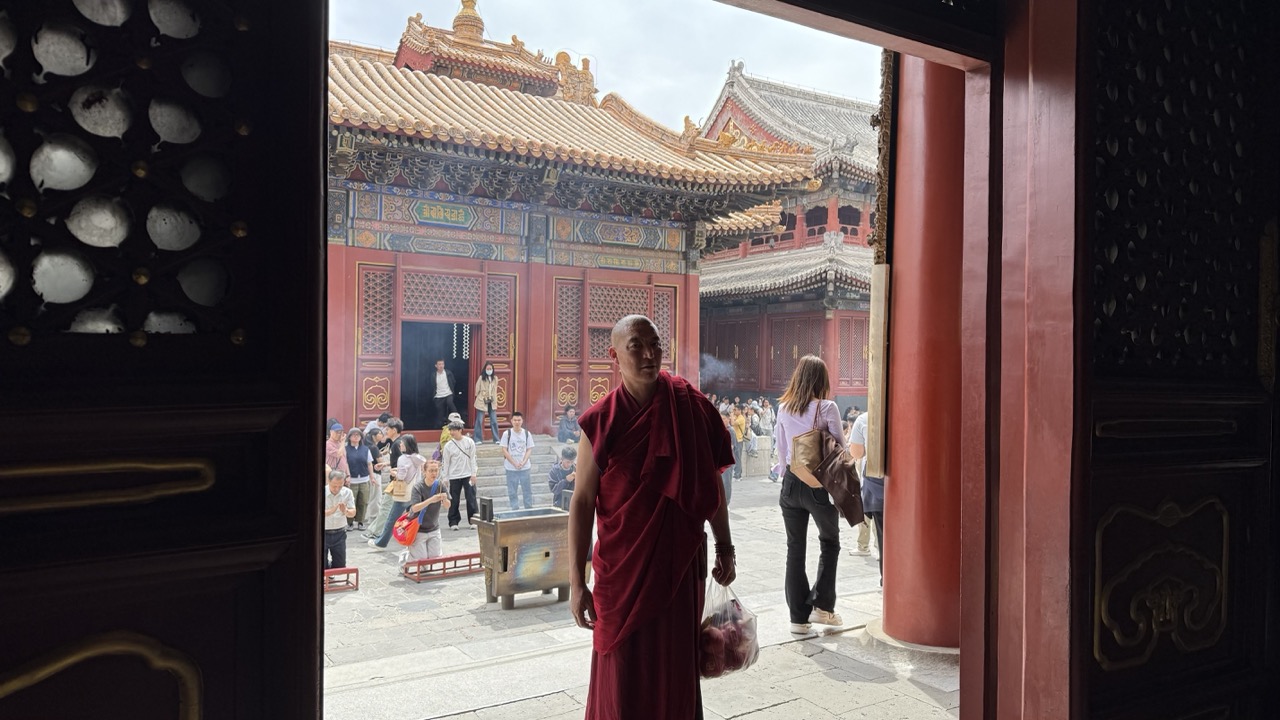
Of course, Beijing’s famous landmarks deserve all the attention they receive. The Great Wall, the Forbidden City, Tiananmen Square, the Temple of Heaven, and the Lama Temple are all incredible places to visit. But some of my favorite memories actually came from much simpler moments. Sitting in a quiet square, watching locals play cards, exercise, or simply go about their day often felt just as memorable as visiting the city’s biggest attractions.
I also felt very safe throughout my stay. Although English isn’t widely spoken outside tourist areas, translation apps made everyday communication much easier than I expected. Whenever I needed help, people were generally patient and willing to assist, even when we couldn’t fully understand each other.
Looking back, Beijing wasn’t nearly as intimidating as I expected before arriving. Once I understood how the city worked, it became one of the easiest large cities I’ve explored.
Where I Stayed in Beijing
One of the biggest decisions you’ll make when planning a trip to Beijing is choosing where to stay.
Because Beijing is so enormous, I quickly realized that the neighborhood itself matters less than its connection to the metro. If you’re within walking distance of a subway station, getting almost anywhere in the city becomes simple and affordable.
For my 10-day stay, I booked a hotel in Panjiayuan, a neighborhood in southeast Beijing.

It’s not usually one of the first places recommended in travel guides, but honestly, I was very happy with my choice. The metro station was only a short walk away, making it easy to visit places like the Forbidden City, the Temple of Heaven, and many other attractions without spending much time or money on transportation.
What made Panjiayuan special for me was how local it felt.
Instead of tourist crowds, I found small restaurants serving affordable meals, local fruit shops, supermarkets, convenience stores, cafés, and everyday life happening all around me. After just a day or two, I had already developed a comfortable routine, grabbing breakfast from nearby street vendors, stopping for coffee, and shopping where local residents did.
Another bonus was being within walking distance of the famous Panjiayuan Antique Market, one of Beijing’s most fascinating markets. Many locals still refer to it as the old “Ghost Market” because decades ago traders would gather before sunrise to buy and sell antiques, collectibles, artwork, and second-hand treasures. Even today it’s an interesting place to spend a few hours exploring.
My hotel itself was simple but had everything I needed. It included a private bathroom, air conditioning, daily housekeeping, reliable Wi-Fi, and very friendly staff.
The best part was the price.
I paid 118 RMB per night, which worked out to roughly 15 USD. For a clean room in a well-connected neighborhood of one of the world’s largest capitals, I thought it offered excellent value.
If it’s your first visit to Beijing and your budget allows it, neighborhoods like Dongcheng or Chaoyang will put you closer to many of the city’s main attractions and nightlife.
That said, I personally don’t think it’s worth paying significantly more just to stay in the most popular tourist districts. As long as you’re close to a metro station, you’ll have no trouble exploring the city, and you might even get a more authentic experience by staying in a quieter local neighborhood like I did.
Food in Beijing: Can You Eat Well on a Budget?
One of the biggest surprises during my time in Beijing was just how affordable the food is. Before arriving, I expected China’s capital to be much more expensive, but I quickly realized that eating out is often cheaper than cooking, especially if you stick to local restaurants.
Most mornings I grabbed breakfast from small neighborhood shops or street vendors. Fresh steamed buns, jianbing (Chinese breakfast pancakes), dumplings, soy milk, and other local snacks usually cost between 10 and 20 RMB ($1.50 to $3 USD). It was a cheap and authentic way to start the day.

Lunch and dinner were just as budget friendly. Small family-run restaurants are everywhere, serving generous portions of noodles, fried rice, stir-fried vegetables, and meat dishes for around 20 to 35 RMB ($3 to $5 USD). The portions were usually large enough that I never left hungry.
Of course, no visit to Beijing would be complete without trying Peking Duck, but northern Chinese cuisine has much more to offer. I also enjoyed handmade dumplings, grilled lamb skewers, spicy noodle dishes, and plenty of regional specialties that I had never tried before.
For groceries, I mostly visited 7-Eleven, FamilyMart, and local supermarkets. They were clean, modern, and stocked with everything I needed, from fruit and drinks to snacks and toiletries. Local products were generally inexpensive, although imported foods were noticeably more expensive than what I was used to.
And if you ever start missing home, Beijing has no shortage of international restaurants, bakeries, specialty coffee shops, and brunch cafés.
Personally, I found a nice balance between local and Western food. Most of my meals were Chinese, but I still treated myself to good coffee and the occasional Western meal. On average, I spent around 80 RMB ($11 USD) per day on food, which felt very comfortable without trying to save money.
Transportation in Beijing: Easier Than I Ever Expected
Looking at a map of Beijing before my trip honestly felt intimidating. The city is enormous, so I assumed getting around would be complicated. In reality, it turned out to be one of the easiest big cities I’ve ever explored.

The Beijing Metro is incredibly impressive. It’s one of the largest subway systems in the world, with clean stations, frequent trains, and signs in both Chinese and English. Most journeys cost just 3 to 7 RMB, and even crossing the city is usually less than one US dollar.
The only thing that caught me off guard was the size of some stations. Walking between platforms or finding the correct exit can easily take several minutes. After a day or two, though, it all started to feel surprisingly straightforward.
Whenever I didn’t want to use the metro, I ordered a DiDi, China’s version of Uber. Because it’s integrated directly into Alipay, booking a ride takes only a few taps. Most short rides cost between 15 and 40 RMB, making taxis much cheaper than in many other major cities.
One of my favorite ways to explore Beijing was by using the shared bicycles that are parked almost everywhere. You unlock them through Alipay, ride wherever you want, then simply leave them at your destination. Cycling through the narrow hutongs gave me a completely different perspective of the city and helped me discover places I would have walked right past otherwise.
Some neighborhoods are simply best explored on foot, especially around the Forbidden City, the Temple of Heaven, and the older hutong districts. Slowing down and wandering through the smaller streets ended up being one of my favorite parts of the entire trip.
What impressed me most was how seamlessly everything works together. Metro tickets, bike rentals, taxis, and payments are all connected through your phone, so I almost never needed cash or physical tickets during my stay.
Lifestyle, Coffee Shops, and Remote Work in Beijing
Although Beijing isn’t usually considered one of Asia’s top digital nomad destinations, I actually found it to be a very comfortable place to work remotely.

The coffee culture has grown rapidly over the last few years. One morning I would be working from a tiny café hidden inside a traditional hutong, and the next I’d find myself surrounded by glass skyscrapers in a modern specialty coffee shop full of students, freelancers, and remote workers.
The chain you’ll notice almost everywhere is Luckin Coffee. Ordering is done entirely through the app, prices are affordable, and an Americano usually costs between 15 and 20 RMB, while milk-based drinks are around 20 to 30 RMB. If you’re looking for a more relaxed atmosphere, independent cafés are easy to find, with specialty coffee typically costing 30 to 45 RMB.
Once I had my eSIM and VPN set up, working from cafés felt completely normal. Fast internet, plenty of coffee shops, and comfortable seating made it surprisingly easy to stay productive while exploring the city.
What I loved most, though, was Beijing’s lifestyle. It’s one of those places where you don’t always need a detailed itinerary. Some of my favorite days were simply spent wandering through hutongs, discovering hidden cafés, browsing small art spaces and galleries, and seeing where the streets took me.
Even Beijing’s most famous attractions never felt like places built only for tourists. Around the Forbidden City, Temple of Heaven, and Summer Palace, you’ll see locals exercising, practicing tai chi, playing music, relaxing with friends, or simply enjoying the parks. It makes these historic places feel alive rather than frozen in time.
When the sun goes down, Beijing offers a completely different atmosphere. Sanlitun is the city’s best-known nightlife district, packed with rooftop bars, restaurants, and cocktail lounges. If you prefer something more local, the bars around Houhai Lake are a great place to spend the evening. Many have live Chinese bands performing, creating a relaxed atmosphere that feels very different from the city’s modern business districts.

Drinks are reasonably priced, with beers typically costing 30 to 50 RMB, while cocktails at more upscale venues usually start around 100 RMB.
That variety is what made Beijing memorable for me. It’s one of the few cities where you can spend the morning working from a modern café, the afternoon exploring centuries-old temples, and finish the evening listening to live music beside a lake. Every day felt a little different, and that’s one of the reasons I enjoyed Beijing so much.
Healthcare in Beijing: What It’s Like as a Foreigner
One thing I wasn’t sure about before arriving in China was healthcare. Luckily, Beijing turned out to be one of the easiest places I’ve visited when it comes to getting medical care as a foreigner.
The city has plenty of modern private hospitals and international clinics with experienced doctors, good facilities, and often English-speaking staff. For everyday things like checkups or minor health issues, the process is usually straightforward and much less stressful than many people expect.
That said, accidents can happen anywhere. While routine appointments are often affordable, emergency treatment or a hospital stay can become expensive very quickly. Because I spend a lot of time traveling and living abroad, I always prefer having international health insurance rather than taking that risk.

Personally, I use SafetyWing. Their Nomad Essential plan covers travel and emergency medical expenses in more than 180 countries, which makes it ideal if you’re moving between countries or traveling long term. I currently pay around $62 every four weeks, although the price depends on your age and the level of coverage you choose.
If you’re planning to settle abroad for a longer period, they also offer Nomad Complete, which adds routine healthcare, screenings, and more comprehensive medical coverage.
If you’re interested, you’ll find the link here. New customers can also use the promo code NOMADNEST by clicking the pink camera on the SafetyWing homepage to get two months of the Electronics Theft Add-On free with their first Nomad Essential purchase. Using my link also helps support Nomad Nest at no extra cost to you.
My Real Cost of Living in Beijing: 10-Day Budget Breakdown
After tracking every expense during my trip, I finally had a clear picture of what it actually cost me to spend 10 days in Beijing.

I included everything in my budget, not just the obvious expenses like accommodation and food, but also transportation, coffee, attractions, insurance, mobile data, and all those small purchases that are easy to forget when calculating the real cost of a trip.
Could I have done Beijing for less? Absolutely.
If you stay in hostels, eat only local food, and skip most paid attractions, your daily budget can be much lower. On the other hand, choosing luxury hotels, international restaurants, rooftop bars, and private transport will increase your costs quite quickly.
I wanted something in the middle. My goal wasn’t to backpack on the smallest possible budget, but also not to spend money like I was on a short luxury vacation. I wanted my spending to reflect what a typical traveler, remote worker, or future expat might realistically experience.
Over the course of 10 days, I spent around 3,800 RMB, which works out to roughly $500 USD.
For me, that felt like excellent value. I stayed in a private hotel room, ate well every day, enjoyed plenty of coffee, visited major attractions, used public transport and DiDi taxis, and never felt like I had to constantly watch every yuan I spent.

What surprised me most is that Beijing, despite being one of the world’s largest capital cities, is still much more affordable than many people imagine. Once you understand how the city works and start using local services, it’s possible to experience an incredible amount without spending a fortune.
If you’ve visited Beijing yourself, I’d love to hear how your budget compared to mine. Feel free to share your own experience in the comments.
| Item | Cost in Yuan (RMB) | Approx. USD |
| Accommodation (hotel room, Panjiayuan area) | 1,180 | ≈ $152 |
| Street food / local breakfasts | 250 | ≈ $35 |
| Local restaurants (17 meals × ~35 RMB) | 595 | ≈ $83 |
| Groceries (water, fruit, snacks, convenience stores) | 180 | ≈ $26 |
| Coffee (16 coffees × ~20 RMB) | 320 | ≈ $47 |
| Transport (metro + DiDi rides + bikes) | 160 | ≈ $22 |
| Attractions & entrance tickets | 250 | ≈ $35 |
| Small extras / services | 180 | ≈ $25 |
| Drinks / going out | 300 | ≈ $42 |
| Insurance (10-day portion) | 150 | ≈ $21 |
| Haircut | 50 | ≈ $7 |
| SIM / mobile internet | 110 | ≈ $15 |
| Toiletries / misc. | 70 | ≈ $10 |
| TOTAL | 3,795 RMB | ≈ $517 |
Digital Setup & Essential Apps
China is probably the most digital country I’ve ever visited, but it also works very differently from what most of us are used to. Many everyday apps like Youtube, Gmail, Instagram, and WhatsApp are blocked or restricted.

The first thing I recommend is getting an eSIM before your flight. Make sure it’s activated before landing, because setting everything up after connecting to Chinese networks can be much more complicated.
Most travel eSIMs route through places like Hong Kong or Singapore, which means your phone can usually access services like Google, YouTube, and Gmail just like back home. If you’re bringing a laptop, I’d also recommend installing a VPN before arriving.
Once your internet is ready, the most important app is Alipay. Download it before your trip, connect your Visa or Mastercard, complete the verification, and you’ll be ready for everyday life in China.
I used Alipay for almost everything: restaurants, coffee shops, supermarkets, metro rides, taxis, and shared bikes. China is basically a cashless society, and even small local shops usually prefer QR code payments.
For transportation, DiDi is China’s version of Uber, and Hello Bike is great for short rides. The best part is that both are already integrated into Alipay, so you don’t need many separate apps.
For navigation, I found Amap much more useful than Google Maps. It has better local information, public transport routes, restaurant listings, and walking directions. After a few days, it became my main way of exploring Beijing.
Another useful app is Trip.com. It’s great for booking hotels, and especially for buying high-speed train tickets as a foreigner.

The last one is WeChat. Unfortunately, I never fully managed to set it up because the verification process can sometimes be complicated. At first, I didn’t think it mattered, but later I realized how important it is in China for staying connected with people.
I actually ended up exchanging email addresses with a few locals I met, which felt very old-school, but somehow it worked.
Those were the main apps I used during my trip. If you’ve been to China and know another useful app, share it in the comments because it will definitely help future travelers.
Visa Options for China
Before booking your flight to China, the first thing you should check is your visa requirements.
The rules depend on your passport, so there is no single answer for everyone. Many travelers still need to apply for a tourist visa before arriving, usually through a Chinese embassy or visa application center.
The process is generally straightforward. You’ll typically need your passport, application form, photo, travel details, and proof of accommodation.
There are also visa-free transit options and short-term visa exemptions for some nationalities, but these depend on your specific situation and can change over time.

So the simple rule is: don’t assume you can just arrive and enter China. Check the latest requirements for your passport before booking your trip and prepare everything in advance.
Once your visa situation is sorted, the rest of planning your China adventure becomes much easier.
Downsides & Deal-breakers
Of course, Beijing isn’t perfect. Like any major city, it has its own challenges, and I think it’s important to talk about them honestly.
The first thing you notice is the size. Beijing is enormous, and the distances between neighborhoods can be much bigger than you expect. Even with an excellent metro system, crossing the city can easily take 40 minutes or more, so you need to plan your days around where you want to go.

The language barrier is another adjustment. Outside of tourist areas, daily life is mostly in Chinese, and things like menus, signs, and local communication can feel challenging at first. But with translation apps and the right setup, most situations become much easier.
The weather is also something to consider. Summers are hot and humid, winters are cold and dry, and the seasonal changes are much stronger than in many parts of Asia.
Another thing is that daily life in China simply works differently. The payment systems, apps, and everyday routines are not always what foreigners are used to. The first few days can feel like a learning process, but once you understand the system, many things actually become very convenient.

Beijing can also feel less international compared to cities like Shanghai. Many areas still feel very local and traditional, which some people will love, while others might need more time to adjust.
But personally, I think that’s exactly what makes Beijing interesting. It’s not a city that feels familiar immediately, but once you start understanding how it works, it becomes much more rewarding.
I really enjoyed my time here, and I think Beijing is one of those places where the longer you stay, the more you discover.
Frequently Asked Questions About the Cost of Living in Beijing, China
Is Beijing expensive to visit or live in?
Beijing is one of the most expensive cities in China, but compared with many global capitals like London, New York, Sydney, or Singapore, it can still be surprisingly affordable.
Your budget depends heavily on your lifestyle. Budget travelers can spend around 200 to 300 RMB ($28 to $42 USD) per day by staying in cheaper accommodation, eating mostly local food, and using public transportation.
A more comfortable mid-range lifestyle, including a private room, restaurants, coffee shops, attractions, taxis, and occasional nightlife, can cost around 300 to 600 RMB ($42 to $85 USD) per day.
During my 10-day trip to Beijing, I spent around 3,800 RMB (approximately $500 USD) including accommodation, food, transportation, coffee, attractions, insurance, and daily expenses.
How much does food cost in Beijing?
Food in Beijing can be very affordable, especially if you eat where locals eat.
Typical prices:
- Local breakfast (dumplings, steamed buns, jianbing, soy milk): 10 to 20 RMB ($1.50 to $3 USD)
- Noodles, fried rice, or local restaurant meals: 20 to 35 RMB ($3 to $5 USD)
- Coffee at Luckin Coffee: 15 to 30 RMB ($2 to $4 USD)
- Specialty coffee shops: 30 to 45 RMB ($4 to $6 USD)
- Mid-range restaurant meal: 50 to 100 RMB ($7 to $14 USD)
I personally spent around 80 RMB per day on food, mixing affordable local restaurants with coffee shops and occasional Western meals.
How much does accommodation cost in Beijing?
Accommodation prices in Beijing vary a lot depending on location, season, and comfort level.
For budget travelers:
- Hostel beds: around 50 to 150 RMB per night
- Basic private rooms: around 100 to 250 RMB per night
For a comfortable private hotel room or apartment:
- Mid-range options: around 250 to 600 RMB per night
During my stay, I booked a simple private hotel room in the Panjiayuan area of southeast Beijing for 118 RMB per night (around $15 USD). It had a private bathroom, air conditioning, daily housekeeping, and was close to the metro.
For first-time visitors, areas like Dongcheng and Chaoyang are usually more convenient, but staying near a metro station is often more important than choosing a specific neighborhood.
Is Beijing cheaper than Shanghai?
Generally, Beijing and Shanghai have very similar costs, but the experience can feel different.
Shanghai is often considered slightly more international, with more expensive restaurants, nightlife, and luxury shopping areas. Beijing can sometimes feel more affordable, especially for local food, transportation, and cultural attractions.
Both cities have excellent public transportation, but Beijing’s huge size means you should consider location carefully when choosing accommodation.
Can foreigners use Alipay and WeChat Pay in China?
Yes, foreigners can use Alipay and, in many cases, WeChat Pay in China.
Alipay is usually the easiest option for visitors because you can:
- Download the Alipay app before arriving.
- Register your account.
- Connect an international Visa or Mastercard.
- Complete identity verification if required.
During my trip, I used Alipay for almost everything:
- Restaurants
- Coffee shops
- Supermarkets
- Metro rides
- DiDi taxis
- Shared bicycles
China is almost completely cashless, and QR code payments are used even at small local shops and street vendors.
Do I need a VPN or eSIM for China?
For most foreign visitors, preparing your internet before arriving in China is extremely important.
Many popular services including:
- Gmail
- YouTube
are restricted in mainland China.
A travel eSIM that routes your connection through locations such as Hong Kong or Singapore can often allow access to these services without additional setup. If you plan to use a laptop, installing a reliable VPN before your trip is also recommended.
The most important thing is to set everything up before landing because some services are much harder to configure once you are already connected to Chinese networks.
Is Beijing safe for foreigners?
Yes, Beijing is generally considered a very safe city for travelers and foreigners.
During my visit, I felt comfortable walking around different neighborhoods, using public transportation late in the day, and exploring areas outside the main tourist attractions.
The biggest challenges for visitors are usually not safety issues, but practical things like the language barrier, internet restrictions, and learning how local payment systems work.
What apps should I download before visiting Beijing?
The most useful apps I recommend before visiting Beijing are:
- Alipay: payments, metro, taxis, bike rentals
- Amap (Gaode Maps): navigation and local information
- DiDi: taxis, similar to Uber
- Trip.com: hotels and high-speed train tickets
- WeChat: messaging and everyday communication
Having these apps ready before arriving makes daily life in Beijing much easier.
Do foreigners need a visa to visit China?
Visa requirements depend on your passport.
Many travelers still need to apply for a Chinese tourist visa before arriving, while some nationalities may qualify for visa-free entry or short-term transit exemptions.
Requirements can change, so always check the latest information from official Chinese immigration sources before booking your trip.
Is Beijing a good city for digital nomads?
Beijing is not as established as places like Bangkok or Bali for digital nomads, but it can still be a comfortable city for remote workers.
The city has:
- Fast internet in many cafés
- A growing specialty coffee culture
- Affordable food
- Excellent transportation
- Safe neighborhoods
- Many interesting places to explore after work
I personally enjoyed working from cafés in Beijing because you can combine productive work days with exploring thousands of years of history, local neighborhoods, and hidden cultural spots.