
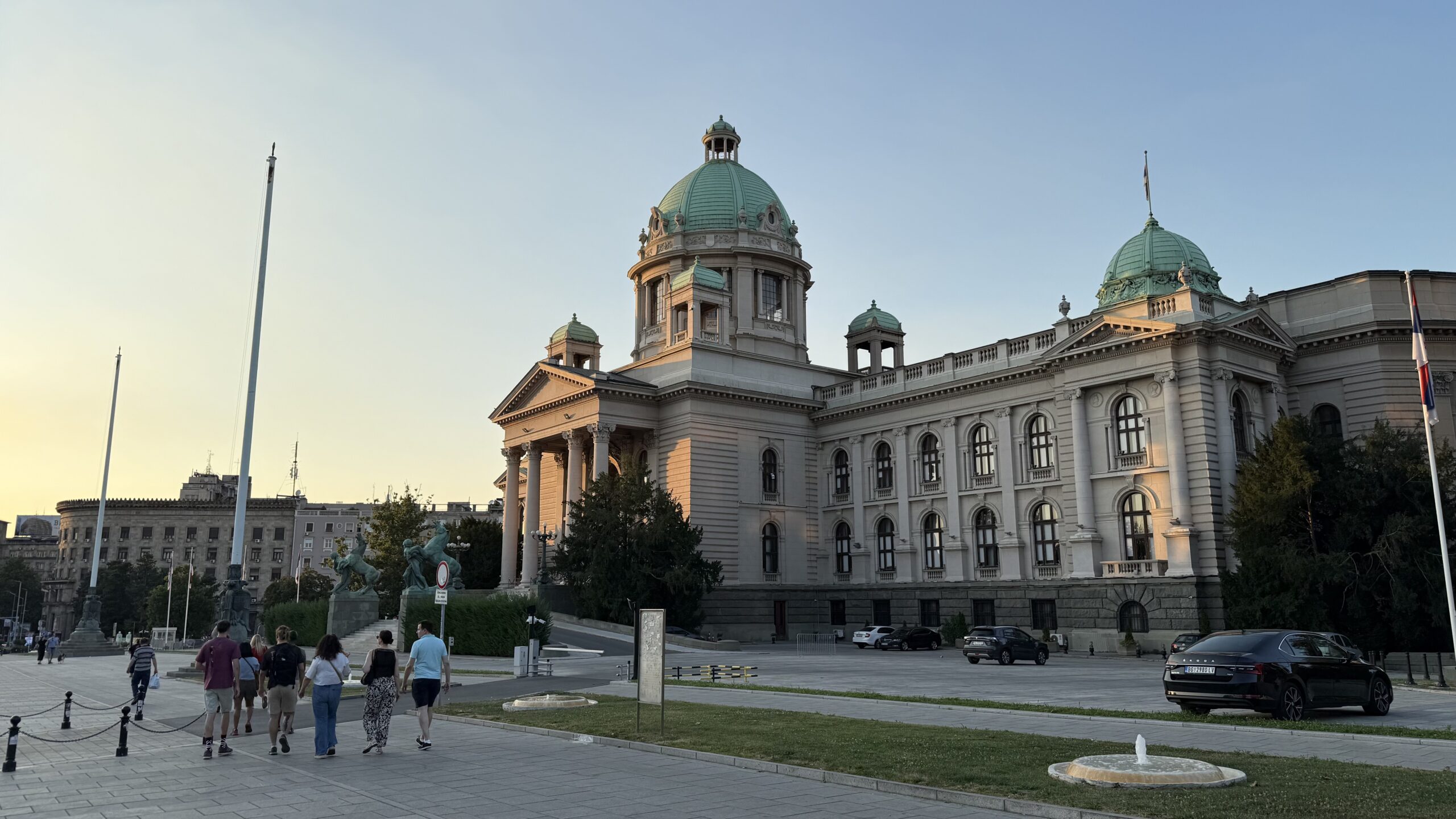
Can you actually live comfortably in Belgrade on €1,000 a month?
That was one of the questions I wanted to answer for myself while spending time in the Serbian capital. I wasn’t looking for a backpacker budget where I would stay in the cheapest room, cook every meal and avoid doing anything fun. At the same time, I wasn’t trying to create a luxury lifestyle either.
I wanted to see what a more normal life would cost.
For me, that means having my own apartment, buying groceries, eating out occasionally, going for good coffee, using public transportation, exploring the city and still having some money left over at the end of the month.
Belgrade is an interesting city for this kind of lifestyle because it gives you many of the things I normally associate with a European capital, but without the same prices you would find in cities such as Paris, London or Vienna.

Of course, €1,000 can mean very different things depending on where you live, how much you go out and what kind of apartment you want. Based on my own experience, I think it’s possible to have a comfortable life here on this budget, especially if you’re sensible about accommodation. Belgrade feels quite similar to Yerevan and Tbilisi in some ways, although I’d say it’s a little more expensive overall, while still offering a very similar relaxed, social atmosphere.
So let’s start with the biggest reason I personally like Belgrade.
Why I Like Living in Belgrade
For me, the biggest appeal of Belgrade is the combination of a proper European capital with a relaxed Balkan atmosphere.
It’s a busy city. There are more than a million people in the wider urban area, there is plenty of traffic, restaurants and nightlife, and the city can feel energetic at almost any time of day.
But you don’t necessarily have to live at that pace.

I can walk around in the morning, stop for a coffee, sit in a café for a couple of hours with my laptop, and later go for a walk along the river. There isn’t always a feeling that you need to rush from one thing to another.
That slower approach to everyday life is often associated with the Serbian word “polako”, which roughly means taking things slowly or not rushing. You really notice it in the café culture. Going for coffee in Belgrade isn’t necessarily something you do quickly before work. It’s often a social activity, and people can sit and talk for hours.
Belgrade’s neighborhoods feel very different
One of the things I enjoy most about Belgrade is how much the city changes depending on where you are.
Stari Grad is the historic center, with pedestrian streets, restaurants, cafés, bars and plenty of activity. Dorćol, where I stayed, has a younger and more creative atmosphere, with independent cafés, restaurants and small businesses.
Vračar feels more residential and local, while Zemun, across the Sava and Danube, can almost feel like a completely different town. It has older houses, narrow streets and a lovely waterfront along the Danube.

Then there is New Belgrade, which is much more modern in its layout and is known for its large apartment blocks and wide streets.
I like having all these different options. You don’t necessarily have to choose between living in a busy city center and moving somewhere completely suburban. There are quite a few neighborhoods in between.
Architecture, art and a little bit of chaos
Belgrade is also an interesting city if you enjoy architecture.
You can walk through streets with Austro-Hungarian buildings, old Serbian architecture and colorful façades, and then suddenly find yourself surrounded by huge brutalist Yugoslav-era buildings and communist apartment blocks.
There are also museums, galleries, independent exhibitions and murals scattered around the city.

It isn’t always beautiful, and I think it’s important to say that.
Some streets are messy. Some buildings clearly need renovation. New construction can appear right next to much older buildings, and the city can look completely different from one block to the next.
But personally, I think those imperfections are part of what makes Belgrade interesting. It doesn’t feel overly polished or designed for tourists. It feels like a real city that has developed over many different periods.
Life by the Danube and Sava
The rivers are another big part of everyday life in Belgrade.
The Danube and Sava give you plenty of opportunities to get outside without leaving the city. You can walk, cycle, sit by the water or simply find a place to have a coffee and watch people go by.
Kalemegdan Park and Belgrade Fortress are particularly nice because they give you a large amount of open space right in the center of the city. The views over the rivers are also some of my favorite in Belgrade.

And if you want to escape the city for a day or a weekend, there are plenty of options nearby. Novi Sad is easy to reach by train, while Fruška Gora and the Serbian countryside are good choices when you want something quieter.
Free public transportation in Belgrade
One of the biggest advantages for anyone trying to live in Belgrade on a budget is public transportation.
Since January 1, 2025, regular public transportation in Belgrade has been free. This includes city buses, trams and trolleybuses, and it applies to both residents and foreigners.
For someone living on €1,000 a month, this makes a noticeable difference.

Transportation can easily become an annoying monthly expense in many European cities, especially if you’re using it every day. In Belgrade, you don’t have to worry about buying a monthly pass or calculating every individual trip.
There are some interesting details behind the decision to make public transportation free, especially considering the size of Belgrade, but that’s a topic for another article.
Food, coffee and nightlife
Food is another reason I enjoy spending time here.
Serbian food is filling and relatively straightforward. You’ll find ćevapi, burek, kajmak, grilled meat, fresh bread and plenty of other Balkan dishes.
Prices have obviously increased over the years, and Belgrade isn’t the ultra-cheap destination it may once have been. But you can still eat at local restaurants without spending the kind of money you might expect in Western European capitals.

Coffee culture is also a big part of daily life. There are cafés everywhere, from simple neighborhood places to much more modern specialty coffee shops.
And then there’s the nightlife.
Belgrade has a reputation for being a party city, and there is definitely plenty going on. You’ll find bars, live music venues, clubs and riverside spots that stay open late. The electronic music scene is particularly active.
But you don’t have to be a party person to enjoy the city. It’s just as easy to have a quiet evening at a local bar or spend the night having dinner with friends.
A city that doesn’t feel completely touristy
Another thing I personally appreciate is that Belgrade doesn’t feel overwhelmingly touristy.
There are tourists, of course, particularly around the central areas and major attractions. But you don’t get the same constant tourist atmosphere that you might experience in cities such as Paris or Vienna.
At the same time, Belgrade has a growing international community. You’ll find remote workers, entrepreneurs, international students and long-term expats living here, which makes it relatively easy to meet people from outside Serbia.

I also like how pet-friendly the city seems to be. I don’t have a pet myself, but you see dogs everywhere, including parks, cafés and restaurants, and finding places that welcome pets generally doesn’t seem too difficult.
So overall, Belgrade works well for me because it offers a lot of what I want from city life: good food, cafés, nightlife, culture, walkable areas, rivers, public transportation and an international community.
And now we get to the most important part if you’re considering living here.
How much does it actually cost?
Rent and Utilities in Belgrade
If you’re trying to live in Belgrade on €1,000 a month, accommodation is probably the expense you need to think about most carefully.
Rent prices vary considerably depending on the neighborhood, apartment size, condition, heating system and even the time of year.
I was lucky with my apartment.
My apartment in Dorćol
I’m currently staying in a tiny studio in Dorćol and paying 60,000 Serbian dinars per month.

That’s roughly €510, depending on the exchange rate.
And honestly, I got a very good deal.
I’m subletting a friend’s apartment while he’s abroad, so this isn’t necessarily the price you should expect to find easily on the open market.
The apartment is only around 25 square meters, so it is genuinely tiny. But for me, it has everything I need.
There is a comfortable bed, a good shower, a small kitchen and, probably my favorite part, a nice balcony overlooking the leafy streets.
The small kitchen has also been useful for keeping my monthly spending under control because I can cook at home most days instead of eating out for every meal.
For one person, I actually think a small apartment like this can work perfectly well if you’re spending most of your time exploring the city rather than sitting at home.
How much is an apartment in Belgrade?
Finding a central apartment for €500 or less is becoming more difficult, particularly if you want something modern, spacious and fully renovated.
If you want to live in Stari Grad, Dorćol or parts of Vračar, you should expect to pay more for the location.
A decent furnished apartment in these popular central neighborhoods can easily cost around 100,000 dinars per month or more. Larger, newer or recently renovated apartments can go considerably higher.

This is why I wouldn’t necessarily recommend trying to live in the absolute center if your total monthly budget is only €1,000.
Moving just 10 or 15 minutes farther from the most expensive parts of central Belgrade can make a meaningful difference in rent.
Where to live on a budget
If you’re looking for cheaper apartments while still wanting reasonable access to central Belgrade, I’d look at areas such as:
- Zvezdara
- Palilula
- Parts of New Belgrade
- Zemun
Zemun is particularly interesting if you prefer a quieter, more residential atmosphere. You still have access to the city, but the neighborhood has its own character and feels quite different from central Belgrade.
Zvezdara and Palilula can also offer better value than the most expensive central neighborhoods.

Personally, I wouldn’t sacrifice too much space or comfort just to say you’re living in the very center. Belgrade is big enough that being a little farther out doesn’t necessarily mean you’re disconnected from everything.
How to find an apartment
If you’re moving to Belgrade for the first time, I would avoid committing to a long-term rental before actually seeing the apartment.
Personally, I’d book somewhere for the first few days or perhaps a couple of weeks through a short-term rental platform, then look for a longer-term apartment after arriving.
This gives you the chance to see different neighborhoods and, more importantly, inspect the apartment yourself.

For longer-term rentals, you can look at local listings, Facebook groups and Serbian real estate websites such as Halo Oglasi.
If you don’t speak Serbian, having a Serbian friend help with communication can also make the process much easier.
One thing I like about the Belgrade rental market is that many apartments come fully furnished. You can often find a place with a bed, kitchen, washing machine and basic furniture already included.
That’s particularly convenient if you’re a digital nomad, remote worker or someone planning to stay in Serbia for only a few months.
Utility Bills
Rent isn’t the only housing cost to consider. Belgrade uses Infostan for several municipal services, and many apartments have district heating that is charged throughout the year, so always ask the landlord what is included.

My apartment isn’t centrally heated, and my electricity, water and internet came to around 6,000 RSD, or just over €50, but this will vary depending on the apartment and your usage.
For a €1,000 monthly budget, keeping rent around €500 to €600 makes the rest of your expenses much easier to manage.
Food, Coffee and Going Out
Food is honestly one of the things that makes living in Belgrade so enjoyable for me.
There is a strong café and restaurant culture here, and eating out doesn’t feel like a special occasion. It’s simply part of everyday life. You don’t have to go to an expensive restaurant to have a good meal, either.
You can start your morning with burek and yogurt, grab some ćevapi for lunch, or sit down for a proper Serbian meal in a traditional kafana.
How much does food cost in Belgrade?
A simple meal at a local restaurant can still cost around 700 to 1,000 Serbian dinars, depending on the restaurant and what you order. Of course, prices go up quickly if you choose one of the newer or more upscale restaurants in central Belgrade.
During my stay, I spent a little over 13,000 dinars on occasional dinners out with friends. For me, that’s pretty good value considering how much I enjoy eating out here.

Portions are usually generous, too. Serbian food is definitely not what I’d call light. There is a lot of grilled meat, bread, potatoes, cheese and rich sauces. It’s simple, filling food, and after spending some time here, you’ll probably find yourself returning to the same few local places again and again.
But you don’t have to eat Serbian food every day.
Belgrade’s restaurant scene has become much more international, especially around the central neighborhoods. You can find Italian, Asian, Middle Eastern, Mexican and Indian restaurants, as well as plenty of vegetarian and healthier options.

Some international restaurants can be surprisingly expensive these days, particularly in popular areas, but there is enough competition that you can still find good-value places if you look around.
Grocery shopping
Because I had a kitchen in my apartment, I cooked at home most of the time.
I spent around 17,000 dinars on groceries during the month, which covered the basics I needed for cooking at home, snacks, drinks and other food.
The big supermarkets such as Maxi and Univerexport are convenient and easy to find, but I wouldn’t rely on supermarkets alone.
One of my favorite ways to buy food in Belgrade is visiting the local farmers’ markets. They’re great for fresh fruit and vegetables, but you can also find cheese, meat and other local products.
I especially like the atmosphere of these markets. You can actually talk to the people selling the food, and sometimes you’re buying directly from local farmers. It makes grocery shopping feel much more personal than simply walking around a supermarket filling a basket.

If you’re trying to keep your cost of living in Belgrade low, I’d recommend buying mostly local and seasonal products. Imported food can get expensive surprisingly quickly, especially if you’re looking for products from Western Europe.
So you can definitely eat well in Belgrade without spending a fortune. You just need to be a little more selective about what you buy.
Coffee Culture in Belgrade
Coffee deserves its own section because it’s such a big part of life here.
There are cafés everywhere, and people don’t seem to be in a hurry to leave them.
Going for coffee in Belgrade can mean sitting down with a friend for an hour or two, reading a book, working on your laptop or simply watching the world go by.
That’s actually one of the things I enjoy most about the city.
I sometimes work from cafés, so I don’t just buy coffee because I need caffeine. I enjoy the atmosphere, the people-watching and being able to sit outside and watch everyday life happening around me.

If you like specialty coffee, you’ll also have plenty to explore. Belgrade has a growing specialty coffee scene, with newer cafés offering everything from good cappuccinos to more experimental drinks.
A traditional domaća kafa, which is similar to Turkish coffee, can be very affordable. In newer cafés, a specialty cappuccino might cost around 150 dinars, while more upscale specialty coffee shops can charge 300 to 400 dinars or more.
I spent at least 5,000 dinars a month on coffee, partly because I often worked from cafés.
For me, it’s money well spent.
Nightlife
Then there is Belgrade’s famous nightlife.
The city has a serious reputation for going out, and after spending some time here, I understand why.
Techno and electronic music are particularly popular, and there are plenty of clubs and events for people who want to dance until late.
For example, entrance to techno clubs such as Karmakoma can be around 700 dinars when buying tickets online, while paying at the door can cost around 900 dinars or more, depending on the event.

But you definitely don’t have to go clubbing every weekend to enjoy the social side of Belgrade.
There are small pubs, wine bars, craft beer places, live music venues, traditional kafanas and restaurants all over the central areas. And if you want a bigger night out, there are plenty of venues along the rivers as well.
Alcohol is generally still cheaper than in many parts of Western Europe, although prices vary a lot depending on where you go. A beer in a club might cost around 400 to 500 dinars, while a local bottled beer in a regular bar can be around 300 dinars.
At some of the trendier places, though, prices can be surprisingly high.
That’s something I noticed in general with Belgrade. You can still live relatively cheaply, but the city also has plenty of places where you can spend Western European prices if you want a more upscale experience.
For me, the good thing is that I have the choice.
I can have a cheap local meal, sit in a neighborhood café, walk along the river and spend very little. Or I can go out for a nicer dinner and drinks when I feel like it.
That flexibility is one of the reasons I think a €1,000 monthly budget can work quite well in Belgrade.
Getting Around Belgrade
Transportation is another area where Belgrade is unusually affordable.
In fact, this is one of the biggest advantages I noticed while living here.
Since January 2025, Belgrade’s regular public transportation has been completely free. That includes city buses, trams and trolleybuses, and it applies to both locals and foreigners.

There is a complicated political and financial story behind the decision, and locals have different opinions about why it happened. Whatever the reason, as someone trying to keep monthly expenses under control, I’m certainly not going to complain.
Having free public transportation 24 hours a day is a huge advantage.
And considering the traffic in Belgrade, it’s also nice to have a practical alternative to driving.
Is public transportation in Belgrade good?
I was actually surprised by how usable the system is.
You might expect free public transportation to be badly maintained or unreliable, but in my experience, it works reasonably well.
Belgrade has a slightly unusual mix of vehicles, too. You can see an old tram that looks like it has been running for decades operating on the same network as a much newer modern tram.
Some of the older buses don’t have air conditioning, which can obviously be uncomfortable during the hottest summer days, but the dedicated bus lanes can help make certain journeys surprisingly quick.
The system isn’t perfect, but considering that you don’t have to pay for it, I think it’s a pretty impressive benefit.
Walking and cycling in Belgrade
I also walk a lot.
Central Belgrade is a great city to explore on foot, particularly around Stari Grad, Dorćol, the waterfront and Kalemegdan.
I can easily spend an afternoon walking between cafés, restaurants, parks and different neighborhoods without really having a plan. That’s actually one of my favorite ways to experience the city.

You keep coming across interesting architecture, old buildings and murals that you might completely miss if you’re sitting in a taxi or driving.
There are also bike lanes and cycling routes, particularly along the rivers.
I wouldn’t personally describe Belgrade as one of Europe’s easiest cycling cities, though. There are hills in some areas, traffic can be stressful and the cycling infrastructure isn’t always ideal.
For me, walking and public transportation are simply easier for everyday life.
Taxis and Yandex Go
For shorter trips, taxis are widely available, and apps such as Yandex Go are convenient.
A short taxi ride can cost around 500 dinars, although this obviously depends on the distance and traffic.
The problem is that those small rides can quickly add up if you use taxis every day.
I personally didn’t need one during this month.
Because my apartment was relatively central, I could walk most places, and for anything farther away, I could use the free public transport.
So my total transportation cost for the month was literally zero.
That’s pretty hard to beat.
Do you need a car in Belgrade?
For normal life in the city, I don’t think you need one.
In fact, I think having a car would probably create more problems than it solves for me. Parking can be difficult, especially in central Belgrade, and once you add fuel, insurance, maintenance and parking costs, owning a car doesn’t make much sense if you’re mainly living in the city.
It’s a different story if you want to explore Serbia regularly.
Novi Sad is easy to reach by fast train, but if you want to visit smaller towns, mountains or areas that aren’t well connected by public transportation, renting a car can be useful.
For everyday life in Belgrade, though, I’d happily go without one.
Other Monthly Expenses in Belgrade
There are always smaller expenses that don’t seem important individually but can add up by the end of the month.
For me, these included mobile data, haircuts, toiletries, household products and a few random purchases.

Mobile internet and SIM cards
Since I mostly use Wi-Fi at home, I kept my mobile data costs very simple.
I bought an eSIM for €9, which was enough for what I needed.
I also looked at local Serbian SIM options, and they can be around the same price while sometimes offering even more data.
So if you’re moving to Belgrade and need affordable mobile internet, I don’t think this is something you’ll need to spend much money on.
Haircuts and personal care
A basic men’s haircut at a local barbershop can cost around 1,000 dinars.
Of course, prices can be considerably higher at modern or premium barbershops, especially in the more expensive central neighborhoods.
For me, there’s no real need to pay extra for something as simple as a haircut, so I usually look for a normal local barbershop.
Toiletries and household products
I spent around 4,200 dinars on toiletries and household basics during the month.
That included things like shampoo, toothpaste, soap, toilet paper and cleaning products.
These are easy to find in supermarkets such as Maxi and Lidl, so you don’t need to search around the city for basic everyday products.
I think around 4,200 dinars was pretty reasonable for the month, although obviously this depends heavily on what you buy and how often you need to replace things.
The random expenses
Then there are the expenses you never really plan for.

Maybe something breaks in your apartment. Maybe you need a new phone cable, some clothes, an accessory or something else that wasn’t part of your original budget.
These aren’t necessarily expensive in Belgrade, but they are part of real life.
I always like leaving a little bit of room in my monthly budget for these things rather than planning every single dinar and assuming nothing unexpected will happen.
My Total Cost of Living in Belgrade
So, after adding everything together, how much did I actually spend?
My total came to roughly €1,000 for the month.
That included my small studio apartment, utilities and internet, groceries, eating out, coffee, health insurance and the smaller everyday expenses I mentioned above.
For me, this represents a comfortable but fairly simple lifestyle in Belgrade.
I’m not living extravagantly, but I’m also not trying to survive on the absolute minimum. I have my own apartment, I cook at home, I eat out with friends, I regularly visit cafés, I can explore the city freely and I don’t have to worry about transportation costs.
And I think that’s the important distinction when talking about whether you can live in Belgrade for €1,000 a month. You can certainly spend much less.

Some locals manage on a smaller budget by living farther from the center, cooking almost everything at home and keeping entertainment costs low.
But you can also spend much more. A larger apartment in a prime neighborhood, frequent restaurant meals, taxis, nightlife and a more expensive lifestyle can easily push your monthly expenses to €1,500 or €2,000 or more.
For me, around €1,000, or roughly 130,000 Serbian dinars at the exchange rate I was using, feels like a realistic middle ground.
My costs breakdown:
| Item | Cost (RSD) | Approx. EUR |
| Rent (small studio) | 60,000 RSD | ≈ €511 |
| Utilities + Internet | 6,000 RSD | ≈ €51 |
| Groceries | 17,000 RSD | ≈ €145 |
| Eating out | 13,000 RSD | ≈ €111 |
| Coffee | 5,000 RSD | ≈ €43 |
| Public transport | 0 RSD | ≈ €0 |
| Healthcare & insurance | 6,000 RSD | ≈ €51 |
| Activities & entertainment | 7,000 RSD | ≈ €60 |
| Haircut | 1,500 RSD | ≈ €13 |
| SIM / mobile internet | 1,000 RSD | ≈ €9 |
| Toiletries & household items | 4,200 RSD | ≈ €34 |
| TOTAL MONTHLY COST | 120,700 RSD | ≈ €1,027 |
It gives me enough money to enjoy Belgrade without constantly checking my bank account every time I want to go for a coffee or dinner.
And that’s probably the biggest thing I wanted to find out.
Living in Belgrade on €1,000 isn’t about living as cheaply as possible. It’s about making a few sensible choices, especially when it comes to rent, and then having enough left over to actually enjoy the city.
Entertainment and Lifestyle in Belgrade
One of the things I really like about Belgrade is that you don’t always need a plan to have a good day.
Sometimes I’ll leave my apartment just because I want a coffee, walk through Dorćol, continue towards Kalemegdan, and then end up sitting by the river for a while. Before I know it, half the day has disappeared.
I think that’s one of the reasons Belgrade works so well for me as a place to live.
There are plenty of things to do, but you don’t constantly feel like you need to spend money to enjoy yourself.
Everyday life in Belgrade
A lot of the social life here revolves around cafés, restaurants and bars, and people actually spend time in these places.
Coffee isn’t something you necessarily grab on your way to work and forget about. You sit down, talk, catch up with friends, read, work or simply watch people passing by.
That suits me quite well.
There are also plenty of simple ways to spend a day without spending much money. Kalemegdan Park and Belgrade Fortress are two of my favorite places to walk, especially around sunset. The views over the Danube and Sava are beautiful, and you can easily spend a couple of hours there without spending anything.

There are also long promenades along both rivers, while Ada Ciganlija becomes especially popular during the warmer months. You can swim, cycle, run, walk or simply sit outside and enjoy the weather.
For someone trying to live in Belgrade on a €1,000 monthly budget, having so many free or inexpensive things to do makes a real difference.
Staying active without spending much
If you’re into fitness, you’ll find plenty of gyms around Belgrade.
A typical gym membership can start at around €30 to €50 per month, with more expensive options available if you want better facilities or additional services.
Personally, I don’t go to the gym very often.
I usually prefer jogging around the city or using the outdoor workout areas in parks. So for me, staying active doesn’t really cost anything.
I also like that you can combine exercise with exploring the city. Going for a run along the river or through one of the parks doesn’t feel like a workout you have to force yourself to do. You’re simply outside and seeing more of Belgrade at the same time.
Making friends as a foreigner
I find Belgrade quite easy to settle into, thanks to its international community, cafés, coworking spaces, sports and nightlife. English is generally easy to use, especially with younger people, and after a few months, you naturally develop your favorite cafés, restaurants and places to walk.
For me, that’s when a city starts feeling like home. And in Belgrade, you can have a good social life without spending a lot of money.
Visa Options for Living in Serbia
If you’re thinking about moving to Serbia, the visa situation is obviously something you’ll need to look into before making any plans.
The rules depend on your passport and your personal circumstances, so there isn’t one simple answer that applies to everyone.

Many nationalities, including citizens of the United States, United Kingdom and Canada, can enter Serbia without a visa for short stays of up to 90 days within a 180-day period.
If you want to stay longer, you’ll need to look at temporary residence options.
There are several possible grounds for temporary residence, depending on your situation. These can include employment, self-employment, running a business, property ownership, family reunification and other qualifying circumstances.
Serbia for digital nomads and remote workers
For digital nomads and remote workers, self-employment can be one option worth investigating.
Some foreigners establish a small business or register as an entrepreneur in Serbia and use self-employment as the basis for their temporary residence and work authorization.
However, I wouldn’t assume that simply opening a company automatically gives you the right to live in Serbia.
There are tax, accounting and administrative responsibilities involved, and the exact requirements can change.
If you’re seriously considering moving to Serbia, I would check the current rules for your nationality and specific situation before making any decisions. Immigration requirements can change, and something that worked for another foreigner may not necessarily be the right option for you.
For me, the important point is that Serbia has several possible routes for longer-term stays, so you’re not limited to simply leaving the country every 90 days if you want to build a more permanent life here.
Healthcare and Insurance
Belgrade has both public and private healthcare, and there are plenty of private clinics around the city.
As a foreigner, though, I would personally budget for private healthcare or international health insurance rather than relying entirely on the public system.
A basic consultation at a private clinic can cost around 5,000 dinars, although prices vary depending on the doctor, clinic and type of appointment.
Another advantage for foreigners is that many private clinics have English-speaking doctors, which makes arranging an appointment and explaining a problem much easier.
Luckily, I haven’t needed to use a hospital during my time in Belgrade.
I still prefer having international travel insurance for peace of mind. At the moment, I’m using SafetyWing and paying around $62 per month.
For me, this is one of those expenses that I would rather have and not need than suddenly need and not have.
If you’re planning to live in Serbia for several months or longer, I’d recommend looking at your insurance options before you arrive and checking exactly what is covered, particularly for private healthcare, emergencies and treatment outside Serbia.
The Downsides of Living in Belgrade
Belgrade has a lot going for it, but I don’t want to make it sound perfect.
There are definitely some things that can become frustrating when you spend more time here.
Traffic
Traffic is probably my biggest complaint.
During rush hour, Belgrade can get seriously congested, and crossing the city can take much longer than you would expect when looking at the distance on a map.

This is another reason I’m happy not to have a car.
Driving in heavy traffic and then trying to find parking in central areas would probably make my daily life more stressful rather than easier.
The free public transportation system also makes it much easier for me to avoid dealing with the traffic myself.
Air pollution
Air pollution is another issue I’d consider before moving to Belgrade permanently.
The problem tends to be more noticeable during the colder months, when winter air quality can sometimes become poor.
If you’re planning to live here year-round, particularly if you have concerns about air quality, I’d definitely research this before choosing Belgrade.
For me, it’s not a reason to avoid the city, but it’s something I wouldn’t ignore either.
Housing quality and rent
The rental market can also be frustrating.
The best apartments in popular neighborhoods aren’t particularly cheap anymore, especially if you want something modern, renovated and centrally located.
And sometimes the buildings themselves can be surprising.
You can find a beautiful, completely renovated apartment inside a building that looks like it hasn’t been touched in decades.
That’s just part of Belgrade’s architectural mix.
Personally, I don’t mind it too much, but if you’re expecting every apartment building to look modern and polished, you might be disappointed.
The Serbian language
Finally, there’s the language.
Serbian isn’t the easiest language for me, and while you can get by with English in many parts of central Belgrade, I wouldn’t assume everyone will speak it.
In expat-friendly neighborhoods, cafés, restaurants and younger social circles, English is usually quite easy to use.

Outside those environments, things can become more difficult.
I think learning some basic Serbian would make living here much easier and would also help you connect with locals. Even simple phrases can go a long way.
None of these things are deal-breakers for me.
But they’re exactly the kind of details I would want to know before deciding whether Belgrade is the right city for me.
Frequently Asked Questions About Living in Belgrade
Can you live in Belgrade for €1,000 a month?
Yes, based on my own experience, I was able to live in Belgrade for around €1,000 a month with my own small apartment, groceries, eating out, coffee, utilities, internet, insurance and other everyday expenses. The biggest factor is rent, so finding reasonably priced accommodation is what makes this budget realistic.
How much does it cost to rent an apartment in Belgrade?
Rent in Belgrade varies significantly by neighborhood, apartment size and condition. I paid 60,000 Serbian dinars per month for a small 25-square-meter studio in Dorćol, but I was subletting a friend’s apartment, so I consider this a particularly good deal. In popular central neighborhoods such as Dorćol, Stari Grad and Vračar, good furnished apartments can easily cost 100,000 dinars or more per month.
What are the best neighborhoods to live in Belgrade?
For central city life, I particularly like Dorćol, while Stari Grad and Vračar are also popular choices. If you want better value or a quieter atmosphere, I’d look at Zvezdara, Palilula, parts of New Belgrade or Zemun. Personally, I wouldn’t worry too much about living in the absolute center because being 10 or 15 minutes farther out can make a noticeable difference in rent.
Is public transportation free in Belgrade?
Yes. Regular public transportation in Belgrade has been free for everyone since January 1, 2025. This includes city buses, trams, trolleybuses and the BG Train, making transportation one of the easiest expenses to eliminate from a monthly budget. (Tourist Organization of Belgrade)
Is Belgrade a good city for digital nomads?
I think Belgrade can be a very good choice for digital nomads who want a real European capital with a strong café culture, nightlife, international community and relatively manageable living costs. I also like that there are plenty of cafés where you can work, while the city is large enough that you don’t run out of neighborhoods, restaurants and places to explore after a few weeks.
Is Belgrade expensive for food?
It depends on where you eat, but I still find local food reasonably affordable. A simple meal at a local restaurant can be around 700 to 1,000 dinars, while modern restaurants in central areas can cost considerably more. I spent around 17,000 dinars on groceries and a little over 13,000 dinars on occasional dinners out during my month in Belgrade.
How much should I budget for groceries in Belgrade?
For my own lifestyle, I spent around 17,000 Serbian dinars on groceries for the month. I had a kitchen and cooked most of my meals at home. I also recommend visiting local farmers’ markets because fresh fruit, vegetables, cheese and other local products can offer good value, and I personally enjoy the experience much more than doing all my shopping in supermarkets.
Is Belgrade good for expats who don’t speak Serbian?
You can get by with English surprisingly well, especially in central Belgrade, cafés, restaurants and among younger people and the international community. However, I wouldn’t expect English to work everywhere. If you’re planning to stay for several months or longer, learning some basic Serbian will make everyday life easier and will also help you connect with locals.
Is healthcare in Belgrade good for foreigners?
Belgrade has both public and private healthcare, and there are many private clinics where foreigners can make appointments relatively easily. Many private clinics also have English-speaking doctors. I would personally budget for private healthcare or international health insurance, especially if you’re planning to live in Serbia rather than simply visit.
How long can foreigners stay in Serbia without a visa?
This depends on your nationality and passport. Serbia allows visa-free entry for many nationalities, but the exact conditions vary. For short stays, the common rule is up to 90 days within a 180-day period. If you want to stay longer, Serbia also has longer-term visa and temporary residence options depending on your circumstances. Always check the current Serbian government requirements for your specific passport before making long-term plans.