
I spend a few months every year in Da Nang, and over time it has become one of my main bases in Southeast Asia. One of the most common questions I get is about the Da Nang cost of living and how much you actually need to live here comfortably.
You will find plenty of estimates online, from ultra-cheap backpacker budgets to more comfortable expat lifestyles, but very few explain what everyday life actually costs in a clear and realistic way.
In this guide, I am sharing my real monthly expenses based on personal experience, not theory.
This is not a survival budget. And it is not a luxury lifestyle either.
It is a realistic picture of a comfortable, active daily life, including rent, food, coffee, transport, social life, and everything in between.
And yes, the number might surprise you. Around $700 per month.
Why I Keep Coming Back to Da Nang
Before we talk numbers, let me explain why this city works so well.
There’s something about Da Nang that just makes life feel… lighter.
You move more without trying. You spend more time outside. Your days don’t feel rushed or heavy like in bigger cities. There’s always a breeze from the ocean, and the air, especially near the coast, just feels fresh.
And then there’s the beach.
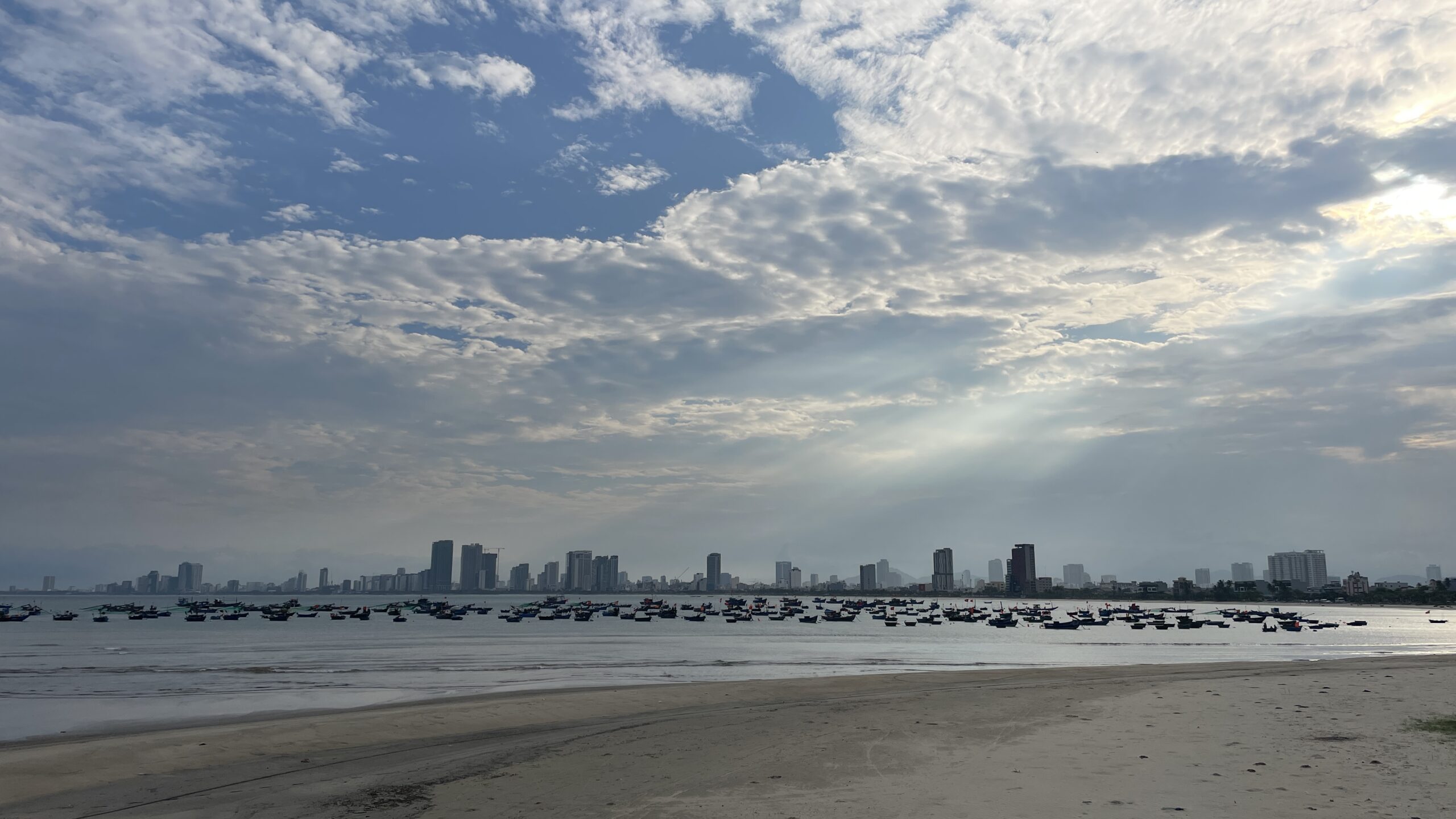
My Khe Beach is easily one of the best urban beaches I’ve seen in Asia. Wide, clean, lined with palm trees, and always alive in the mornings. Locals working out, people playing volleyball, others just walking or stretching.
It’s one of those places where being active feels natural, not forced.
Another thing I love is how close everything is. Within 40 minutes, you can be in Hoi An, a completely different world with lantern-lit streets and a slower, almost nostalgic atmosphere.
And if you feel like escaping even further, the Hai Van Pass is one of the most scenic coastal drives you’ll find anywhere.
But what really makes daily life special here is how close you are to nature.
Sometimes I go up to the Linh Ung Pagoda, where the Lady Buddha overlooks the sea. I just sit there for a while, reading, thinking, doing nothing. Monks chanting in the background, monkeys running around (don’t feed them, seriously).
It’s simple, but it resets your mind.

Finding an Apartment (And Avoiding Mistakes)
Let’s start with the biggest expense: rent.
When you first arrive in Da Nang, accommodation can feel surprisingly expensive. Especially if your first instinct is to check Airbnb or Booking. At that point it almost feels like a “modern beach city” with Western-style prices.
But the reality is a bit more interesting. There are basically two different price worlds here.
Near the beach, especially around My Khe, you are in tourist territory. Prices are higher, buildings are newer, and everything is designed for short stays. Walk just a few streets inland, and the situation changes completely. Suddenly you are in local pricing mode, where the same type of apartment can cost significantly less.
What I usually do is keep it very simple. I book a place only for the first few days, just to have a base. Then I go out and physically walk around the neighborhood looking for “Apartments for Rent” signs. A lot of the best deals are not listed online at all. Some buildings literally just wait for people to show up and ask.
That is actually how I found my current place.
Nothing fancy, nothing Instagram-worthy. But it is clean, bright, has a good shower, a small balcony, and a location that works well for daily life. And honestly, that combination is more important than anything else.
Price-wise, around 6,000,000 VND (about $230 per month) is very normal for a small studio like this. It might sound low if you are coming from a Western city, but here it is a standard range, and in some cases you can even negotiate lower if you deal directly with landlords.
Another thing people often underestimate is location. It is not just about price, it completely changes your day-to-day experience.
The first few blocks near the beach look attractive at first. You are close to the sea, cafés, restaurants, everything feels active. But after a while, it can become quite intense. It is louder, more crowded, and very tourist-focused. Even simple things like a quiet walk or working from a café can feel a bit overstimulating.
If you move just 10 to 15 minutes inland, everything shifts. Streets become calmer, cafés feel more local, and daily life slows down in a noticeable way. It starts to feel like a neighborhood instead of a resort zone.
When it comes to finding a place, there are a few important things I always check before committing.
First, construction. The city is developing fast, and building noise can easily ruin an otherwise perfect apartment.
Second, karaoke. This is something people underestimate until they experience it. Karaoke culture is huge here. It can be fun in the background, but if it is close to your apartment, it can also completely change your evenings.
And finally, mold. Because of the humidity, poorly maintained apartments can develop it quite quickly. I always check corners, wardrobes, and bathrooms properly before deciding. A nice-looking room can still hide moisture issues.

Utilities, Cleaning, and Internet
This is one of the most surprisingly affordable parts of living in Da Nang.
Da Nang is not actually that hot from November to March, so during those months I do not use air conditioning at all. My electricity bill usually stays under 500,000 VND ($20–$25) per month.
Around April and May, I start using the A/C again, but even then the bill rarely goes above 1,000,000 VND ($40–$45), mostly because I am not home very often.
Water is extremely cheap and usually comes out to just a couple of dollars per month for a single person.
Wi-Fi is commonly included in rent, which removes another potential monthly expense entirely. When it is not included, it is still very affordable and easy to set up.
Since I do not have a washing machine in my apartment, I use local laundry services. The standard rate is around 17,000 VND per kilogram ($0.70/kg), which keeps monthly laundry costs very low.
I also pay for weekly apartment cleaning for a small studio, which typically costs around 400,000 VND per month ($16).
Many people choose to do these things themselves, which makes total sense. Personally, I do not mind paying for them. It is affordable, convenient, and it also supports local workers.
Overall, all of these small living costs combined come to around $50 per month.
Food: Why I Rarely Cook
I don’t cook here. Not because I can’t, but because it usually does not make much sense in Da Nang.
Eating out is often cheaper, faster, and honestly better than cooking at home.
Vietnamese food is easily one of my favorites in the world, so yes, I might be slightly biased. But in Da Nang, it is very hard not to love the food scene.
One thing you quickly realize is that fancy-looking restaurants do not automatically mean better food. In many cases, it is the opposite. A simple bowl of pho from a small local place often tastes fresher and more flavorful than something served in a polished café that costs three times more.
And this is not a rare experience here. It happens all the time.
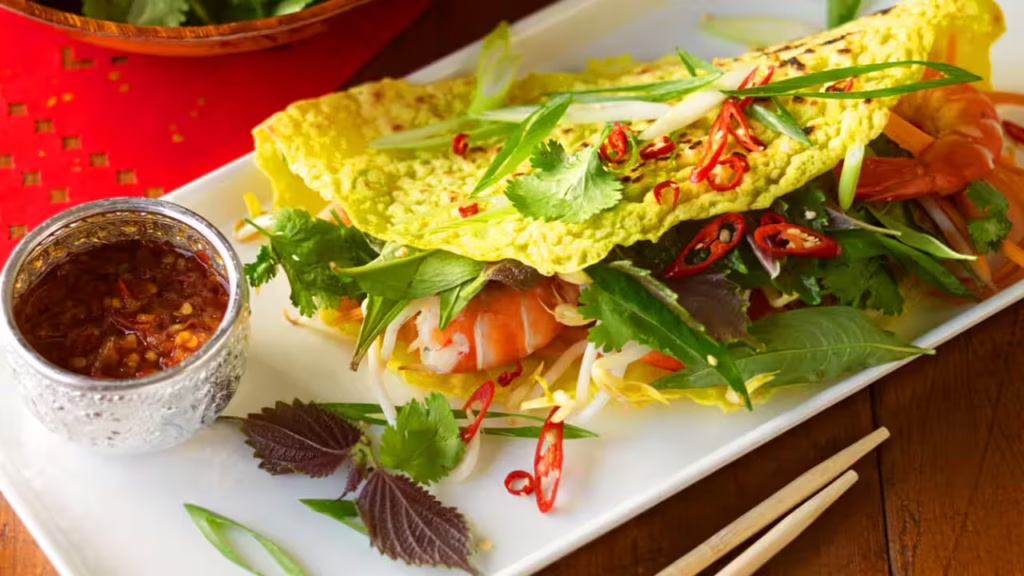
Of course, you will find all the classics like pho, banh mi, and bun cha, but Central Vietnam also has its own everyday dishes. Mi Quang is everywhere, and you will see it on almost every street. Banh xeo is another local favorite, lighter and crispier than what many visitors expect.
A full meal at a local family-run restaurant usually costs around 40,000 to 50,000 VND ($1.60 to $2). That is a freshly cooked dish, usually served with tea or filtered water, with no extra charges or surprises. For many long-term visitors, this becomes the default way of eating.
Over time, you naturally find your regular spots. You go back to the same places, and eventually the owners start recognizing you, sometimes even remembering your usual order or spice preference. It is a small detail, but it makes daily life feel much more personal and comfortable.
Of course, sometimes you want something different, like Japanese, Indian, Western food, or healthier café-style meals. Da Nang has plenty of options, but location makes a big difference. A meal that feels expensive near the beach can easily drop to around 120,000 to 150,000 VND ($5 to $6) just a short distance inland. Same food, completely different pricing.
When it comes to groceries, my situation is very simple. I do not cook at home since I do not have a kitchen, and also because eating out in Vietnam is often cheaper than cooking for one person.
So my grocery spending is minimal. Mostly coffee, fruit, snacks, and unfortunately a lot of bottled water. Tap water is not drinkable, and refill stations are not really part of daily life here.
Local markets are usually cheaper and fresher than most people expect, even if you do not speak Vietnamese. Supermarkets and convenience stores are everywhere, but prices can vary. Interestingly, unlike Saigon or Hanoi, you do not really see chains like 7-Eleven or Circle K in central Da Nang. That lack of competition often means local supermarkets set their own pricing.
Over time, most people naturally develop a mixed routine. Markets for fresh produce, supermarkets for convenience items, and local restaurants for daily meals, with international food occasionally.
If you follow a similar lifestyle, your monthly food expenses usually land somewhere between 5 to 6 million VND, roughly around $200. And honestly, the quality of food you get for that budget is quite impressive.
Coffee Scene in Da Nang

I did not expect this, but coffee slowly became a real part of my monthly budget in Da Nang. At this point, I probably spend around 1.5 million VND ($60) per month just on coffee, and honestly, it is easy to understand why.
If there is one thing Da Nang does exceptionally well, it is coffee. Vietnam already has a strong coffee culture, but Da Nang feels like a very comfortable place to actually enjoy it.
Cafés are everywhere. And I really mean everywhere. You cannot walk more than a few minutes without passing one.
What makes the coffee scene here special is the variety. You can go from a tiny local spot with plastic chairs, to a quiet hidden garden café, to a modern designed space that would easily fit into any major European city.
The traditional Vietnamese coffees are a big part of daily life here. A ca phe sua da (iced coffee with condensed milk) is the classic choice. It is strong, sweet, and usually costs around 20,000 to 30,000 VND ($0.80 to $1.20). A ca phe den (black coffee) is even simpler, very strong and slightly bitter, usually at the same price. You will also find coconut coffee almost everywhere now, which is colder, creamier, and surprisingly addictive in hot weather.
Once you move into modern cafés, prices usually sit between 40,000 and 70,000 VND ($1.60 to $3). Still very affordable, especially considering the atmosphere you get.
And the atmosphere is a big part of why people stay in cafés for hours. Many local owners clearly care about design and comfort. You will often find cafés filled with plants, natural light, wooden interiors, small garden spaces, and sometimes even fish ponds or rooftop seating.
Most cafés also have reliable Wi-Fi and comfortable seating, which makes them perfect for working, meeting people, or just escaping the heat for a while.
Daily life naturally starts to revolve around them. You see students studying, remote workers on laptops, groups of friends chatting, and people just sitting quietly for hours.
For digital nomads and slow travelers, this becomes one of the biggest advantages of living here. Finding a good café with Wi-Fi and air conditioning is never a problem. The real challenge is actually choosing where to go.
Over time, most people develop their own rotation of favorite cafés depending on mood, focus, or time of day. That is also why many expats rarely feel the need for coworking spaces here.
Getting Around the City
Da Nang has a population of around 1.2 million, which makes one thing surprisingly noticeable right away. There is technically public transport, but in reality, it is not something you will ever rely on.
You might see bus stops around the city, and Google Maps will even show a few routes, but in daily life, I have almost never seen anyone actually using them.
Instead, scooters completely dominate everything.
For locals, scooters are not just transport, they are freedom. And for most foreigners staying long-term, it quickly becomes the default way to get around as well.
A typical scooter rental in the city costs around 1.8 million VND ($70) per month. Many of these are small Vietnamese-made electric scooters, often colorful, simple, and very practical. Charging stations are easy to find, and running costs are basically zero compared to fuel.
A lot of expats even take it a step further. They buy a second-hand scooter, use it for a few months, and then resell it before leaving, usually losing very little money in the process.
In my case, I actually stopped riding scooters after a small accident in Thailand, so I moved to a different setup.
Now I mainly rely on Grab, which is the local ride-hailing app similar to Uber. Bike taxis are everywhere, and they are extremely convenient. Most short trips cost around 20,000 to 40,000 VND ($0.80 to $1.60), so you can get across the city very quickly for almost nothing.
Walking is also surprisingly pleasant in many areas. The city is relatively flat, streets are wide, and distances are manageable, especially if you are living centrally.
Another great option is cycling. Daily bike rentals usually start around 90,000 VND ($3–4), and get cheaper if you rent long-term. It is actually one of the best ways to explore quieter neighborhoods or ride along the beach.
For me personally, combining walking, Grab, and occasional cycling keeps my monthly transport cost under 800,000 VND ($30). For a city this size and lifestyle, that is hard to beat.
Social Life, Bars, and Activities
Da Nang is one of those places where you rarely have the problem of “nothing to do”. If anything, the real challenge is choosing what to go for in a given evening.
There is a constant flow of small events and casual social activities happening around the city. Live music is probably the easiest example. You will find everything from low-key jam sessions in local bars to small bands playing in more designed rooftop venues. Most places do not have entrance fees. You just grab a drink and enjoy the night.
A local beer like Huda usually costs around 30,000 VND ($1.20). In more modern or tourist-focused bars, imported or craft beers are usually closer to 80,000 to 90,000 VND ($3–3.50). Cocktails and stronger drinks can obviously go higher, so it is always worth checking the menu before ordering too fast.
What makes the city interesting is how social everything feels. It is very easy to end up involved in something without planning it. There are digital nomad meetups, beach workouts, yoga sessions, volleyball games, ice baths, and random community events happening throughout the week. A lot of them are either free or cost almost nothing.
Billiards is also a surprisingly big part of life here. You will see pool tables everywhere, from small local spots to proper billiard clubs. Locals take it seriously, and if you stay here long enough, you will probably end up playing at least a few games just by being around it.
Over time, something subtle happens. You start forming your own rhythm in the city. A few favorite cafés, a couple of regular bars, familiar faces you keep running into, and new people you meet without actively trying. It does not feel forced, it just develops naturally.
For most people, entertainment costs stay surprisingly low. Around 1 million VND ($40) per month is usually enough for a pretty active social life if you are not going out heavily.
Of course, this can change quickly depending on lifestyle. If you go out often or prefer more upscale places, it is very easy to double or triple that without even noticing.
Healthcare and Insurance
Da Nang actually does surprisingly well when it comes to healthcare, especially for day-to-day medical needs.
Vietnam in general has a solid healthcare system, and in Da Nang you can find several modern private hospitals that feel very comfortable compared to what people might expect in Southeast Asia. Equipment is up to date, waiting times are usually short, and in many cases you will find staff who can communicate in English.
One of the most commonly used hospitals among expats is Hoan My Hospital. A lot of foreigners go there for everything from basic checkups to more unexpected situations, mostly because the process is simple and efficient.
For standard things like consultations, blood tests, or X-rays, the costs are usually quite low compared to Western countries. You can walk in, get checked, and leave without the long waiting times or high bills you might be used to elsewhere.
That said, this affordability mainly applies to routine care. Once you move into more serious situations, hospital stays or complex treatments, costs can rise quickly. It is still cheaper than many Western countries, but it is not something you want to rely on without preparation.
Because of that, most long-term expats and digital nomads choose to have health insurance.
Personally, I use SafetyWing. It is designed for people living a location-independent lifestyle, and the setup is very simple. Everything is managed online, and you can adjust or cancel the plan easily if your situation changes. I pay around $62 per month, depending on coverage, and it has been a straightforward safety net while traveling.
The Small Expenses People Forget
Da Nang is already very affordable on the big things like rent and food, but there are also a bunch of smaller daily costs that quietly add up in the background. Nothing dramatic, but they still matter when you look at the full monthly picture.
Mobile data is one of the best examples. Vietnam has very cheap and reliable internet. I personally use a local VinaPhone SIM card, which is one of the more stable networks here. My monthly plan costs around 130,000 VND (just under $5) and gives me more than enough data for daily use, navigation, work, and streaming.
A small but important tip here: always register your SIM in an official store with your passport. If you skip that step, you often end up with a tourist SIM that looks fine at first but expires quickly or has limitations.
Haircuts are another simple expense. A basic local barbershop usually costs around 80,000 VND ($3–4). It is nothing fancy, but it is fast, clean, and very convenient. If you go for more Western-style barbers or premium spots, the price obviously goes up, but most everyday cuts are very affordable.
Then there are basic household items like shampoo, soap, toothpaste, detergent, and similar essentials. For me, this usually stays under 200,000 VND ($8) per month. You can find convenience stores and small shops everywhere, so you never really need to plan ahead for these things.
When you combine all of these smaller expenses together, a realistic monthly estimate sits around 400,000 VND ($15–17). It is not a major cost, but it is one of those categories that quietly completes the full lifestyle budget.
My Real Monthly Cost Breakdown

Here is the breakdown in a simple form:
- Rent: $231
- Utilities + cleaning: $53
- Food: $190
- Coffee: $57
- Transport: $33
- Insurance: $62
- Social life: $38
- Extras: $27
Total: around $691 per month
Alright, let’s put everything together.
Da Nang is not a place where you need to constantly think about money, but it is still useful to see how the full picture looks when all the small and big expenses are combined.
These numbers are based on my actual monthly spending and what I regularly see others paying here. Nothing extreme, no luxury lifestyle, and also not trying to live on the absolute minimum. Just a normal, comfortable day-to-day life.
When everything is added up, my monthly budget comes to around 18 million VND, which is roughly $690–700 per month.
That includes everything: rent, food, transport, insurance, coffee, eating out, social life, and all the small things that quietly add up like laundry, haircuts, SIM card, and random activities.
Things like coffee runs, billiards nights, live music, beach evenings, and casual weekends are all part of this number as well. It is basically the full lifestyle, not just survival costs.
Of course, everyone’s experience is different. Some people spend significantly more, especially if they go out often or choose higher-end places. Others can easily live on less if they cook more and limit extras. But for me, this range gives a very comfortable and active lifestyle without feeling restricted.
Visa Situation in Vietnam (Important to Understand)
Let’s talk visas, because this is probably one of the most confusing parts of living in Vietnam.
The main thing to understand is that rules here change quite often, so instead of getting lost in technical details, it is better to look at how things usually work in practice.
Vietnam is still not a classic long-term expat hub in the same way as places like Bali or Thailand. Most foreigners here are on temporary stays, short extensions, or 90-day cycles. It is very normal to see people moving in and out regularly. The country is welcoming, but the system is still built more around tourism and short stays rather than full relocation setups.
One important point is that there is currently no dedicated digital nomad visa. So if you are planning to stay long term, you will not find a special remote work program like in some other countries. Instead, you work with standard visa options.
For most people, the default choice is the 90-day e-visa. It is applied for online through the official government system, costs around $25, and is usually approved within a few days. It is simple enough, and for many people it works well for initial stays.
Once the 90 days are up, the common approach is to leave the country and apply again from outside. This is what people usually refer to as a visa run. Popular nearby destinations for this are Kuala Lumpur, Laos, or Cambodia. You take a short trip, reset your visa, and return with a new entry. In reality, this process is very common, and for most people it works without major issues.
There are also longer-term options if you are more established. If you work for a local company or set up a business in Vietnam, you can apply for a work visa and potentially a temporary residence card. That is the most stable route, but it comes with paperwork, requirements, and usually sponsorship from an employer or entity.
Other visa categories exist as well, but since regulations change quite often, it is always worth checking the official sources before making long-term plans.
The Downsides No One Talks About
Let’s be real, living in Da Nang is not perfect. No place is.
There are a few things you quickly notice once the initial excitement fades and daily life starts to feel normal.
First of all, it is a loud city. Traffic, constant scooters, construction, street noise, and general movement are part of the background almost all the time. Silence is rare. It is not necessarily a bad thing, but it is something your brain has to adjust to.
There is also a different social rhythm here. People can feel a bit more direct or neutral compared to what some might expect from other parts of Asia. Smiles are not constant, and communication is often simple and functional rather than expressive. It is not unfriendly, just different.
Karaoke deserves a special mention here. It is very much part of the culture. You will sometimes hear neighbors setting up speakers and singing late into the night, fully enjoying themselves. From the outside it can feel chaotic or even overwhelming, especially if you are trying to sleep, but for locals it is just normal social life.
Another common question is whether Da Nang is truly an expat hub. Compared to places like Chiang Mai or Bali, Vietnam still feels relatively new when it comes to long-term foreign communities. A lot of people are here short-term or in transition. That said, the international community is definitely growing, and you see more digital nomads and long-stay residents every year.
Tourism growth is another factor shaping the city. Prices have gone up over time, and the city is clearly developing quickly. At the same time, this brings better infrastructure, more services, and improved connectivity. Despite the growth, it still manages to feel relaxed once you settle into a routine.
Weather is another big point. Most of the year is warm and tropical, which many people enjoy. But the rainy season, usually around November to mid-January, can bring heavy rain, grey skies, and occasional flooding. If you are sensitive to humidity or long wet periods, this is something to seriously consider.
Sidewalks technically exist and in many areas they are wide and well-built, but in practice they are often used for parking scooters, small cafés, or random street setups. Walking usually means weaving around obstacles. It becomes normal after a while, but it is definitely part of the experience.
English is another mixed factor. In central and tourist-heavy areas, communication is usually easy. Outside those zones, it becomes more basic. Combined with the more neutral communication style, this can sometimes feel like a barrier at first, but over time interactions tend to feel more natural and straightforward.
Final Thoughts
Despite all of that, I keep coming back to Da Nang.
And every time, I like it even more.
It’s not perfect. But it’s real, it’s affordable, and it offers a lifestyle that’s hard to match for this price.
If your budget is around $700–$1000 per month, this city can give you a very high quality of life.
And honestly, once you settle into the rhythm here… it’s hard to leave.