
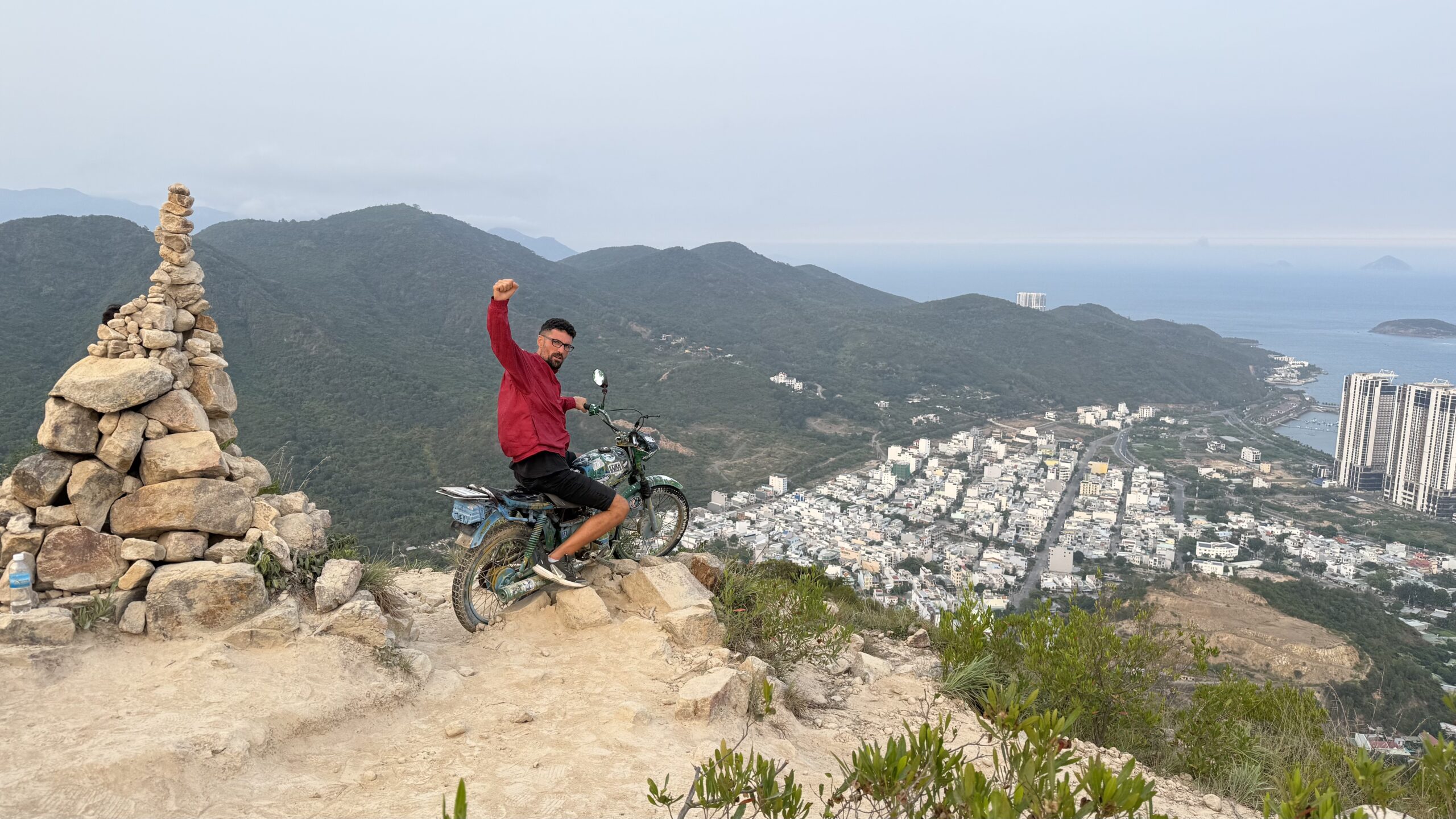
I spent a full month living in Nha Trang as an expat, and honestly, it completely changed my opinion of the city. I had been here twice before, but I didn’t really like it back then. It felt too touristy, too chaotic, and I never imagined I would stay longer than a few days. But this time was different, so I decided to track everything and break down exactly how I lived in Nha Trang on around $700 per month, what that actually covered, and what kind of lifestyle you can realistically expect.
This wasn’t a survival setup or a strict budget experiment. I had a private apartment with a balcony, I ate out almost every day, drank a lot of coffee, used transport freely, went to live music nights, played billiards, and still stayed within budget. That’s what surprised me the most.
But before talking about money, there’s something more important.
Why I Changed My Mind About Nha Trang
The first time I came here, I honestly didn’t like it. Nha Trang felt like a classic tourist city, and not an expat hub, with Russian menus everywhere, people drinking beer early in the morning, and overpriced restaurants serving fairly average food. At the time, everything felt designed for short-term visitors, and I left with the impression that there wasn’t much depth to the place.
To be clear, this had nothing to do with any nationality. I’ve met many Russians here who were genuinely great people. The issue was the overall atmosphere, not the people. It just didn’t feel like a place built for real everyday life.
But coming back this time, I approached it differently. I stayed longer, moved away from the obvious tourist areas, and started exploring properly. That changed everything. I began to notice a completely different side of Nha Trang as an expat: small local streets, family-run restaurants where the owners actually remember your preferences, quiet cafés that just focus on good coffee, and neighborhoods that feel more like real communities than tourist zones.
I also spent more time outside the city, visiting nearby fishing areas and seeing how local life actually flows beyond the beachfront. That added a completely different layer to the experience. And visually, the city is honestly stunning. You have beaches right next to green mountains, and within a short ride you can reach viewpoints, hiking spots, and some of the best sunsets I’ve seen in Vietnam.
Even the infrastructure surprised me. Despite being a relatively small city, Nha Trang still has an international airport, modern shopping malls, electric buses, wide roads, and clean public spaces. Daily life is simple and convenient in a way I didn’t expect.
So slowly, my opinion shifted. I realized I had been wrong about the city.
Nha Trang is still touristy, yes, but once you move slightly away from the beachfront, there’s a much more relaxed and livable rhythm underneath it all. And even though the population is only around 400,000, the city feels surprisingly active. You see people dancing in public spaces, sunset football games, outdoor workouts, and music sessions near the beach. It has a social energy that grows on you over time.
Finding an Apartment in Nha Trang (And What I Pay)
Accommodation is usually the first big decision for an expat, and in Nha Trang it can feel confusing at first. Prices look high for a coastal city this size, but the reality is that there are two completely different markets.
If you stay around Tran Phu Street or Loc Tho, you’re in the tourist zone. Everything is more expensive there, and most places are designed for short-term stays. But if you move inland or slightly north, for example areas like Vinh Hoa or Vinh Diem Trung, prices drop noticeably and the lifestyle becomes much more local.
That’s what I ended up doing. I rented a short-term place first, then started walking around neighborhoods and looking for “For Rent” signs. In Vietnam, this still works surprisingly well. Many apartments are listed directly by owners, and negotiation is normal, especially if you stay longer.
That’s how I found my current apartment. It’s simple but comfortable, with natural light, a small balcony, decent water pressure, and a quiet environment. Nothing luxury, but everything I actually need.

I pay 7 million VND per month, which is about $270. From what I’ve seen and discussed with other foreigners here, this is a very normal price range. Most long-term apartments in decent areas fall somewhere between 6 and 10 million VND depending on size and location.
The biggest difference, though, isn’t just price. It’s atmosphere. Away from the tourist streets, everything feels calmer. Cafés feel local, daily life slows down, and the city starts feeling like a real neighborhood instead of a holiday destination.
Things You Need to Watch Before Renting
As an expat there are a few things worth checking before signing anything in Nha Trang.
First, always look at the neighborhood carefully. The city is developing fast, and construction noise can appear almost anywhere.
Second, be aware of karaoke spots nearby. Karaoke is a huge part of Vietnamese culture, and while it can be fun, it can also get extremely loud at night when people celebrate.
And third, check for humidity and mold, especially in lower floors or older buildings. Because of the climate, this is something you really don’t want to ignore.
These small details make a big difference in daily comfort.
Utilities, Electricity, Internet, and Laundry
Utilities in Nha Trang are quite manageable. During cooler months, I barely use air conditioning, so my electricity bill stays under 500,000 VND. In hotter months, it goes up, but still rarely exceeds 1 million VND per month, mainly because electricity costs around 4,000 VND per kWh.
Water is extremely cheap, often just a couple of dollars per month. Wi-Fi is usually included in rent, which makes life much easier when you first arrive.
Since I don’t have a washing machine, I use local laundry services. It costs around 17,000 VND per kilogram, which keeps my monthly laundry expenses under $8. Simple, affordable, and widely available everywhere in the city.
Coffee Shops and the Co-Working Scene
For some reason, I always keep a separate monthly budget of around one and a half million VND just for coffee when I stay in Vietnam. It sounds a bit unnecessary at first, but once you live here, you quickly understand why.
If there’s one thing Nha Trang and Vietnam in general do exceptionally well, it’s coffee. Not only is it cheap, it’s also strong, bold, and surprisingly high quality. The robusta beans here have a very distinct taste that slowly grows on you until it becomes part of your daily routine.

Cafés are everywhere. It’s almost impossible to walk more than a few minutes without passing one. What makes the coffee culture especially interesting is the contrast. You’ll find tiny street cafés with plastic chairs serving extremely strong local coffee, right next to beautifully designed modern spaces that could easily exist in any major city in Europe.
A traditional Vietnamese black coffee or iced milk coffee usually costs around 17,000 to 25,000 VND. It’s simple, strong, sometimes sweetened with condensed milk, and strong enough to wake you up instantly. At first it feels like nothing special, but over time it becomes something you naturally start your day with.
Modern cafés are a different experience. Espresso-based drinks, arabica blends, and more international-style menus are common, and prices usually range from 40,000 to 70,000 VND. Still very affordable considering the comfort, design, and atmosphere you get in return.
And the atmosphere really is a big part of it. Many cafés feel like small green spaces filled with plants, natural light, and open air layouts. Some even have fish ponds or garden-style seating. Most places have strong Wi-Fi and naturally turn into workspaces during the day. You’ll see students studying, remote workers on laptops, friends chatting, and people simply escaping the heat.
Coworking spaces also exist, although many people don’t really use them long term. There are modern options with meeting rooms, quiet zones, and stable internet, and a daily pass usually costs around 150,000 VND while monthly memberships are around 2.7 million VND. Even so, many expats prefer cafés because they feel more flexible and relaxed.
For digital nomads, this is one of the biggest advantages of the city. Finding a comfortable place to work is never difficult. Over time, most people naturally build a small rotation of favorite cafés depending on mood or productivity. That flexibility becomes part of daily life.
Transportation
Even though Nha Trang has a relatively small population, the city still has a functional public transport system. Buses are modern, often electric, and fairly easy to use. You can pay in cash or tap a card directly on board.
One thing that still feels a bit unusual is that there is usually a staff member on each bus handling payments instead of fully automated systems. It’s a small detail, but something you notice quickly.
A single bus ride within the city usually costs around 15,000 VND, while the airport route is about 50,000 VND, which is very affordable.
However, buses don’t cover the entire city very efficiently, so scooters naturally become the main form of transportation. Most locals rely on them, and many foreigners adapt quickly to the same system.

Electric scooter rentals usually cost around 1.8 million VND per month. They are quiet, practical, and extremely convenient since there are no fuel costs involved. Some people also choose to buy second hand scooters and resell them later, often through Facebook Marketplace. If you stay for a few months, buying can actually be cheaper than renting.
Personally, I don’t ride scooters anymore after a small accident, so I mostly use Grab motorbike taxis. A typical ride costs between 20,000 and 40,000 VND, often less than two dollars, which makes it one of the most efficient transport systems I have ever used.
Cycling is another good option. The city is mostly flat, roads are wide enough, and bicycle rentals are usually around 50,000 VND per day, with cheaper long term options available. It’s also a nice way to stay active while exploring quieter neighborhoods.
By combining walking, Grab, and occasional cycling, my monthly transport costs stay under 700,000 VND, which feels very reasonable for daily life here.
Entertainment and Lifestyle
Nha Trang is a fairly active city when it comes to expat lifestyle. It may not be as large as Da Nang, but it still offers plenty of ways to stay social, active, and entertained.
One of the most enjoyable parts of living here is the live music scene near the beach. Small bars and casual gatherings where people play guitar, sing, and spend the evening together. It is informal, relaxed, and feels very natural rather than commercial.
Another unique part of the city is social dancing. This is mostly a local scene rather than an expat one in Nha Trang. In the evenings, groups of Vietnamese people often gather to dance tango, bachata, salsa, and other partner styles. People rotate partners, laugh, teach each other, and genuinely enjoy the moment. It is simple but very uplifting to watch.
Outdoor exercise is also a big part of daily life. You constantly see groups practicing aerobics or moving to music in parks and public spaces. Some are large organized groups, others are small circles, but the atmosphere is always open and welcoming.
Beachside workout areas are another highlight. You’ll often see people jogging, stretching, or exercising right next to the ocean. Since I haven’t been going to the gym recently, this has actually become one of my favorite ways to stay active.
Hiking is another major advantage of the city. Being only a short ride away from mountain trails is a big plus. Many locals and expats spend weekends hiking, and over time you start recognizing familiar faces along the way.
Nightlife in Nha Trang is generally relaxed. There are plenty of beach bars where you can sit by the water and enjoy the evening. A local beer usually costs around 30,000 VND, while imported or craft options can go up to 70,000 or 90,000 VND. Cocktails are more expensive, so it is always worth checking the menu first.

Football with locals is another activity that naturally becomes part of life here. It is a great way to stay active and meet people without forcing social interactions.
Billiards is also extremely popular in Vietnam, and you will see clubs almost everywhere. Sooner or later, you end up playing a few games yourself and realizing how deeply it is part of the local culture.
Over time, you naturally build a routine. Familiar cafés, regular spots, and people you keep seeing again and again. Social life starts happening without effort.
The interesting part is that all of this does not require a big budget. For most people, entertainment stays around 1 million VND per month. Of course, if you go out more often or prefer higher end places, it can easily increase without you noticing.
What Nobody Talks About When Living Abroad: Banking, Mail & Taxes
One thing you rarely hear about living abroad long term is everything happening in the background.
At first, it all feels easy and exciting. You are thinking about flights, apartments, food, cafés, and exploring a new place. Everything feels flexible and temporary in a good way.
But after some time, reality starts to shift. Practical issues come up. What address do you use for banking? How do you deal with taxes back home? What about mail, legal residency, or simply keeping your finances organized while constantly moving between countries?
This is the side of expat life that almost never shows up online, but it is often the one that matters most.
Because once you leave your home country, you are not just traveling anymore. You are effectively managing two systems at once, your life abroad and your setup back home. If that structure is messy, everything else eventually feels harder than it should be.
That is why I started paying more attention to this part of the lifestyle.
One service I found useful in this space is SavvyNomad. They help Americans living abroad set up things like Florida residency, mail management, and a more organized tax and admin structure for long term life overseas.
They also offer a free checklist that covers the basics of what you should have in place when starting out. If you are early in the process, that is a good place to begin.
And if you already want a more complete setup, you can also check their full service, pricing, and options here. You can also use the code “NOMADNEST” for $50 off.
What I realized is that this is not the exciting part of living abroad, but it is one of the most important. Once the backend is handled properly, everything else feels lighter. You stop worrying about paperwork, missed mail, or random admin issues, and you can actually focus on why you moved abroad in the first place.
Living abroad is not just freedom and travel. It is also structure. And the better the structure, the more real freedom you actually have.
Other Expenses
There are also a few smaller daily costs that often get overlooked but still add up over time.
Mobile data in Vietnam is extremely cheap. A local VinaPhone SIM usually costs around 125,000 VND per month and provides more than enough data for daily use. One important tip is to always register your SIM at an official store with your passport, otherwise you may end up with a temporary tourist SIM that expires quickly.
Haircuts are also very affordable. A basic local barber usually costs around 60,000 VND. Nothing fancy, but fast, clean, and efficient.
Household essentials like shampoo, soap, toothpaste, and detergent usually stay under 200,000 VND per month. With convenience stores everywhere, it is very easy to pick up whatever you need.
Altogether, these smaller expenses usually add around 400,000 VND per month to the budget.
For health insurance, I personally use SafetyWing, which costs around 62 USD every four weeks. It has been reliable so far, and support has been helpful whenever needed.
Total Monthly Cost Breakdown
Alright, now let’s put everything together. These numbers are based on my real monthly expat spending in Nha Trang. Nothing luxurious, but also not extreme budgeting, just a normal, comfortable everyday lifestyle.
In total, it comes to around 18.5 million VND per month, which is roughly 700 US dollars.
That includes basically everything: rent, food, transport, health insurance, coffee shops, eating out, social life, and all the small daily expenses people usually forget: laundry, haircuts, billiards, live music, and random weekend plans.

Of course, some people spend much more, while others manage to live on far less. But for me, this kind of budget creates a very relaxed and easy lifestyle here.
And if your experience living abroad looks completely different, I’d actually be curious to hear about it in the comments. Everyone seems to have a slightly different version of what “affordable living” really means.
| Item | Cost (VND) | Approx. USD |
| Rent (small room) | 7,000,000 VND | ≈ $261 |
| Utilities (water + electricity) | 500,000 VND | ≈ $19 |
| Groceries (fruits + snacks) | 400,000 VND | ≈ $15 |
| Local restaurants (74 meals × ~50k) | 3,700,000 VND | ≈ $140 |
| Western restaurants (17 meals × ~110k) | 1,870,000 VND | ≈ $71 |
| Coffee (30 × 40k) | 1,200,000 VND | ≈ $45 |
| Bicycle rental (3 × 50k) | 150,000 VND | ≈ $5 |
| Grab scooter rides (13 × 35k) | 455,000 VND | ≈ $17 |
| Public bus (5 × 15k) | 75,000 VND | ≈ $3 |
| Healthcare & insurance | 1,300,000 VND | ≈ $62 |
| Drinks / going out | 850,000 VND | ≈ $32 |
| Laundry (4 × ~50k) | 200,000 VND | ≈ $8 |
| Random activities (billiards, pickleball, etc.) | 320,000 VND | ≈ $12 |
| Haircut | 60,000 VND | ≈ $3 |
| SIM / mobile internet | 125,000 VND | ≈ $5 |
| Toiletries | 200,000 VND | ≈ $8 |
| E-visa fee (monthly average) | 220,000 VND | ≈ $9 |
| Total monthly cost | 18,625,000 VND | ≈ $707 |
Visa Options for Vietnam
Now let’s talk about visas, which is probably one of the more confusing parts of staying in Vietnam long term. Vietnam doesn’t feel like a fully established expat hub in the same way as places like Thailand or Bali. A lot of foreigners here are doing shorter stays, visa runs, or slow travel rather than fully settling long term.
There is also no dedicated digital nomad visa at the moment, so most people rely on the standard tourist visa system.
For many, the 90-day e-visa is the most common option. You apply online through the official government website, pay around 25 dollars for a single entry visa, and usually get approval within a few days.
After those 90 days, many people leave the country briefly. Some fly to nearby cities like Bangkok or Kuala Lumpur, then return a few days later with a new e-visa. Others take organized border runs to Cambodia and come back the same day with a fresh visa. It sounds unusual at first, but in practice it’s a very common routine among long-term travelers here.
If you work for a Vietnamese company or open a local business, you can also apply for a work visa and temporary residence card, which is the more stable long-term solution.
Downsides and Deal Breakers
Of course, no place is perfect, and Nha Trang definitely has its downsides for an expat lifestyle.
The first thing many people notice is how tourist-focused parts of the city feel. Around the main beachfront areas, you’ll see Russian, Korean, and Chinese signage everywhere, along with massage shops, souvenir stores, and restaurants built mainly for short-term visitors. At times, it can feel less like a Vietnamese city and more like an international beach resort.
And just to be clear, this isn’t about any specific nationality. I’ve met plenty of great Russian people here. It’s more about the overall atmosphere that heavy tourism naturally creates in certain areas.
Compared to cities like Da Nang or Ho Chi Minh City, Nha Trang is also smaller and less diverse for an expat lifestyle. After a while, daily life can start to feel repetitive for some people. There are fewer neighborhoods to explore, fewer events, and less overall variety.
The weather can also be challenging depending on the season. During the hotter months, the heat and humidity can feel intense, especially in the middle of the day. During the rainy season, heavy rain and occasional flooding can also happen.
English levels outside tourist areas are fairly limited, which means simple daily interactions sometimes require patience, gestures, or translation apps.
And finally, like many places in Vietnam, karaoke culture is everywhere. Most nights are quiet and peaceful, but occasionally someone decides to sing at full volume late at night, and unfortunately, you will hear it whether you planned to or not.
Still, despite all of that, I ended up enjoying Nha Trang much more than I expected as an expat. It’s the kind of place I can easily see myself coming back to again.