
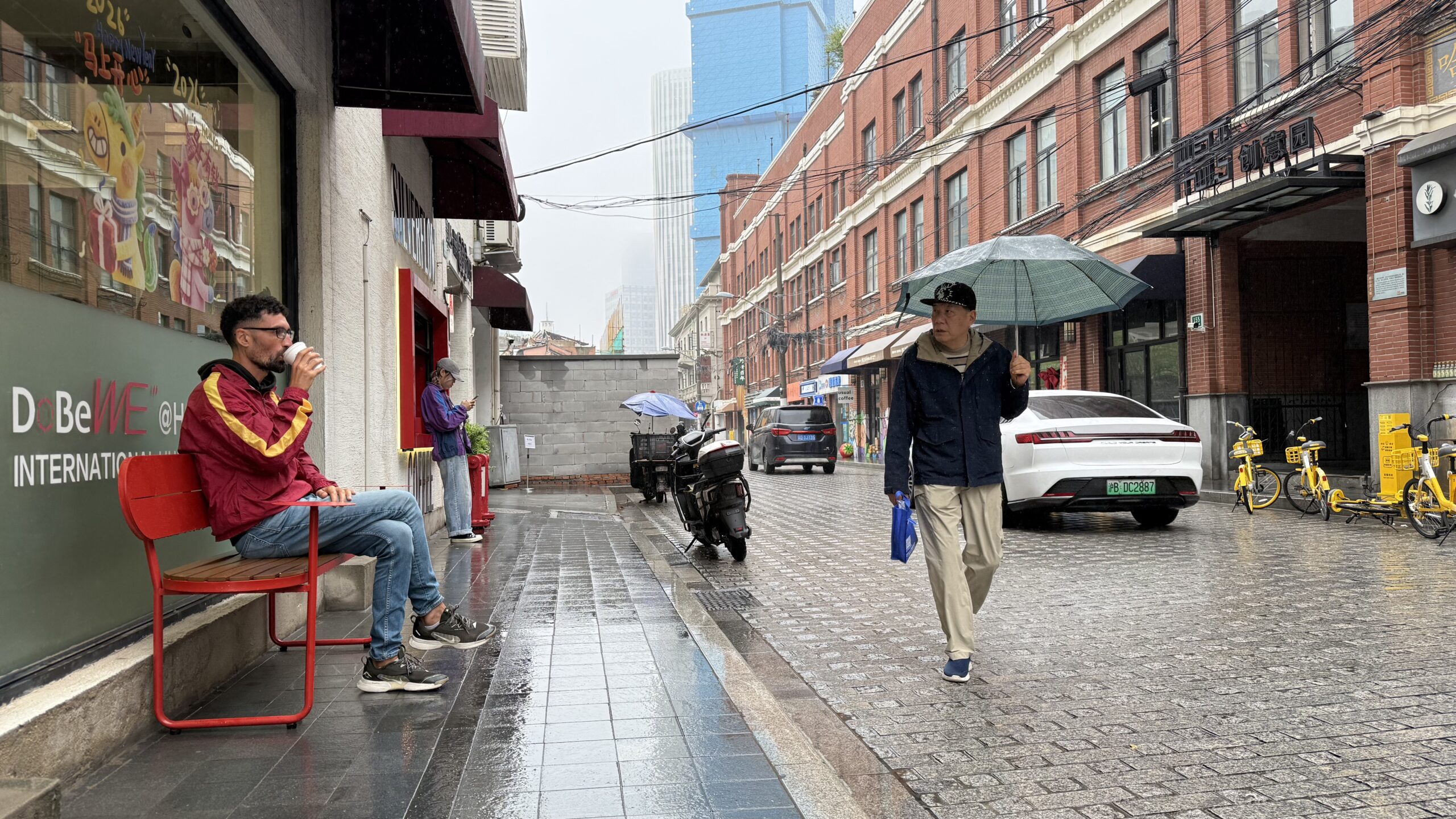
Shanghai is one of the largest, busiest, and most futuristic cities in the world. It’s a place where futuristic skyscrapers, AI powered technology, and cashless payments have become part of everyday life. At the same time, it’s also a city where many of the apps most of us rely on, like Google, Gmail, Instagram, and WhatsApp, simply don’t work.
Before visiting, I wasn’t sure what to expect. I imagined a city full of glass towers, high speed trains, and cutting edge technology, but I quickly realized there’s much more to Shanghai than that. I spent 10 days slow traveling through the city, staying in a local neighborhood, tracking every expense, riding shared bikes, working from cafés, and trying to experience daily life beyond the typical tourist attractions.
What surprised me most was how quickly the city changes. One moment you’re standing between some of the tallest skyscrapers in the world, and just a few streets later you’re walking through quiet alleyways, traditional markets, and neighborhoods where life feels completely different. That contrast ended up becoming one of my favorite things about Shanghai.
In this guide, I’ll share exactly how much I spent during my 10 day trip, including accommodation, food, coffee, transportation, mobile data, travel insurance, and all the smaller expenses that are easy to overlook. I’ll also cover the practical side of traveling in China, including the essential apps you should install before you arrive, how to make mobile payments without a Chinese bank account, and a few simple tips that made my trip much smoother from day one.

If you’re planning your first trip to Shanghai, or you’re simply curious about what it’s really like to travel independently in one of the world’s most technologically advanced cities, I hope this guide helps you avoid some of the mistakes I almost made.
Why Shanghai Feels So Different on First Arrival
Before getting into prices, food, neighborhoods, and all the apps you need for China, I want to start with something more personal: my first impressions of Shanghai city. Because honestly, before landing here, I had no clear idea what to expect.
The first surprise came almost immediately after arriving in central Shanghai. It was the silence. And I know that sounds strange when you’re talking about one of the largest cities in the world. Coming straight from Vietnam, I stepped outside and genuinely thought, “Wait, where is the chaos?”
There were millions of people, massive intersections, endless skyscrapers, and constant movement, but somehow the city felt unusually calm. Almost like the volume had been turned down on a megacity.
A big reason for that is how heavily China has shifted toward electric transport. Cars, buses, scooters, and delivery bikes are almost all electric in Shanghai. You notice it right away because there’s very little engine noise in the background. Even traffic, which in most cities feels loud and chaotic, is surprisingly smooth here. Green license plates, which are reserved for electric vehicles, are everywhere, and they’ve become a normal part of the city landscape.

Another thing that is hard to fully understand until you experience it in person is the scale of Shanghai city. Everything feels bigger than expected. Roads are wider, metro stations are deeper and more complex, shopping malls feel almost like small cities, and residential compounds stretch much further than what most people are used to. Even after 10 days, I still had moments where I would stop and look around thinking about how a place like this actually functions so efficiently.
And yet, despite all the concrete and glass, Shanghai is also one of the greener megacities I’ve visited. Parks are everywhere. Trees line major roads. Small green pockets appear between buildings, and larger parks are never far away. It makes the city feel far more livable than you would expect for its size and density.
One thing that stood out to me very quickly was how practical everyday life feels here. Public toilets are everywhere, and not only are they free, but they are also surprisingly clean and well maintained. The same goes for general street cleanliness. Everything feels organized and managed at a high standard.
There is also a strong visible sense of order and safety. Cameras are present on most major streets, and police presence is noticeable in many areas. For a visitor, it creates a feeling of structure and control that you don’t really experience in many other large cities.
Another thing I really appreciated about Shanghai city is how well connected it is. Shanghai Pudong International Airport is modern, efficient, and connects directly to destinations all over the world. For domestic travel, China’s high speed rail network is genuinely impressive. The bullet trains are fast, comfortable, affordable, and often a better option than flying. You can travel from Shanghai to Beijing or even smaller cities across the country in just a few hours.
One stereotype I completely changed my mind about was the idea that Chinese people are cold or distant. My experience was the opposite. Yes, there is often a language barrier, but translation apps make communication much easier than expected. And more importantly, people are usually willing to help when you need it. The social style is different from what many Westerners are used to, but it doesn’t feel unfriendly. In most cases, a simple smile is enough to break the barrier.

And that is probably what surprised me most about Shanghai overall. On paper, it sounds overwhelming. A massive city, a different language, different apps, different systems, and an entirely different way of doing everyday things. But once you arrive, it quickly becomes much more approachable than you would expect.
In fact, after just a few days, I started to understand why so many people become fascinated with China. It is one of those places that constantly surprises you, usually in ways you never planned for.
Digital Setup and Essential Apps for China
Before getting into accommodation, food, transport, or prices, there is something I think matters even more for China: your digital setup. In my opinion, this is easily the most important part of planning a trip here.
China is probably the most digital country I have ever visited, but at the same time, it is also one of the most different from what most travelers are used to. Many of the apps we rely on every day simply do not work here. Gmail, WhatsApp, Instagram, GitHub, Slack, and several others are either blocked or partially restricted.
So before flying to China, the first thing I strongly recommend is getting an eSIM. And this is important: make sure you buy and activate it before you land. Once you are already connected to local Chinese networks, setting things up becomes more complicated and sometimes frustrating.

Most travel eSIMs route your connection through places like Hong Kong or Singapore, which effectively bypasses the Great Firewall in the background. From a user perspective, it means your phone basically works the same as back home. You open Google Maps or YouTube, and everything just works without extra setup.
If you are planning to work from a laptop, the situation is slightly different. In that case, I highly recommend installing a reliable VPN before arriving in China. Many expats, remote workers, and long-term travelers use one, because without it, a lot of the websites and tools you normally depend on simply will not load.
Once your internet setup is sorted, the next essential app is Alipay. Honestly, this is probably the single most important app in China. Download it before you arrive, link your Visa or Mastercard, complete the verification process, and upload your passport if required. It is worth taking a few minutes to make sure everything works properly before you land.
Once Alipay is set up, you are basically ready for daily life in China. You can scan QR codes to pay for food, coffee, groceries, metro rides, taxis, and even bike rentals. It really becomes an all in one system for almost everything.
China is essentially a cashless society now. During my entire trip, I barely saw any physical cash being used, except once in a temple where someone left money as an offering next to a Buddha statue. Even small street vendors prefer QR payments over cash.
For transportation, the main app you will use is DiDi, which is basically the Chinese version of Uber. For short rides, especially in cities like Shanghai, Hello Bike is extremely convenient thanks to the huge number of bike lanes everywhere. The best part is that you do not even need to download separate apps in most cases, because both DiDi and bike sharing services are integrated directly into Alipay, which is exactly what I ended up using most of the time.

Another app that quickly becomes essential is Amap. Apple Maps works surprisingly well, but Google Maps is not really reliable in China. Many restaurants are missing, location data is sometimes outdated, and reviews are limited.
Amap is built specifically for China. It is extremely detailed, shows real time public transport routes, walking directions, traffic, businesses, and user reviews. After just a day or two, it became my main navigation tool.
Then there is Trip.com. Since Booking.com and Airbnb are not always the best option in China, many hotels and guesthouses are listed on Trip.com instead. Because it is a local platform, prices are often better and listings tend to be more complete. It is also one of the easiest ways for foreigners to book bullet trains and intercity travel, which you will probably end up using at least once if you are traveling around the country.
And finally, WeChat. I have to be honest, I never fully managed to set it up properly. The registration process can be tricky, and in some cases it requires verification from an existing user, which is not always easy if you are just arriving.
At first, I did not think it was a big issue. But later I realized how important it is in daily life here. In China, WeChat is not just a messaging app, it is basically part of everything, from communication to payments to social interactions.
Because of that, I ended up exchanging email addresses with a few locals instead, which honestly felt a bit like going back in time. Imagine meeting someone in a café in Shanghai city and then emailing them later to arrange dinner. It sounds unusual, but it actually worked surprisingly well.
These are the main apps I personally relied on during my trip. If you have been to China and feel like I missed something important, let me know in the comments. It will definitely help other travelers prepare better before they arrive.
Accommodation and Neighborhood Options in Shanghai
One thing you quickly realize about Shanghai city is just how massive it is. Because of that, choosing the “perfect” neighborhood is not nearly as important as many people think. As long as you stay somewhere reasonably central and close to a metro station, you will be completely fine.
No matter where you stay, you will most likely use public transport every day anyway. Shanghai is simply too big to explore comfortably on foot like many other cities. Even short distances can take a long time if you are not using the metro.
For my 10 days in Shanghai city, I stayed in Jing’an District, in the Fangua Nong area. It turned out to be a very practical choice. The neighborhood itself felt quite local and quiet, but at the same time I was only about a five minute walk from Shanghai Railway Station, which is one of the city’s main transport hubs.

From there, I had direct access to Metro Lines 1, 3, and 4, which made getting around the city extremely easy. I could reach most central areas without much planning, and I rarely had to think twice about routes or connections.
The room itself was simple but better than I expected for the price. It was bright, clean, reasonably spacious, had a good shower, daily housekeeping, basic toiletries, and the staff were always friendly and helpful.
I paid 122 Chinese Yuan per night, which is roughly 17 US dollars. Considering the location and overall quality, I was genuinely happy with it. Of course, accommodation in Shanghai varies a lot. You can easily spend several times more if you are looking for a larger apartment or a hotel in one of the more upscale areas.
When it comes to neighborhoods, Jing’an is probably one of the most balanced options. It is central, well connected, easy to navigate, and full of cafés, restaurants, shopping malls, and coworking spaces. It has a good mix of local life and modern convenience, which makes it a very comfortable base for a short stay.
Another popular area among visitors and expats is the Former French Concession. It is one of the most charming parts of Shanghai, with tree lined streets, historic buildings, small cafés, and a noticeably more relaxed atmosphere. It feels very different from the futuristic image most people associate with the city.
In the end, for most travelers, I would focus less on finding the perfect neighborhood and more on staying close to a metro station. In Shanghai city, that is what really shapes your day to day experience.
Groceries and Eating Out in Shanghai
Food in Shanghai city is one of those things that constantly switches between extremes. One moment you are eating a full meal for around 2 dollars, and the next you are sitting in a modern café paying almost Western prices. That contrast is exactly what makes the food scene here so interesting.

Let’s start with everyday local food.
In residential neighborhoods, daily meals are still very affordable. A quick breakfast from a street stall or a small local restaurant usually costs around 10 to 20 RMB. Things like steamed buns, soy milk, and simple pancakes are everywhere in the morning, and you will see locals grabbing them on their way to work without even stopping.
One of the most common meals you will come across is dumplings. A small portion of pan fried or soup dumplings usually costs around 20 to 30 RMB depending on the place, and for many people that is already enough for a full meal.
Noodle bowls are another staple of daily life. You will find everything from simple clear broth noodles to richer pork or beef versions. Most local noodle shops charge around 20 to 25 RMB for a solid bowl. Nothing fancy, but very filling and something people here actually eat regularly.
Then there are the classic Shanghai style dishes like soup dumplings, scallion oil noodles, and pan fried buns. You do not really need to memorize the names, but you will see them everywhere. They are cheap, quick, and usually eaten casually rather than as a formal sit down meal.
What surprised me most is that even in a city as large and modern as Shanghai, it is still very easy to eat well for under 30 RMB per meal if you stick to local spots.
On the other side, supermarkets like 7-Eleven, FamilyMart, and larger grocery stores are clean, modern, and very well organized. You can find everything from fresh fruit and vegetables to ready made meals and imported products. Local items are still reasonably priced, but imported goods are noticeably more expensive, especially Western snacks and drinks.
Then there is the completely different world of Western style cafés, brunch spots, and international restaurants. If you feel like splurging, Shanghai easily allows you to switch from budget street food to high end dining within the same day. The city really covers both ends of the spectrum.
In the end, your daily food cost in Shanghai depends entirely on how you move between these two worlds. I personally stayed somewhere in the middle and spent around 80 RMB per day, which felt like a very comfortable balance for a short stay.
Transportation and Navigating the City in Shanghai
Getting around Shanghai is one of the easiest parts of living here, mainly because the transport system is not only massive, but also extremely efficient and surprisingly cheap for a city of this size.
The backbone of everything is the metro. With over 520 stations, it is one of the largest metro networks in the world and connects basically every area you are likely to need. It is fast, clean, clearly signposted in both English and Chinese, and very easy to understand even on your first day in the city.
Most rides cost around 3 to 7 RMB depending on distance. Even longer cross city trips usually stay under 10 RMB, which honestly feels almost unreal for a city this large. Once you figure it out, the metro quickly becomes your default way of moving around Shanghai.

On top of that, there is a huge network of electric buses. They cover areas the metro does not reach, and everything is fully integrated into the same digital payment system. You simply tap your phone and go. No tickets, no cash, no confusion.
For shorter distances, DiDi is the next option. DiDi is everywhere in Shanghai. It is basically the Chinese version of Uber, but often cheaper and more integrated into everyday life. Short rides usually cost around 15 to 40 RMB depending on distance and traffic. Even longer cross district trips are still very reasonable compared to most major cities around the world.
Then there is something you will notice immediately in Shanghai: shared bicycles. Brightly colored bikes are parked on almost every corner of the city. You unlock them by scanning a QR code with Alipay, ride them for short trips, and simply leave them at your destination. Most rides cost around 2 to 3 RMB, sometimes even less.
And honestly, bikes are one of the best ways to actually experience the city. Shanghai is very flat, and many areas are designed with cycling in mind, especially around parks, rivers, and residential neighborhoods where traffic is lighter and the atmosphere feels more relaxed.
What makes everything even smoother is how fully digital the entire transport system is. Whether you are taking the metro, a bus, a taxi, or a bike, everything connects through your phone. No cards, no cash, no physical tickets. Just scan and go. After a few days, it becomes completely natural and you stop thinking about it altogether.
Coffee Shops and Remote Work in Shanghai
If you work remotely, Shanghai is one of those cities that just makes life easy.
Not because it was designed as a digital nomad hub, but because coffee culture here has developed fast and at a serious scale. You will find specialty coffee everywhere. And I do not just mean a few trendy cafés in one district. I mean entire streets filled with independent coffee shops, chains, and hybrid spaces where people sit for hours working on laptops.

One of the most common chains you will see is Luckin Coffee. It is basically everywhere in the city. Fast, cheap, and fully app based. You order from your phone, walk in, pick it up, and leave.
An Americano usually costs around 15 to 20 RMB, while an oat milk latte is around 20 to 30 RMB depending on promotions. It is not really third wave coffee, but it is consistent, convenient, and almost impossible to avoid in Shanghai.
Then you have the next level, small specialty cafés and local roasters.
Here the atmosphere changes completely. People stay longer, work on laptops, take calls, and spend hours inside. Coffee quality is higher, but prices also go up. An Americano is usually around 30 to 45 RMB, especially in central areas.
What I found interesting is how normal remote work feels here.
It is very common to see people working on laptops in cafés, locals, expats, freelancers, students. It is all mixed together. Many people also run VPNs in the background to access international tools, and after a while it just becomes part of the routine. You sit down, connect, and start working like anywhere else.
What I liked most is that cafés in Shanghai are not just places to grab coffee. They are actually designed for staying. Good Wi-Fi, plenty of seating, calm environments, and a steady flow of people working or studying.
You do not feel rushed to leave after one drink. Because of that, many people do not even bother with coworking spaces. The café network is strong enough on its own.
Entertainment and Lifestyle in Shanghai City
One of my favorite things to do in Shanghai is very simple. Just walk around the city with a coffee, no real plan, and just watch the rhythm of daily life.
The city constantly shifts depending on where you are. Street art, museums, quiet residential streets, massive architecture. Everything blends together in a way that keeps it interesting even when you are doing nothing specific.

On one side, there is the slower and more traditional version of Shanghai. You have temples, old gardens like Yu Garden, and places like Tianzifang, where narrow alleys are filled with small shops, art spaces, and cafés. These areas feel completely different from the futuristic skyline and give you a glimpse of older Shanghai.
There are also museums and art galleries, including the Shanghai Art Museum. Many are free or very affordable. Even in a city this dense, it is surprisingly easy to find quiet parks and green spaces where people walk, do tai chi, play music, or just sit and relax. That contrast between skyscrapers and calm public spaces is something you notice everywhere.
And then there is the architecture. It is a mix of ultra modern skyscrapers, colonial era buildings, and older monumental structures that sometimes feel almost Soviet in scale. At moments, if you ignore the Chinese signs, parts of the city could almost feel like Madrid or another European city, until you look again and remember where you are.
The social and entertainment side of Shanghai is just as varied. Nightlife is active, but not concentrated in a single area. You will find everything from small local bars to rooftop venues and large club spaces spread across the city.

One of the most interesting places I visited was INS Land, a multi floor super club near Fuxing Park. Entry is usually around 170 to 310 RMB depending on the day, and it is worth experiencing at least once. Each floor has a different vibe, music, and crowd. It feels overwhelming at first, but also very Shanghai in scale.
Drink prices vary a lot depending on where you go. In local bars, a beer is usually around 30 to 50 RMB. In upscale rooftop bars or clubs, cocktails can easily reach 100 to 150 RMB or more.
If I had to highlight a few places, I would say Yu Garden for traditional Shanghai, Tianzifang for artsy alleyways and cafés, the Bund for skyline views, and Jing’an for modern city life and everyday walking. Each one shows a completely different side of the city.

What stood out to me most is how flexible Shanghai is. You can spend an entire day walking through parks and quiet neighborhoods on a low budget, or switch into a high energy night out without even changing districts.
Prices and Cost Breakdown in Shanghai
Now let’s talk about the actual numbers.
What you are seeing on screen is everything I spent in Shanghai over 10 days. I tracked all my expenses, including accommodation, food, transport, coffee, insurance, and all the small daily costs that usually do not feel like much until you add them up.
Of course, Shanghai city can be much cheaper if you fully stick to local food, avoid Western cafés, and choose more basic accommodation. On the other hand, it can also get very expensive if you go for comfort, nicer apartments, and frequent dining out in international restaurants.

In total, I spent around 3,750 RMB over 10 days, which is roughly 520 US dollars.
For me, this felt like a realistic mid range budget for Shanghai city. Not budget backpacker level, but also not a luxury trip.
It is not the cheapest city in Asia, but it is also not as expensive as many people assume, especially once you understand how local life actually works here.
Here is the full breakdown of my spending for reference.
| Item | Cost in Yuan (RMB) | Approx. USD |
| Rent (studio / hotel room, Jing’an area) | 1,220 | ≈ $170 |
| Street food (13 meals × ~20 RMB) | 260 | ≈ $36 |
| Local restaurants (17 meals × ~35 RMB) | 595 | ≈ $83 |
| Groceries (water, ice cream, fruit + snacks) | 220 | ≈ $31 |
| Coffee (14 coffees × ~20 RMB) | 280 | ≈ $39 |
| Transport (metro + DiDi rides) | 190 | ≈ $27 |
| Small extras / services | 200 | ≈ $28 |
| Drinks / going out | 410 | ≈ $57 |
| Insurance (10-day portion) | 150 | ≈ $21 |
| Haircut | 50 | ≈ $7 |
| SIM / mobile internet | 110 | ≈ $15 |
| Toiletries / misc. | 70 | ≈ $10 |
| TOTAL | 3,755 RMB | ≈ $523 |
Visa Requirements for China and What You Need to Know Before You Go
Before booking your flight to China, always check your visa requirements first because it really depends on your passport and nationality.
Most travelers from countries like the US, UK, Canada, and much of Europe still need to apply for a tourist visa in advance. This is usually done through a Chinese embassy or visa center in your home country and involves basic documents like your passport, application form, photo, travel insurance, return flight, and proof of accommodation.
There are also visa free transit options, usually 24 or 72 hours, but only if you are continuing on to a third country and meet the specific requirements.

Some nationalities also have short term visa free agreements, which can allow stays of around 15 days, but these rules change quite often, so it is always worth double checking before you travel.
So the simple rule is this: most people still need to apply for a visa in advance unless they clearly qualify for a transit or short term exemption.
Downsides and Things to Know Before Visiting Shanghai
Shanghai is not an easy city at first. It looks extremely modern and polished from the outside, but once you actually spend time here, you realize it is a mix of excitement and constant adjustment.
The first thing is the pace. Everything moves fast. People walk fast, services are fast, decisions are fast. If you are coming from slower places in Southeast Asia or Europe, it can feel overwhelming at the beginning. But after a while, you naturally adapt to it and start moving at the same rhythm.
Then there is the language barrier. In central areas you will find some English, especially in hotels and cafés, but daily life is still mostly in Chinese. Menus, signs, and everyday interactions are often fully local, so translation apps quickly become essential. The good thing is they work well enough to handle almost everything you need.
Weather is another factor that can catch you off guard. It can shift quite quickly, from hot and humid to cold, rainy, and windy within a short period. The seasonal changes feel more intense than many people expect.

There is also a cultural adjustment period. Things do not always work the way you expect if you are coming from the West. Systems are different, communication is different, and you quickly learn to adapt instead of relying on familiarity. In some situations, people can also feel more reserved compared to what you might be used to elsewhere.
But that is also what makes Shanghai interesting. Once you get past that initial friction, you start to understand why so many people come here for work and opportunity. The city is highly efficient, extremely organized in many ways, and full of industries moving fast, from business and tech to finance and content creation.
I personally really enjoyed Shanghai city, and I am already looking forward to coming back and exploring it even more.